


As Pune-based Southern Command gears up for Exercise Trishul, a tri-service manoeuvre spanning the Saurashtra coast, deserts, and creek sectors, the drill goes far beyond a show of firepower. It’s a crucible for India’s evolving theaterisation blueprint — where logistics, not just leadership, will decide victory.
Integrating Intelligence, Surveillance and Reconnaissance (ISR), Electronic Warfare (EW) and Cyber Operations under one grid, Trishul aims to operationalise the CDS General Anil Chauhan’s “JAI” doctrine — Jointness, Atmanirbharta and Innovation.
Under Lieutenant General Dhiraj Seth, Southern Command has built a reputation for inter-service synergy and indigenous capability. Now, it faces its toughest test: proving that India’s logistics machinery can sustain multi-domain operations across air, land, and sea — seamlessly, swiftly, and self-reliantly.
The Logistics Backbone of Theatre Power
India’s move toward integrated theatre commands is the most transformative military reform since Independence. Yet, as strategists note, it will stand or fall on logistics. Command structures matter — but how supplies move, convoys replenish, and depots sustain will ultimately define the nation’s combat edge.
From Himalayan passes to coastal deserts, logistics is the bloodstream of Indian power — measured not by rhetoric, but by speed, tonnage, and resilience.
Lessons from Ladakh: Winter Stocking and Strategic Reach
The 2020 Ladakh standoff was India’s most profound logistics test since the Kargil standoff. Each autumn, before snow seals the mountain passes, the Army conducts Advanced Winter Stocking (AWS) — pre-positioning food, fuel, and ammunition for over 50,000 troops above 14,000 feet.
In 2020, India moved 90,000 tonnes of supplies to the front — a feat unmatched in decades. These lessons now underpin theatre logistics planning for the future Northern Theatre Command, ensuring no mountain front runs dry.
From Concept to Command: The New Logistics Grid
Reforms under the CDS have replaced single-service stockpiles with shared resources through Joint Logistics Nodes (JLNs) in Mumbai, Guwahati, and Port Blair. The upcoming Joint Theatre Logistics Commands (JTLCs) will take this further — unifying supply, transport, and maintenance under theatre control.
Exercise Trishul acts as the rehearsal ground — integrating these logistics streams into one theatre-wide system. The Army still bears about 75% of the logistics load, but the Navy’s reach and the Air Force’s lift bring synergy to the supply rhythm.
Trishul in Motion: Bridging Land, Sea, and Sky
In Southern Command’s domain — from Kutch’s marshlands to Gujarat’s coast — Trishul integrates every environment into a single operational theatre. Amphibious landings, airborne reinforcement, and ground manoeuvres are all synchronised through a single logistics grid.
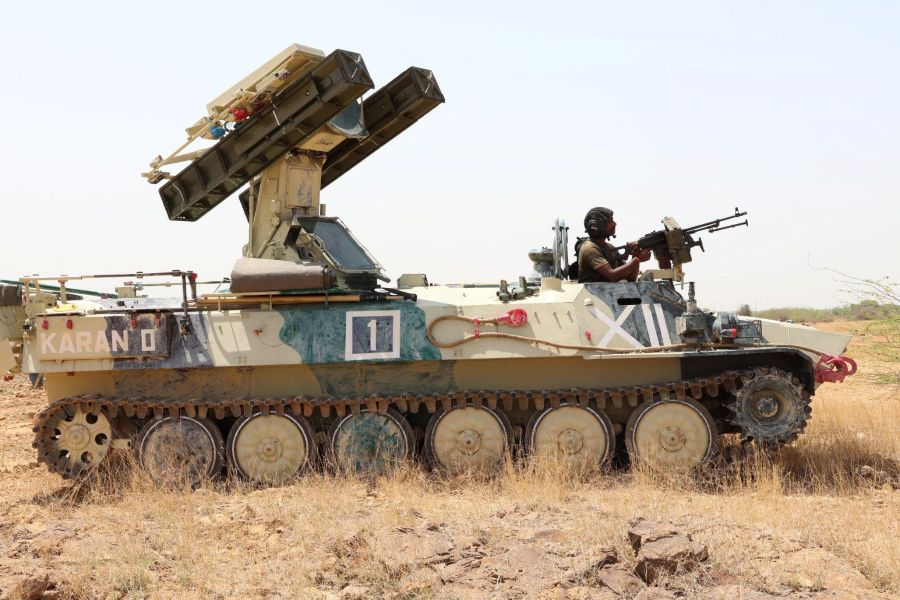
Indigenous systems under atmanirbharta — bridging equipment, modular fuel bladders, and homegrown ISR platforms — will be tested under battlefield conditions. Each successful sortie or replenishment mission becomes a validation of India’s self-reliant warfighting ecosystem.
BRO: Building the Arteries of Victory
The Border Roads Organisation (BRO) is the silent enabler of theatre power. Over five years, it has completed 330 projects worth Rs 8,000 crore, including the Darbuk–Shyok–DBO road and the Sela and Nechiphu tunnels.
The Ministry of Defence now aligns road priorities with operational timelines — success is measured by “time-to-front”. New rail links to Nyoma and Missamari, and southern feeder lines from ports to airbases, will drastically cut logistics lag and fuel joint mobility.
Fuel, Power, and Data: The New Logistics Triad
Modern warfare demands more than rations and diesel. Data, power, and bandwidth have become logistics lifelines.
The upcoming Joint Air Defence Command (JADC) depends on steady electronic supply chains, power resilience, and secure data links. During Trishul, cyber and EW units will stress-test this ecosystem — ensuring that information flows remain as unbroken as fuel lines.
Metrics of Victory: From Tonnage to Tempo
Logistics success is measured not by glamour but by efficiency: tonnage delivered, time taken, and pre-positioning accuracy.
If the 90,000-tonne Ladakh benchmark was static readiness, Trishul tests dynamic, multi-domain sustainment — refuelling times, convoy reroutes, endurance without resupply.
These are the new metrics of war, where logistics defines readiness more precisely than headcounts or hardware.
Atmanirbhar Logistics: Innovation as Sustainment
The Atmanirbhar Bharat initiative has transformed logistics from a backend function to a combat multiplier.
Indigenous vehicles, modular habitats, lubricants, and high-altitude rations are now frontline assets. Start-ups under iDEX and SPRINT are developing automated inventory systems and hybrid fuel technologies, reducing dependency and enhancing resilience in the face of sanctions or blockades.
Trishul’s insistence on homegrown systems ensures that innovation, self-reliance, and operational readiness advance together.
Synchronising the Logistics Clock
Theaterisation demands one unifying rhythm — the logistics clock.
Every refuelling stop, depot dispatch, and airlift sortie must tick in synchrony. The Army provides the pulse, the Navy and Air Force extend its reach, and together they sustain the flow of men, materiel, and information.
Southern Command’s Trishul is more than an exercise — it’s a template for the future Peninsular Theatre Command, where amphibious and air-land warfare will anchor India’s southern flank.
Huma Siddiqui