As India positions itself as a major player in the evolving global order, exports are emerging as a critical pillar of national growth and strategic autonomy. Sharing their views on “Exports as a Strategic Lever: India’s Next Big Push,” policymakers and industry leaders underscored how the synergy between defence manufacturing, technology innovation, and resilient logistics would define the country’s next phase of industrial expansion.
Streamlining Defence Exports and Testing Infrastructure
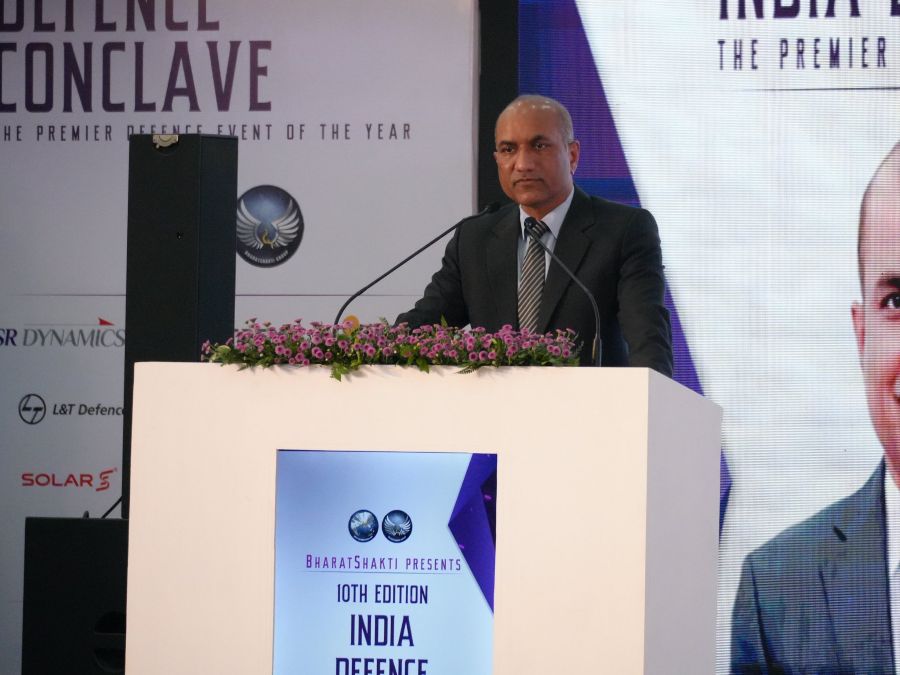
Delivering the keynote address at the 10th edition of India Defence Conclave, Sanjeev Kumar, Secretary, Defence Production, outlined how the government is reshaping export mechanisms to strengthen India’s position as a reliable global supplier of defence products.
“Our export approval mechanism has been simplified; nearly 80% of applications are now cleared within ten days,” he said. Kumar also announced a significant expansion of India’s network of testing laboratories, aimed at reducing bottlenecks and ensuring that Indian manufacturers can meet international quality standards efficiently.
He stressed that exports are not a peripheral activity but a strategic necessity for sustaining domestic defence manufacturing. “A part of our domestic production capacity must cater to foreign purchasers. Exports ensure long-term viability for our industry and help integrate Indian enterprises into global supply chains,” he noted.
Kumar further explained that this policy direction is backed by diplomatic outreach and industry partnerships, enabling India to become a trusted part of global manufacturing ecosystems, including those in Southeast Asia, Europe, and Africa. “In a world of shifting alliances and supply dependencies, India’s ability to design, test, and deliver indigenously developed products is a marker of true strategic independence,” he added.
10th India Defence Conclave | Knowledge Session II | Exports as a Strategic Lever
Strategic Exports in a Geopolitical Context
Rear Admiral Sanjay Misra (Retd), an armament specialist and strategic analyst, viewed exports through a broader geopolitical and security lens. “In today’s multipolar world, supply chains are not just economic tools; they are instruments of influence,” he said. Misra argued that countries with control over their production and logistics networks hold both economic and strategic leverage.
He noted that India’s growing defence exports serve dual purposes: bolstering self-reliance and strengthening partnerships with friendly nations. “Every defence export is also a diplomatic engagement,” he observed, adding that maintaining quality, consistency, and after-sales support will be key to building lasting credibility in global markets.
Private Sector and Technological Agility
From the industry’s perspective, Capt. Nikunj Parashar (Retd), Founder and CEO of Sagar Defence Engineering, highlighted the role of private enterprises and startups in driving innovation-led exports. “Defence and maritime technologies are no longer bound by large government projects alone. Agile companies, driven by innovation, are now designing indigenous solutions that can compete globally,” he said.
Parashar stressed that the ease of exporting must be matched with the ease of testing and certification, especially for dual-use technologies that can serve both civilian and defence markets. He noted that new policy initiatives, simplified licensing, and digital monitoring of export applications have created a “window of opportunity” for Indian companies to expand into foreign markets. “Exports are not just about earning revenue, they are about positioning India as a design and technology hub,” he said.
Textile Innovation and Non-Defence Export Synergies
Expanding the conversation beyond defence, Dr S.K. Sundararaman, Managing Director of Shiva Texyarn, spoke about the intersection of defence, textile, and sustainability exports. “Whether it is technical textiles for soldiers, protective gear, or sustainable fabric exports, India has a chance to lead through innovation and reliability,” he said.
He said that the same logistics and testing infrastructure that supports defence exports can strengthen India’s broader industrial export base. “We need a unified approach to export readiness, from compliance and testing to timely delivery and logistics efficiency,” he added.
Building Supply Chain Resilience
All the speakers agreed that India’s next export push must be underpinned by robust supply chain management and logistics resilience. The disruptions of recent years, from pandemics to regional conflicts, have underscored the need for self-contained manufacturing ecosystems that can scale rapidly.
As Admiral Misra summarised, “Control over the supply chain is the new strategic frontier. Those who manage it efficiently will control both markets and narratives.”
With streamlined government mechanisms, private sector innovation, and a global network of partnerships, the country is poised to transform exports into a powerful lever of growth, influence, and self-reliance.
Huma Siddiqui