


The Philippines is preparing to expand its stock of BrahMos supersonic cruise missiles, with a high-level delegation from BrahMos Aerospace currently visiting Manila to discuss the possible purchase of additional batteries, officials familiar with the matter confirmed.
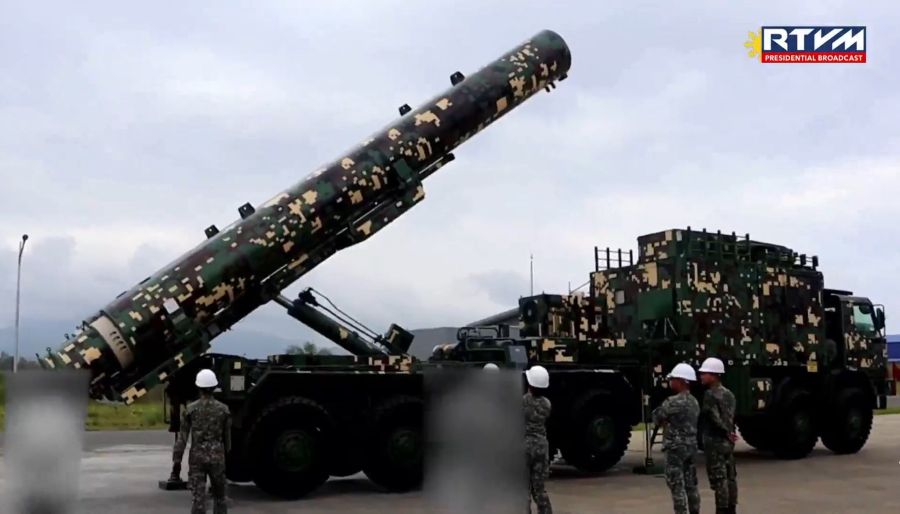
The discussions come just months after the Philippine Marine Corps formally activated its first BrahMos battery in Western Luzon, a move that has significantly enhanced the country’s coastal defence posture amid ongoing tensions with China in the West Philippine Sea.
According to senior sources in the defence and security establishment, Manila’s growing interest in expanding the system stems from the successful integration and deployment of its first units, which now give the Philippines the ability to strike hostile vessels operating around the contested Scarborough Shoal area.
Strengthening Coastal Defences
The first BrahMos battery, operated by the Marine Corps’ Coastal Defence Regiment under the Shore-Based Anti-Ship Missile Battalion, was showcased during the service’s 75th anniversary recently. The system includes mobile autonomous launchers, radar and command vehicles, and reloading trucks, each launcher capable of firing two missiles with a range of nearly 300 kilometres.
Stationed along the country’s western coastline, the battery allows the Philippines to project deterrence over key maritime zones and safeguard its exclusive economic zone (EEZ). Officials say the planned acquisition of additional BrahMos units would enable broader area coverage, particularly in northern Luzon, where Manila seeks to bolster defences near the Luzon Strait, a vital maritime corridor between Taiwan and the Philippines.
“The system has proven to be a reliable deterrent and an operational game-changer,” said a senior military official involved in the discussions. “Expanding our BrahMos capability is part of the Marine Corps’ modernisation plan under Horizon 3, aligned with the Comprehensive Archipelagic Defence Concept.”
Regional Ripple Effect
India’s BrahMos missile, jointly developed with Russia’s NPO Mashinostroyeniya, has emerged as one of the most sought-after precision strike weapons in Asia. The missile’s supersonic speed, low-altitude flight profile, and precision targeting have made it a powerful coastal defence tool for nations seeking to counter naval coercion in contested waters.
Following Manila’s landmark $375 million purchase in 2022, India’s first-ever export of the system, several ASEAN countries have expressed strong interest.
Defence and security sources indicate that both Indonesia and Vietnam are expected to finalise their own BrahMos contracts by the end of this year, with agreements likely to be signed in December.
If concluded, these would represent India’s largest defence export deals to date and mark a significant milestone in New Delhi’s expanding role as a strategic defence supplier in the Indo-Pacific.
“The success of the BrahMos program in Philippine service has served as a live demonstration of India’s credibility as a defence partner,” said a regional security analyst. “It has shown that India can deliver complex, high-end systems on time, with full training and logistical support.”
India’s Expanding Defence Footprint
The BrahMos program has become a cornerstone of India’s defence diplomacy. The system’s growing footprint across Southeast Asia aligns with New Delhi’s Act East Policy, which aims to strengthen strategic and defence partnerships with ASEAN nations amid shared concerns over maritime security and freedom of navigation.
A New Phase in Philippine Modernisation
For the Philippines, the BrahMos acquisition signifies a shift toward a more self-reliant and deterrence-oriented defence posture. Under its $35 billion Horizon 3 modernisation program, Manila is investing heavily in long-range precision strike and surveillance systems to support its “Comprehensive Archipelagic Defence Concept,” a strategy tailored to protect its dispersed maritime territories.
Maj. Gen. Vicente Blanco, Commandant of the Philippine Marine Corps, recently outlined plans to strengthen interoperability among the armed services and enhance coastal defence capabilities under the Marine Corps’ “Beachhead Vision 2040.”
“Our modernisation efforts aim to create a credible defence posture that ensures our sovereignty and secures our maritime domains,” Blanco said during the Corps’ anniversary ceremony.
Huma Siddiqui