



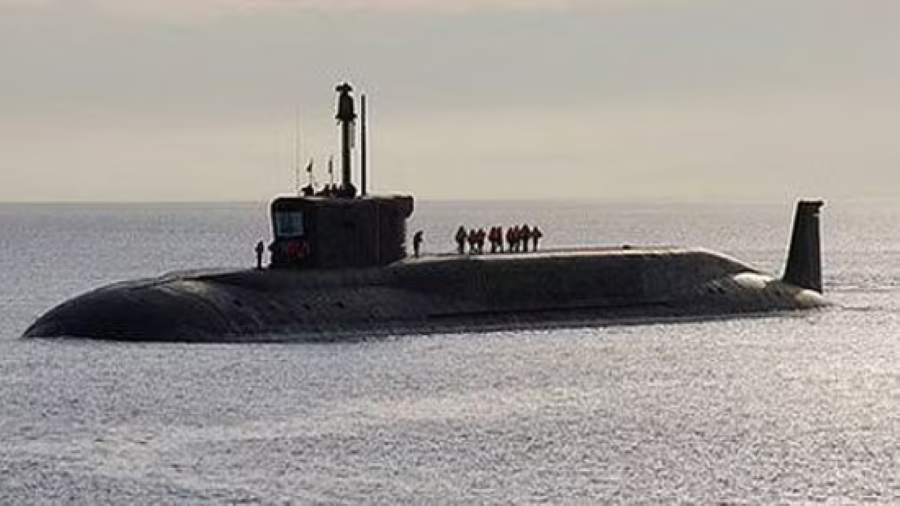
India has reportedly conducted a test launch of the K-4 submarine-launched ballistic missile (SLBM) from a nuclear-powered ballistic missile submarine (SSBN) off the coast of Visakhapatnam, on December 23, an event that further consolidates India’s nuclear triad and strengthens its second-strike capability. Though there has been no official announcement yet, defence reporting and aviation advisories (NOTAMs) point to a successful trial in line with India’s evolving strategic deterrence posture.
What is K-4 Missile?
The K-4, also called Kalam-4, is an indigenous intermediate-range SLBM developed by the DRDO, whuch is designed to hit targets 3,500km away from a nuclear-powered submarine INS Arighaat, the country’s second nuclear-powered submarine with nuclear-tipped ballistic missiles, which was commissioned on 29 August 2024.
K-4 Missile: At a Glance
———————————
Type: Submarine-launched ballistic missile
Range: ~3,500 km
Payload: ~1 tonne (nuclear-capable)
Length: ~10 m
Stages: 2
Platform: Arihant-class SSBNs
Status: Undergoing operational validation
The missile has undergone multiple developmental tests, including the two-stage K-4 was tested for the first time from INS Arighaat in November 2024. This new capability allows India’s SSBNs to strike strategic targets in Pakistan and parts of China from secure patrol zones in the Indian Ocean – a major improvement over the earlier K-15 Sagarika (range ~750 km).
Why a Submarine-Launched Missile Matters
A sea-based nuclear capability is essential to the concept of second-strike deterrence, the ability to retaliate even after absorbing a nuclear attack. Submarines are inherently harder to detect than land-based launch systems, making them the most survivable leg of a nuclear force.
With the K-4 operationally validated, India strengthens the third leg of its nuclear triad:
- Land-based missiles
- Air-delivered nuclear weapons
- Submarine-launched missiles
It supports India’s declared doctrine of “No First Use” and credible minimum deterrence.”
WHY SLBMs ARE CRITICAL
———————–
✔ Harder to detect
✔ Survivable in conflict
✔ Ensures second-strike capability
✔ Strengthens credible deterrence
India’s deterrent posture rests on:
“No First Use” + Credible Minimum Deterrence – meaning nuclear weapons are purely retaliatory.
Quick Guide: What is a Nuclear Triad?
LAND AIR SEA
—- —- —-
Ballistic Aircraft/ Submarine-
missiles bombers launched missiles
✔ Guarantees nuclear retaliation
✔ Reduces vulnerability
✔ Stabilises deterrence
India now has all three legs operational.
Which submarine launched it?
Reports suggest the test was conducted from an Arihant-class SSBN, likely INS Arighaat or the newer INS Aridhaman, under the control of the Strategic Forces Command. These 6,000-tonne submarines can carry up to four K-4 missiles, signalling a transition from developmental testing to operational deployment.
Range Coverage Snapshot
FROM BAY OF BENGAL PATROL ZONES
——————————–
Islamabad ~1,900 km ✔ Within range
Beijing ~3,300 km ✔ Within range
Shanghai ~3,450 km ✔ Within range
Regional missile-defence systems also face challenges intercepting K-4 due to maneuvering re-entry and trajectory shaping.
Timeline: Building India’s Sea-Based Deterrent, India’s SSBN Fleet
Early 2000s SSBN programme advances
2018 INS Arihant fully operational (6,000 -ton, K-15/750km range)
2024 (Aug) INS Arighaat commissioned (6,000 -ton, K-4/3500km range)
2024–25 Multiple K-4 test launches
Late 2025 Reported operational validation trial
2026 (expected) INS Aridhaman (7,000 -ton, K-4/3500km range)
2027-28 S4 enters service (7,000 -ton, K-4/3500km range)
2030s Larger S5-class SSBNs planned (13,500 ton, K-5/K-6/5,000-6,000Km range)
How does it change the strategic balance?
The K-4’s range places major regional cities within reach from secure patrol areas in the Bay of Bengal. Its advanced re-entry manoeuvres and trajectory-shaping aim to defeat emerging missile defence systems, reinforcing deterrence credibility. Analysts note that this shifts India’s posture toward a more stable, survivable deterrent rather than a numerical arms race.
Why the secrecy?
The reported test was conducted without public announcement, consistent with India’s low-key strategic signalling approach, demonstrating capability without escalating tensions. Defence analysts note that a detailed evaluation typically follows each launch to verify whether all mission parameters were achieved.
Bottom line
If confirmed, the K-4 test marks a significant milestone in India’s nuclear deterrent, solidifying a credible second-strike capability from sea-based assets and advancing the maturity of its SSBN fleet amid an increasingly contested regional security environment.
Team BharatShakti