This is an important week for Indian diplomacy, not because of speeches or photo-ops, but because real negotiations are reaching a decision point.
New Delhi has become the centre of European strategic attention, and the reason is simple: India is one of the few major powers still willing to buy big-ticket defence systems—and it is now demanding technology in return.
The opening move comes from France. President Emmanuel Macron’s NSA, Emmanuel Bonne, will be in India on Tuesday ahead of Macron’s visit next month for the AI Impact Summit. Officially, the focus is on emerging technology. In reality, the more serious talks are about fighter aircraft and engines.
Bonne will confer with India’s NSA Ajit Doval on at least two major defence projects.
At the heart of the discussions is the proposed jet engine partnership between Safran and DRDO for India’s future AMCA Mark II fighter. This deal matters because it goes beyond assembly.
For the first time, India is being offered full technology transfer and shared ownership of intellectual property for a high-thrust combat engine. Safran has agreed to design the engine jointly from scratch, rather than repackage an existing product. For India, this is a long-sought breakthrough.
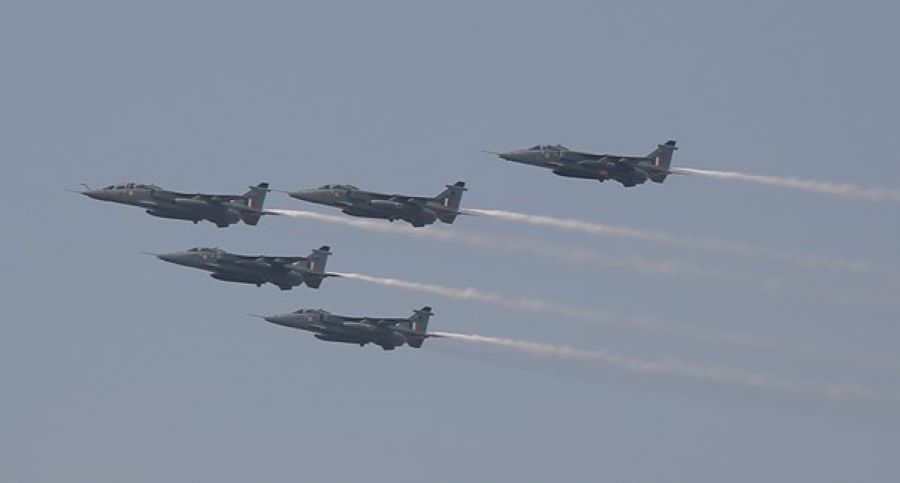
Running alongside this is the Rafale story. Internal Indian consultations on buying a substantial number of Rafale combat jets (the numbers could range from 75 to 114) are likely to move to bilateral discussions, with a clear push to manufacture the majority of aircraft in India rather than import them. Indian industry is already producing components with Dassault Aviation, and the intent now is to turn Rafale into a domestic production line, not a one-off purchase.
Germany’s engagement this week is more immediate and wider. Chancellor Friedrich Merz’s visit has a strong economic focus, but an $8-billion submarine deal to build six boats at Mazgaon Docks with technology from Germany’s tKMS is in the final stages of price negotiations.
Berlin wants the contract, but New Delhi wants clarity on costs and responsibility if problems arise.
Russia, meanwhile, remains an option under quiet examination. The Indian Air Force is studying the Su-57 not for prestige, but for capability. Its interest lies in the aircraft’s ability to launch very long-range missiles like the R-37M and Kinzhal, which allow strikes from well outside enemy airspace.
There is a practical argument for this. India’s own fifth-generation fighter, the AMCA, is still years away. A small number of Su-57s could fill the gap in the interim, especially since the IAF already operates Russian aircraft. But any move carries political risk, with the possibility of US sanctions hanging over the decision.
As reported earlier, another major contest is taking shape in the airlift arena. India’s Medium Transport Aircraft requirement, covering aircraft in the 18–30 tonne range, has attracted global interest. Lockheed Martin is offering the C-130J, Embraer is pushing the C-390 with an Indian partner, and Airbus has entered with the A400M.
Put together, these negotiations show why Europe is suddenly so attentive. With global supply chains under strain and the US trade and defence policy unpredictable, India has become a critical partner.
For New Delhi, this attention is useful—but only if it delivers results. India is no longer satisfied with buying weapons. It wants the knowledge to build them, the rights to improve them, and the capacity to sustain them. That, more than any summit declaration, is what this week of diplomacy is really about.
Nitin A. Gokhale

Author, thought leader and one of South Asia's leading strategic analysts, Nitin A. Gokhale has forty years of rich and varied experience behind him as a conflict reporter, Editor, author and now a media entrepreneur who owns and curates two important digital platforms, BharatShakti.in and StratNewsGlobal.com focusing on national security, strategic affairs and foreign policy matters.
At the beginning of his long and distinguished career, Gokhale has lived and reported from India’s North-east for 23 years, writing and analysing various insurgencies in the region, been on the ground at Kargil in the summer of 1999 during the India-Pakistan war, and also brought live reports from Sri Lanka’s Eelam War IV between 2006-2009.
Author of over a dozen books on wars, insurgencies and conflicts, Gokhale relocated to Delhi in 2006, was Security and Strategic Affairs Editor at NDTV, a leading Indian broadcaster for nine years, before launching in 2015 his own digital properties.
An alumni of the Asia-Pacific Centre for Security Studies in Hawaii, Gokhale now writes, lectures and analyses security and strategic matters in Indo-Pacific and travels regularly to US, Europe, South and South-East Asia to speak at various international seminars and conferences.
Gokhale also teaches at India’s Defence Services Staff College (DSSC), the three war colleges, India's National Defence College, College of Defence Management and the intelligence schools of both the R&AW and Intelligence Bureau.
He tweets at @nitingokhale