



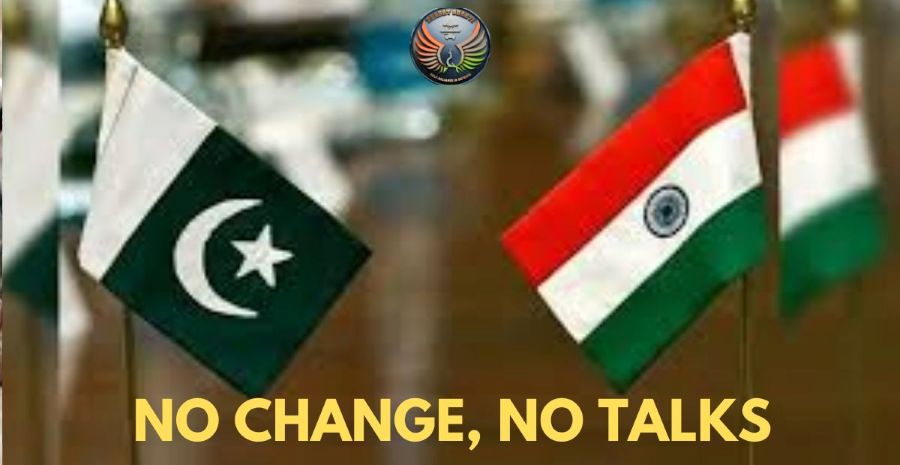
Calls for renewed India–Pakistan dialogue often rest on an appealing moral premise: that peace is strength, dialogue is wisdom, and human contact can soften hardened political positions. Shashi Tharoor’s argument, in a recent article titled “ For India – Pakistan, peace is not weakness, dialogue is not defeat”, that engagement should not be equated with weakness reflects this liberal instinct. Yet it underestimates a central asymmetry – India and Pakistan are not comparable political systems, and diplomacy premised on that assumption is strategically unsound.
India is the world’s largest secular, accountable and electorally credible democracy. Its foreign policy choices are constrained by Parliament, courts, a free press and ultimately voters. Governments change peacefully; strategic decisions are debated publicly; accountability, though imperfect, exists.
Pakistan, by contrast, is not a democracy in any substantive sense. It is a deep-state-dominated polity where elected governments operate at the pleasure of the military-intelligence establishment. Foreign and security policy, particularly toward India, is monopolised by unelected institutions that face no accountability to Parliament or the people. Treating Pakistan as a normal democratic interlocutor ignores this foundational reality.
Imran Khan and the Fiction of Civilian Rule
Nothing illustrates Pakistan’s democratic hollowness more starkly than the fate of Imran Khan. A former prime minister with undeniable popular support, Khan was removed through parliamentary manoeuvres widely seen as military-engineered, arrested repeatedly, disqualified from office and ultimately imprisoned. His party was systematically dismantled: leaders jailed, symbols stripped, candidates intimidated, and the electoral field openly manipulated.
This was not an anomaly. It was the system functioning as intended.
Pakistan’s history is replete with civilian leaders who gained mass legitimacy only to be removed once they challenged military prerogatives. Zulfikar Ali Bhutto was overthrown in a coup and later executed after a deeply questionable trial. Benazir Bhutto, twice elected prime minister, was dismissed from office and ultimately assassinated. Nawaz Sharif was
repeatedly elected, repeatedly disqualified, exiled, imprisoned and politically neutralised. Imran Khan’s imprisonment is merely the latest chapter in a long story.
The lesson is unmistakable: popular mandate in Pakistan is a liability, not a source of authority.
Why People-to-People Engagement Misses the Real Power Centre
Advocates of engagement often invoke shared culture, language, cuisine, music, and literature as a bridge to peace. Indians and Pakistanis do share much culturally. But this proximity has existed for decades, including during wars, terror campaigns and diplomatic breakdowns.
The problem is not hostility between ordinary people. The problem is that ordinary people do not make policy in Pakistan.
More critically, terrorist networks in Pakistan are no longer peripheral actors that can be dismantled through goodwill or gradual confidence-building. They are deeply entangled with the security apparatus itself, intertwined through decades of operational overlap, ideological convergence and strategic utility. Extricating or eliminating these networks would require a profound structural rupture: the dismantling of doctrines, chains of command and institutional incentives that define Pakistan’s military establishment. Such reform is not merely difficult; it is highly unlikely under a radicalised military leadership headed by an outwardly radical Field Marshal, whose authority and legitimacy are rooted precisely in these hardened security narratives. To expect dialogue or people-to-people engagement to overcome this reality is to mistake a systemic condition for a negotiable policy choice.
Cultural warmth does not restrain generals. It never has.
Dialogue Without Reform Rewards Bad Faith
India’s insistence that terrorism must end before dialogue resumes is often framed as inflexibility. In reality, it reflects lived experience. Pakistan has repeatedly followed a familiar pattern: seek talks during moments of economic stress or international pressure, offer cosmetic assurances, and then permit or enable sub-conventional attacks while
denying responsibility.
Dialogue under these conditions becomes a pressure-release valve, not a confidence-building measure. It reduces Pakistan’s diplomatic isolation without dismantling the structures that generate conflict. Engagement without preconditions does not moderate behaviour; it lowers the cost of duplicity.
The China–Pakistan Axis: A Strategic Complication
Any discussion of India–Pakistan peace that ignores China is incomplete. Pakistan’s deep state does not operate in isolation; it is embedded in a strategic partnership with Beijing that has direct national security implications for India. China has shielded Pakistan diplomatically, economically and militarily, including blocking international action against
Pakistan-based terror groups.
The China–Pakistan Economic Corridor, running through Pakistan-occupied Kashmir, embeds Chinese strategic interests in disputed territory and deepens Pakistan’s dependence on Beijing. This alignment reduces the costs of confrontation for Pakistan and creates a two-front security challenge for India, making unconditional engagement even
more strategically risky.
Reform Must Precede Reconciliation
Peace with India requires Pakistan to establish genuine civilian supremacy, dismantle jihadist proxies as instruments of policy, accept borders and pluralism as settled realities, and reform internally before seeking external normalisation.
Expecting dialogue to produce these outcomes reverses cause and effect. No amount of
cultural diplomacy can substitute for institutional transformation.
Conclusion
Peace is not weakness. Dialogue is not defeat. But strategic self-deception is not
diplomacy.
India’s democratic openness does not impose an obligation to engage a neighbour that is structurally incapable of reciprocal accountability and strategically anchored in militarised hostility. Until Pakistan’s deep state chooses reform over revisionism, accountability over adventurism, engagement will remain asymmetric, symbolic and futile.
True reconciliation will begin not with poetry exchanges or cricket matches, but when
Pakistan chooses democracy at home and restraint abroad, and only then.
Sumeer Bhasin (Author is an independent geopolitical analyst)