


In a significant push towards defence self-reliance, the Indian Air Force (IAF) is set to induct indigenously developed 1,000-kg class aerial bombs, with the Ministry of Defence initiating the process under the ‘Make-II’ category of the Defence Acquisition Procedure (DAP) 2020.
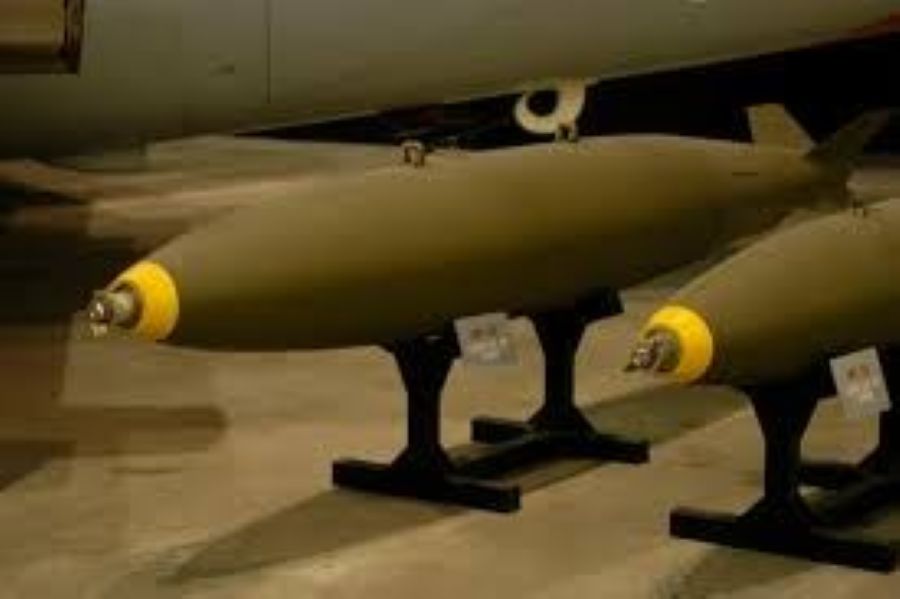
Senior officials said an Expression of Interest (EoI) has been issued for the design, development and eventual procurement of the heavy general-purpose bombs, comparable to the widely used Mk-84 class, along with tail units and associated equipment.
The programme will unfold in two stages. The first phase focuses on developing six prototypes, both live and inert, including the integration hardware. This stage will involve design validation and a series of trials before the system moves to the procurement phase. Once development benchmarks are met, a commercial Request for Proposal (RFP) will be issued to shortlisted agencies.
The proposed munition is expected to be compatible across the IAF’s mixed fleet of Russian and Western-origin aircraft, ensuring operational flexibility without the need for platform-specific redesign.
At present, the IAF relies on imports for Mk-84 class bombs. Officials say the indigenous effort aims to plug this gap while building domestic capability in high-calibre aerial munitions. The bomb is designed as a natural fragmentation weapon, capable of delivering high blast effect and significant peak over-pressure against hardened and area targets.
Under the plan, around 600 bombs will be procured through the ‘Buy (Indian–IDDM)’ route, short for Indigenously Designed, Developed and Manufactured, following successful development and trials.
The project mandates a minimum of 50 per cent indigenous content during the development phase. It will include Single-Stage Composite Trials (SSCT), after which preliminary staff qualitative requirements will be refined into final Air Staff Qualitative Requirements.
Officials estimate the timeline from EoI issuance to contract signing at roughly two-and-a-half years. This period will cover prototype development, user trials, technical and commercial evaluation, and final contract negotiations.
The IAF will oversee trials within India, using designated test ranges and aircraft platforms to validate performance under operational conditions.
Participation has been opened to the Indian industry, including private players, with provisions for foreign collaboration through joint ventures, technology transfer, or off-the-shelf arrangements. However, bidders will have to demonstrate compliance with indigenous design and manufacturing norms, even where foreign partnerships are involved.
The technical evaluation will assess engineering capability, infrastructure, integration expertise, and indigenous content, alongside adherence to qualitative requirements. Financial assessment will follow under the provisions of DAP 2020.
The move is seen as part of a broader effort to reduce reliance on foreign original equipment manufacturers and strengthen India’s domestic defence industrial base.
Team BharatShakti