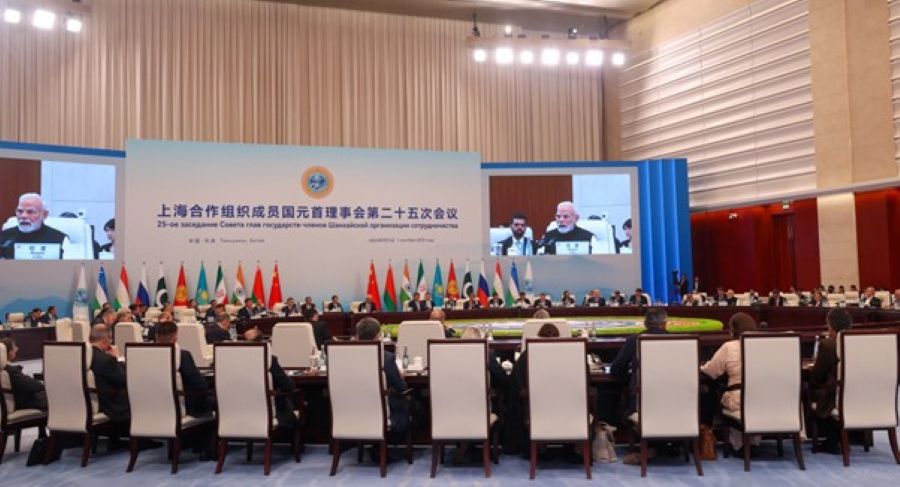
In a firm display of unity, the Shanghai Cooperation Organisation (SCO) member states, led by Indian Prime Minister Narendra Modi and other heads of state, adopted the Tianjin Declaration at the annual summit held today. The declaration places a sharp spotlight on regional security, the fight against terrorism, and unwavering support for global peace and sovereignty.
One of the most strongly worded sections of the declaration centred around the heinous terror attack in Pahalgam, Jammu and Kashmir, on April 22, 2025. The attack, which claimed several innocent lives, drew immediate international condemnation and has now been formally denounced at the highest multilateral level by the SCO.
“The Member States strongly condemned the terrorist attack in Pahalgam… and expressed deepest condolences to the victims’ families,” the declaration stated. Leaders emphasised that the perpetrators, organisers, and sponsors must face justice, rejecting any use of terror for political gain.
Prime Minister Modi, in his intervention, reiterated India’s zero-tolerance policy towards terrorism, calling for the global community to abandon double standards and adopt a unified, uncompromising approach to dismantle terrorist networks and their cross-border support systems.
Strengthening Collective Security: Beyond Words to Action
The summit’s declaration underlined a broader strategic consensus: terrorism, separatism, and extremism remain the most significant threats to international peace. In response, SCO member states pledged to:
- Intensify joint efforts through the SCO Regional Anti-Terrorist Structure (RATS).
- Implement the 2025–2027 Cooperation Programme on Counter-Terrorism.
- Establish a Universal Centre for Countering Security Challenges.
- Expand regional coordination through the SCO Anti-Drug Centre and new initiatives like the Centre for Strategic Studies.
The Tianjin Declaration also took aim at the cross-border movement of terrorists, cyber-radicalisation, and the use of extremist groups for proxy agendas. Member states reiterated the central role of sovereign governments in managing security threats and stressed the importance of multilateral mechanisms, including full implementation of UN Security Council resolutions and the Global Counter-Terrorism Strategy.
Firm Stance on Iran, Palestine, and Afghanistan
The SCO leaders also took strong positions on other geopolitical flashpoints:
- Military strikes on Iran by Israel and the U.S. in June 2025 were condemned as violations of international law.
- The Palestinian-Israeli conflict drew sharp rebukes, with urgent calls for a permanent ceasefire and humanitarian aid access in Gaza.
- On Afghanistan, the member states reaffirmed their commitment to a stable, neutral, and terrorism-free Afghan state, calling for an inclusive political process.
India’s Regional Leadership and Anti-Terror Diplomacy
India’s role at the summit was prominent. PM Modi’s message reflected a wider sentiment within the SCO: terrorism in any form is unjustifiable. By championing accountability for the Pahalgam attack and reinforcing India’s push for an UN-backed Comprehensive Convention on International Terrorism, India positioned itself as a critical voice in shaping the SCO’s anti-terror roadmap.
India’s leadership was further evident in supporting regional connectivity, intelligence sharing, and cross-border cooperation in countering radical ideologies, drug trafficking, and cyber-enabled crime.
From Dialogue to Deterrence
With plans for new anti-terror and anti-drug operations, improved border cooperation, and dialogue platforms such as the SCO Plus Security Dialogue and the Dushanbe Process, the member states appear poised to translate commitments into tangible action.
The Tianjin Declaration stands as a comprehensive blueprint for cooperative security, condemning terrorism not only in South Asia but across all affected regions. As PM Modi noted in his closing remarks, “We must walk the talk — terrorism anywhere threatens peace everywhere.”
Huma Siddiqui