


As tensions sharpen across the Indo-Pacific’s undersea domain, the Indian Navy has deployed its long-range maritime patrol aircraft to join a major multinational anti-submarine warfare exercise led by the United States.
Exercise Sea Dragon 2026 began on March 16 at Andersen Air Force Base, bringing together maritime patrol aircraft and aircrews from the United States, India, Australia, Japan and New Zealand for intensive anti-submarine warfare (ASW) training over the next two weeks.
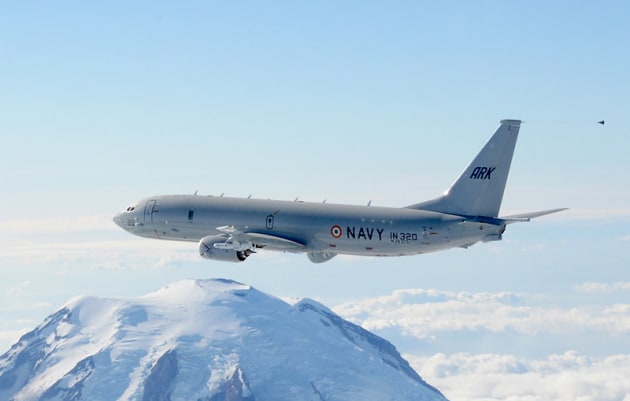
The Indian Navy is participating with its Boeing P‑8I Neptune maritime patrol aircraft, a key platform in India’s expanding undersea surveillance network in the Indo-Pacific. The exercise is designed to sharpen the ability of participating crews to detect, track and coordinate operations against hostile submarines.
Hosted by the United States Navy, the annual exercise will involve more than 200 cumulative hours of flight operations. According to Lt. Christian Castro, Public Affairs Officer for Commander Task Force 72, the training progresses through increasingly complex phases, from tracking simulated contacts to locating and monitoring a live submarine target.
Alongside India, the Royal Australian Air Force has deployed a Boeing P‑8A Poseidon and around 50 personnel from its recently re-formed No. 12 Squadron. The Japan Maritime Self-Defence Force has fielded a Kawasaki P‑1 maritime patrol aircraft, while the Royal New Zealand Air Force is also participating with a P-8A. The US Navy has committed two of its own P-8A aircraft from Patrol Squadrons VP-4 and VP-45.
Throughout the two-week exercise, participating crews will conduct coordinated missions aimed at detecting and tracking both simulated and live submarine targets. The focus is on speed, accuracy and seamless multinational coordination, skills increasingly seen as vital as regional navies strengthen their posture in the Western Pacific.
The opening phase of the exercise includes tabletop planning sessions, where pilots and mission crews from all five countries work through operational scenarios and align tactics, integrating the different sensors and capabilities carried by their aircraft.
RAAF Detachment Commander Squadron Leader Bryce Martin said the scale of the training area around Guam allows crews to practise complex maritime surveillance missions and improve coordination with partner nations. The exercise, he noted, is critical for maintaining an operational edge in a rapidly evolving security environment.
Team BharatShakti