


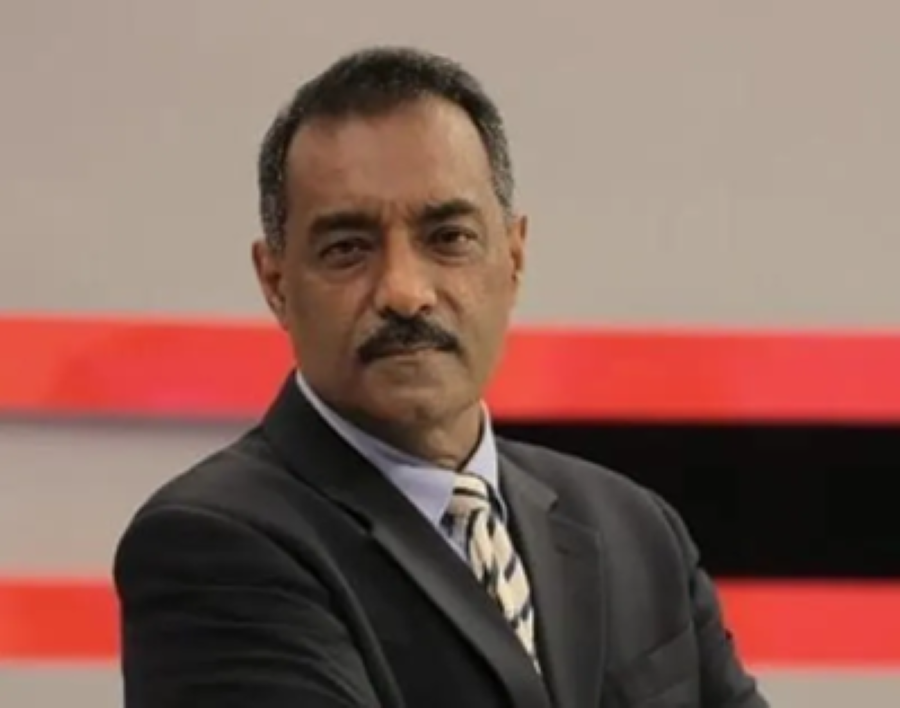
The writing had been on the wall for a while. Maroof Raza, the renowned defence analyst, first started his battle with cancer in 2017. It was multiple myeloma, but in a few years, it was behind him. he then got COVID but came out of it successfully. What finally got him was blood cancer, which he got in May 2023, and for which he underwent a stem cell transfer. Being Maroof, he battled all these like a valiant soldier and was always positive. But on 31 December last year, he was back in Fortis Hospital Gurgaon with complications of pneumonia, bacterial and fungal infections. Unfortunately, he lost the war, and the end came on 26 February.
Prime Minister Narendra Modi posted on X, “Shri Maroof Raza Ji made a rich contribution to the world of journalism. He enriched public discourse with his nuanced understanding of defence, national security, and strategic affairs.
Maroof was a larger-than-life figure, an imposing personality who carried himself with confidence and expressed himself with rare clarity. He was an expert in the fields of national security, counterinsurgency, and India-Pakistan relations.
Born in April 1959 in a military family, he was educated at Mayo College, Ajmer, and St. Stephen’s College, Delhi. He then joined the Indian Military Academy, Dehra Dun, and was commissioned in December 1980 into 6 Grenadiers, the Battalion his father, Brigadier Raza, had commanded. He later served in the Mechanised Infantry and was also posted as an Instructor to the Indian Military Academy, Dehra Dun.
He left the Army in 1993 to pursue an MA in War Studies at King’s College London and later earned an MPhil in international relations at Cambridge University. In 1994, he also won a Times of India Fellowship and held visiting fellowships at the Centre for Policy Research, the Henry L. Stimson Centre, and King’s College London.
Soon after leaving the Army, he became a household name as a strategic affairs consultant for NDTV and Times Now. He also wrote several books, which he said would always remain his most important calling cards.
Apart from that, he was a series presenter, including Line of Duty, which won a military documentary award at the 2005 Rome Film Festival and entered the Limca Book of Records. He has also presented Latitude, Defenders and India Risk Report. As the host, he brought a rare perspective to conversations.
In addition, was the publisher of the Salute Magazine and was a strategic risk and geopolitics advisor with IIRIS Consulting. He also spoke at multiple forums and think tanks in India and abroad, and his company, Flags Media, hosted some of the most well-structured seminars. Garry Singh, the President of IIRIS, remembers Maroof not just as ‘an expert in global threat analysis, military technology and policy advocacy, but a role model who embodied the values of integrity, humility and social responsibility’.
His books were centred on the low-intensity conflict in the Kashmir region, the relationship between India and Pakistan, and the border dispute involving India and China. He spent a lot of time on research and interactions with people; as a result, he was able to focus on the historical, geopolitical, and strategic aspects of security issues. He challenged readers to think critically about complex issues, while he did sensationalise facts. Yet, he never shied away from bringing them to the forefront and was always direct in his views.
Amongst his books was ‘Contested Lines’, which he coauthored with Iqbal Malhotra. The book examined the details of how their differing boundary claims are the basis of Sino-Indian boundary disputes. It will surely be among the most valued books on the subject and its attendant complexities. The hallmark of Maroof’s books remains his depth of research, focus, and ability to present facts logically by connecting the dots and viewing issues from a different perspective.
Even during his illness, which he carried with rare dignity, he remained engaged in his work. He continued writing and speaking on television, even while in the hospital. For him, national security matters always came first.
I first met Maroof at St. Stephen’s College, where he was a year senior. He was part of the college athletics team and a larger-than-life personality. Our paths met again when I joined the IMA a year after him, but our friendship grew when we were both posted as Instructors at the Indian Military Academy, and Tina and I lived above Anis and Maroof. After that, we have remained close friends.
It was a pleasure interacting with Maroof, and he loved his conversations and food. He could regale anyone with his anecdotes in the Army, which ranged from tales about Sepoy Dharamvir in the jungles of Mizoram to his interactions with General Sundarji. It was not the story but the manner in which it was related, with a Haryanvi accent in one case and General Sundarji’s drawl in the other. He could tell jokes with an uncanny mix of expression and seriousness.
His experience in the Army laid the foundation for his authoritative knowledge and understanding of conflict, terrorism, border tensions, and regional security. A self-disciplined and impartial thinker, Maroof was respected by the military and the civilian community alike for his intellectual rigour and disciplined approach. He could connect the gap between military doctrine and its public understanding. His work was a ‘bridge’ between academia and the practitioner on the ground, as far as the viewers were concerned.
He never engaged in speculation and had a rational, authoritative approach, using a responsible language in an environment where sensationalism usually rules. His talent for making geopolitical security complexities seem simple endeared him to many.
He will always be remembered as one of the most credible voices on television regarding national security. He could address security issues and geopolitics in a way that cut out jargon without a jarring tone, making it understandable to everyone. He would explain rather than exaggerate.
In the days of din on television, he had his distinctive style. When others raised their voices, he lowered his baritone voice and yet his point was never lost. When debates veered toward hysterics, he was insightful and gently brought them back to the facts.
While Maroof’s presence will be missed, his thoughts and writings will endure, and his imprint will remain. A brilliant scholar and analyst, respected author and powerful orator, he set the benchmarks and was a national asset. The strategic community will remain poorer with his loss.
Maj Gen Jagatbir Singh, VSM (Retd)
Maj Gen Jagatbir Singh, VSM (Retd)
Major General Jagatbir Singh, VSM (Retd) is a Distinguished Fellow at the United Service Institution of India. Commissioned into 18 CAVALRY in Dec 1981, he has held varied appointments in different terrains including command of an Armoured Division. He has been an Instructor at the Indian Military Academy and has been an Instructor and Senior Instructor and Head of Training Team at the Defence Services Staff College. A prolific writer, his articles have been published in various newspapers and magazines.