It is intriguing how India has presumably slipped (if at all) from being the darling of the developed world and the leader of the Global South to being diplomatically cold-shouldered in the run-up to and post Operation Sindoor. Since his first term in 2014, Prime Minister Narendra Modi has made an extensive and concerted effort to reach the regional and global audience, not only shaping but also refreshing the world’s opinion of India.
As of June 2025, he has embarked on 89 foreign trips, including multiple visits to the US (10 times), France (8 times), China (5 times), Germany (6 times), Japan, Russia, and the UAE (7 times each), among others. He has been able to develop a personal rapport with many world leaders. According to Morning Consult data from June 25, his approval rating was at 76%, the highest amongst global leaders.
President Donald Trump called him a fantastic and magnificent person, carrying forward the “Howdy Modi” euphoria of his first term. Trump’s predecessor, Joe Biden, felt like taking Modi’s autograph. President Putin opined that Modi cannot be intimidated into making decisions except in India’s national interest. Italian Prime Minister Giorgia Meloni felt that Modi was the most loved leader in the world (at the G7 summit in June 2025, she said “you are the best” and “I am trying to be like you“), and the Australian Prime Minister Anthony Albanese called him the ‘Boss’. The Mexican President proposed a peace commission comprising Pope Francis, PM Modi and the UN Secretary General; due to their leadership and moral authority, to resolve world conflicts through dialogue and truce.
PM Modi has been conferred with the highest number of civilian awards by an unprecedented 20 countries (including by Cyprus on June 25), cutting across continents extending from West Asia to the US, France, the Pacific Islands and Russia. The G20 Summit held in Delhi in 2023 was a resounding success, despite the increasingly polarised world, including the African Union. It successfully extracted a Leaders’ Declaration to advance a comprehensive agenda for sustainable development, inclusive growth, and global cooperation.
India reached out to over 96 countries for the distribution of COVID-19 vaccines, while many Western nations not only withheld vaccine formulas due to intellectual property protections and commercial interests but also reserved a disproportionate portion of the vaccines for their populations. India reached out to regional countries, such as Sri Lanka and the Maldives, during their economic distress with liberal loans and grants.
Why is it then that India has not been able to garner the expected support for its stand against terrorism and Operation Sindoor, launched post the Pahalgam terror attack with glaring Pakistan complicity, when the Resistance Front, an offshoot of Lashkar-e-Taiba, took responsibility. Many analysts have attributed this to India’s inability to dominate the information domain, either in the lead-up to, during, or post the strikes, vis-à-vis Pakistan. It thus became expedient for India to designate seven groups of parliamentarians to visit 32 countries to present India’s stance and highlight Pakistan’s role in cross-border terrorism. Whether this exercise has achieved its designed objective, except for eliciting symbolic and conciliatory statements, is a moot point.
The reason for this unfathomable global diplomatic turnaround could be many. First of all, following the Donald Trump phenomenon in the US, increasing exclusivity, isolationism, and realignments based on security and existing economic interests are driving global geopolitics, eluding predictable expectations. International relations were not transactional in the past, but these seem to be more overtly and aggressively nuanced to address immediate challenges/threats. Many countries do not want to provoke the US by not aligning with its altered strategy, pending their respective trade deals. Trump’s foreign policy is demonstrably driven by its economic interests, including the cryptocurrency deal and investment in the lucrative mineral sector in Pakistan (Baluchistan) and Ukraine, occupation of Greenland, Canada and even the corridor between Bangladesh and Myanmar. Pakistan, due to its geostrategic location, continues to be of value to the US, no matter its irrefutable links to terror outfits, to further its long-term interests as regards Iran, Afghanistan and China. The luncheon meeting between President Trump and Field Marshal Asif Munir (Not the Pakistan PM), following the CENTCOM Chief terming Pakistan as a phenomenal partner, only goes to substantiate this duplicity.
Secondly, the stunning magnitude of military retribution by India targeting strategic military and terror infrastructure deep inside Pakistan may have been perceived by many as outrageous by a country thus far hesitant, docile and restrained, without diplomatic consensus and sharing compelling evidence of Pakistan’s complicity. Uncontested endorsement would legitimise such responses in the future. The strikes not only smothered Chinese and Western military equipment but also demonstrated India’s superior military potential even in the shadow of nuclear brinkmanship. Arguably, India would now extract its share in the monopolistic global arms bazaar (market).
Thirdly, having grudgingly conceded to India’s strategic autonomy and decision making in the Russia-Ukraine and West Asia conflicts, continuing oil imports from Russia and abstaining from explicitly condemning Russia in multiple UN resolutions as also the resolution for ceasefire in Gaza; the military assertiveness against a nuclear armed neighbour only enviably consolidates India’s position in the global power matrix. It is not without drawing the ire of status quo powers.
Lastly, notwithstanding India’s increasing bonhomie with countries in West Asia, Pakistan continues to be a vital member of the Islamic World. It is likely to continue to receive financial and ideological support. Furthermore, Chinese collaborative support and its influence in multilateral institutions have only complicated India’s diplomatic position.
How should India navigate through this complex geopolitical quagmire? The world is likely to believe what it wants to, rather than what it is told. Should India be unduly ruffled about what others think about its actions, which are driven by its core national interests?
Indo-US Relations
The Indo-US relations have witnessed a robust upward trajectory over the last two decades with signing of four foundational agreements that enhance bilateral military cooperation, interoperability and information sharing including the General Security of Military Information Agreement (GSOMIA) 2002, Logistics Exchange Memorandum of Agreement (LEMOA) 2016, Communications Compatibility and Security Agreement (COMCASA) 2018 and Basic Exchange and Cooperation Agreement (BECA) 2020. India’s military cooperation with the US has significantly deepened over the past two decades, marked by major defence acquisitions and joint exercises.
Major purchases include C-130 (12, $2.1bn), C-17 Globemaster (11, $4.1bn), AH-64E Apache Attack Helicopters (28, $3.1bn), CH-47F Chinook Heavy lift Helicopters (15, $1.5bn), M777 Ultra-light Howitzers (145, $750 mn) and P8I Maritime Surveillance Aircraft (12, $3bn). The ongoing purchases include Predator MQ-9B drones, as well as GE F404 and F414 engines for the Tejas Mk1 and Mk2 jets. Between 2000 and 2025, US defence exports to India are expected to exceed $22 billion, simultaneously reducing the Russian share from 70-75% to around 50%, despite the S-400 and other purchases in the pipeline.
The last few days of the Biden administration saw the signing of MOUs on Cyber Crime, the removal of US export restrictions on Indian nuclear entities, and the reaffirmation of initiatives on Critical and Emerging Technologies (iCET); none of which have been rescinded, substantiating bipartisan support for enhancing the Indo-US strategic partnership.
The 2025 US National Defence Strategic Guidance mentions China as the “sole pacing threat” and India as a “linchpin partner”. The recent aggressive posturing including statements such as “Tariff King”, threatening Tim Cook against manufacturing Iphones in India (as also Tesla), delay in supply of GE 404 engines and the bizarre statement of Commerce Secretary Howard Lutnick; “India purchase of military equipment from Russia and membership of BRICS is rubbing the US the wrong way and getting under the skin of America”, only smacks of diplomatic immaturity and arrogance. It could well be part of exerting maximum pressure before a favourable trade deal for the US.
According to Moody’s, the US tariffs wouldn’t substantially impact India’s 18% exports due to its large domestic economy, low dependence on exports, and robust services sector. The $44 billion trade deficit with India is premised on false data, as the US enjoys a $82-85 billion trade surplus in services, including education, the technology sector, banking, pharmaceutical patents, and automobiles.
During the telephonic call on 17 June, PM Modi unequivocally called out President Trump on his misleading remarks regarding mediation, trade talks, and the approach to terrorism in the future. While good relations with the US are imperative, they ought to be based on mutual respect, mutual interests, and an appreciation of India’s sensitivities, and should be free from pressure tactics. The recalcitrant behaviour may be a passing phase. India must nuance trade talks and defence deals with the US without compromising its domestic defence industry, pharmaceutical sector, and MSMEs.
Indo-China Relations
The conciliatory statements of the Chief of Defence Staff regarding Chinese patronage to Pakistan during Operations Sindoor notwithstanding, China provided extensive support to Pakistan in terms of battlefield surveillance, deployment of Chinese satellites to monitor Indian military assets, besides hard kill resources, e.g. PL 15 missiles, JF 17, JF 10 C and HQ 9/HQ 16 AD weapon systems.
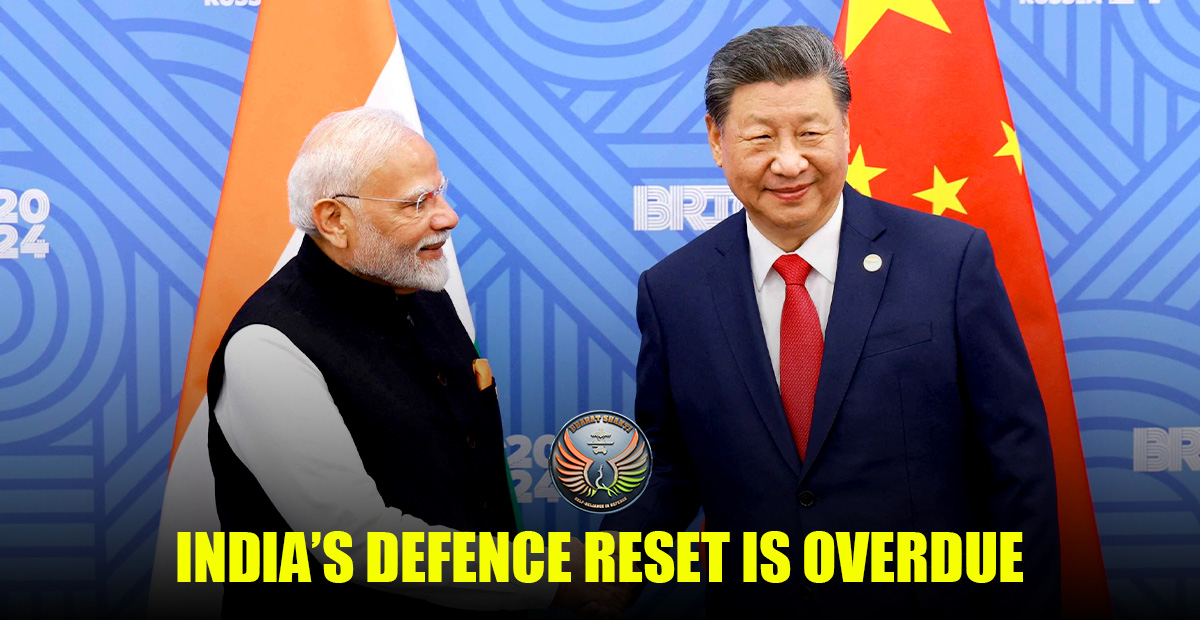
While the standoff along the LAC was cooled off after the October 24 meeting between PM Modi and Xi Jinping, followed by the January 2025 meeting between the foreign ministers and foreign secretaries, the suspicion and trust deficit persist, mandating incessant deployment of additional troops on either side. To make matters worse, China renamed 27 places in Arunachal Pradesh (the fifth list since 2017) in May 2025, following its intervention to omit “The Resistance Front” (UN 1267) from the UNSC statement on April 25.
Trade stress has forced both sides to make incremental concessions, although China continues to hold back rare earth magnets, insisting on end-user certification, which severely impacts electric automobiles. China will also be smarting from the failure of its equipment in Pakistan during the 88-hour air skirmish, both on the ground and in the air. There is internal turmoil within the Chinese Communist Party, with reports of a likely leadership change. It is afflicted by economic slowdown, unemployment, demographic decline, and the increasing militarisation of the Indo-Pacific, forcing a recasting of its security, border diplomacy, tech and industrial policy, and market reforms, as enunciated in China’s National Security in the New Era, released in May 2025. India will have to calibrate its strategy along the LAC while continuing trade and other areas of strategic convergence, until alternatives, especially intermediaries in pharmaceuticals and rare earths, are found.
Indo-Russia Relations
Despite the long-standing relationship between India and Russia, and especially India’s unequivocal support during the ongoing Russia-Ukraine war, Russia’s subdued support is particularly disheartening. It may have more to do with resetting its relations with the US and constrained dependence on China due to the war in Ukraine. It is time for India to convey its disquiet subtly, that its support can’t be taken for granted.
The Troubled Neighbourhood
The neighbourhood has been in persistent turmoil. While India has reached out to Sri Lanka and the Maldives in times of their economic distress, the unelected Advisor to the Government of Bangladesh has left no stone unturned to poke India in the eye with greater alignment towards China and Pakistan. The situation in Myanmar remains delicate and fluid, with both China and the US trying to navigate troubled waters. The pro-democracy movement in Nepal is gathering momentum to the discomfiture of an already fragile government under KP Sharma Oli. A multifaceted, inclusive, generous, non-reciprocal, country-specific and mutually beneficial approach will assist India in remaining ahead of the curve.
Internal Challenges
Multiple internal issues have the potential to be exploited by hostile foreign elements, preventing a united approach towards key foreign policy initiatives. The situation in Manipur remains volatile, despite the imposition of President’s Rule since February 2025. Political differences tend to compromise our assertive position in the international arena, besides providing leverage to our adversaries to question our credibility. Multiple cases of espionage related to Operation Sindoor, the derailment of trains in the recent past, overground workers in Jammu and Kashmir, and the spread of an antinational narrative via the Chinese app RedNote need to be handled with maturity and firmness.
Conclusion
The situation calls for national unity and bipartisan support for key foreign policy objectives. Relations with China and Pakistan (which are likely to continue as a diffuse and deniable strategy) are unlikely to alter substantially even in the medium term. We cannot afford to be surprised by another Galwan, nor plan to fight the next skirmish with Pakistan along the lines of Operation Sindoor.
Investment in national security is more urgent than ever before. Defence expenditure will have to be nuanced on a dynamic and capability-based approach, even if it means allocating 3% or 4% of the GDP, since all other indicators of growth and prosperity are inherently linked to the nation’s security.
India must strengthen its internal stability, forge strategic partnerships, and engage in nuanced diplomacy. Recalibrating strategic autonomy, securing energy and resource sovereignty, expanding defence capabilities and nurturing economic resilience hold the key.
Let it be absolutely clear that India has arrived on the world stage as an independent, assured, ambitious, and proud nation with military and economic heft, which is only silently recognised, applauded, and admired. It will remain a threat to those whose influence it will consequently erode. Pakistan will continue to be prioritised because of its geography. Chaos and instability provide opportunities for exploitation by insidious powers.
By Maj Gen SC Mohanty

Maj Gen SC Mohanty served in the Indian Army for close to 38 years in various command and staff assignments. He played a key role in planning operations during Kargil Conflict while being posted at Drass. He is currently the Security Advisor to a key NE State.