The Cabinet Committee on Security (CCS) has cleared the acquisition of 97 additional Tejas Mk-1A fighters – a boost meant to arrest the Indian Air Force’s squadron decline. From 42 authorised squadrons, the IAF today fields only 31, projected to fall further to 29 after the MiG-21 retirement. But the question now is not just whether Hindustan Aeronautics Ltd (HAL) can deliver on time – it is whether India will even get the engines needed to build them.
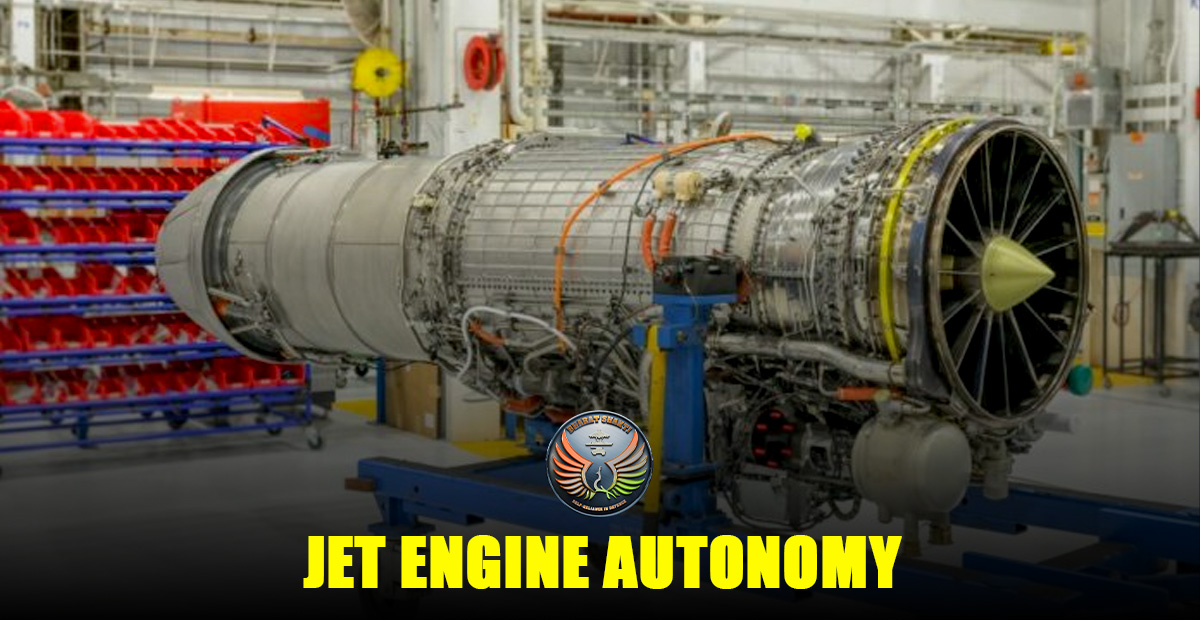
At the heart of this uncertainty lies India’s reliance on U.S.-supplied GE engines – a dependency now under strain as Washington escalates tariffs and hints at broader coercive measures.
Tariffs and Strategic Leverage
The Trump administration’s decision to impose a 25% tariff on Indian exports, ostensibly tied to New Delhi’s continued import of Russian crude, has set off alarm bells in India’s defence community. While described by White House Press Secretary Karoline Leavitt as “secondary pressure” on Moscow, the move underscores Washington’s willingness to use economic levers to shape Indian choices.
Group Captain Praveer Purohit (Retd) cautions:
“Tariffs are not sanctions in the traditional sense, but they signal intent. If this posture extends to export licensing or engine supply, India’s airpower modernisation could be severely hampered.”
A GE-Powered Bottleneck
Air Marshal Anil Khosla (Retd), former Vice Chief of Air Staff, notes the structural risk:
“Any U.S. decision to slow or suspend engine supplies would directly hit India’s LCA program. After Pokhran-II in 1998, sanctions forced redesigns and crippled timelines. A repeat today would be even more damaging.”
The Tejas Mk-1A order alone requires more than 180 F404 engines. The AMCA and Tejas Mk-2 will need the more powerful F414. A $6 billion co-production deal with GE is under negotiation – but as Khosla stresses, “licensing delays or supply freezes could derail everything.”
Russia Steps Forward – But with Limits
Amid this uncertainty, Russia has signalled readiness to deepen collaboration. Roman Babushkin, Chargé d’Affaires at the Russian Embassy in Delhi, on August 20, reiterated Moscow’s willingness to co-develop engines, radars, and mission systems for Indian projects.
Rosoboronexport has even offered engine technology transfer for AMCA. But experts remain cautious: Russian engines, though rugged and powerful, are heavier, smokier, and less fuel-efficient compared to Western designs – a trade-off India cannot overlook.
Kaveri: A Painful Lesson
India’s dependence today is rooted in the failure of the indigenous Kaveri program. Despite decades of effort, the engine could not meet thrust, durability, or altitude performance requirements. Though a “dry” variant is now being revived for the Ghatak UCAV, the manned fighter gap remains wide.
Air Marshal Khosla reflects:
“Kaveri failed because India lacked advanced metallurgy, materials, and design expertise. Without sovereign propulsion, we’re perpetually hostage to foreign supply chains.”
The Road Ahead: France’s Safran offers Joint Development
Defence planners agree that India needs a dual-track strategy – short-term diversification, long-term autonomy. France’s Safran has offered joint development of a high-thrust engine, possibly derived from the Rafale’s M88. Rolls-Royce, MTU Aero Engines, and Japanese firms have held exploratory talks.
Group Captain Purohit argues for urgency:
“India must fast-track partnerships with Safran, Rolls-Royce, MTU, and ITP Aero, but with enforceable technology transfer. An ‘Aerospace Commission’ with national priority is overdue.”
A Wake-Up Call
India’s fighter strength is already stretched. With squadron numbers dwindling and timelines slipping, propulsion sovereignty has shifted from an aspiration to an imperative.
The current tariff shock should be read not as an isolated trade dispute, but as a warning. In an era of shifting alliances and weaponised interdependence, airpower without engine autonomy is an illusion. India’s aerospace future depends not on what Washington permits, but on what New Delhi can build.
Huma Siddiqui