


As the Union Budget 2026 draws closer, attention is firmly on India’s defence outlay. The budget will be the first since Operation Sindoor, a brief but intense kinetic conflict that reshaped security calculations in the region. The question many are asking is simple: Will the government increase defence spending in response to rising threats and the evolving nature of warfare?
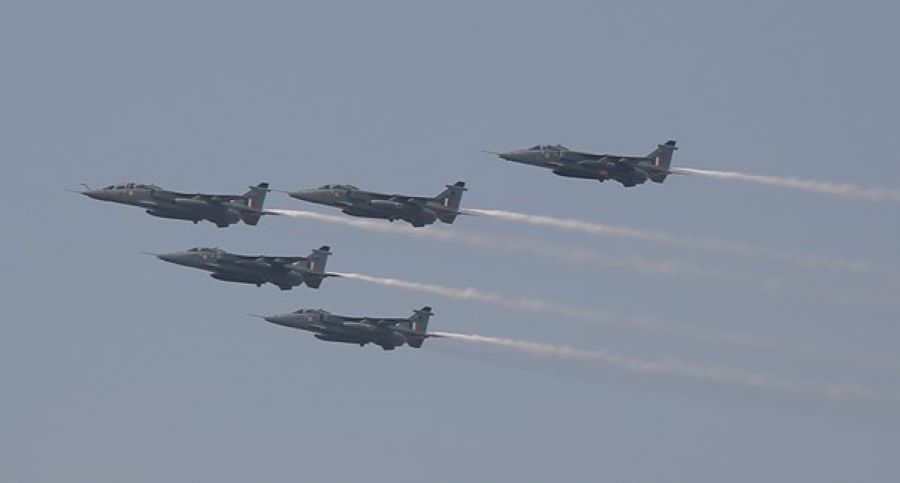
Operation Sindoor marked a sharp escalation between India and Pakistan. The three-day exchange of air strikes, including the use of drones, had military and diplomatic consequences well beyond its duration. It also underlined how quickly limited conflicts can spiral out of control in today’s environment. For India’s planners, it was a reminder that preparedness cannot be episodic.
The regional picture adds to this pressure. China’s steady backing of Pakistan, growing defence cooperation among China, Pakistan and Turkey, and increasingly hostile political signals from Bangladesh have widened India’s strategic arc of concern. The number of active and potential flashpoints is growing. In such a scenario, the scope for complacency is limited.
Against this backdrop, expectations from Budget 2026 are high. There is particular focus on whether defence spending will rise as a share of GDP and whether modernisation will receive greater priority. These two indicators matter more than headline numbers.
Ahead of the budget, Army Chief General Upendra Dwivedi struck an optimistic note. He expressed confidence that financial allocations for critical projects would not be a constraint. The Army, he said, plans to raise its capital spending from an initial Rs 33,000 crore to nearly Rs 50,000 crore this financial year. It reflects a push to fast-track procurement and technology upgrades to boost indigenous industry and modernisation.
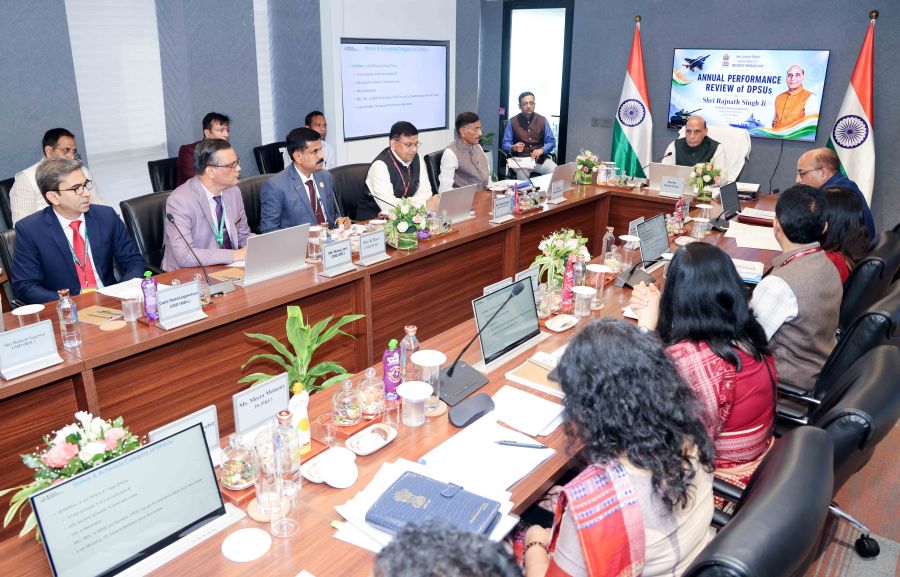
The Chief of Army Staff also revealed that 2026 has been declared the “Year of Networking and Data Centres.” The emphasis is on digital integration, real-time data sharing and network-centric operations. This follows the focus in 2025 on procurement reforms, infrastructure development and adapting to new forms of warfare, including drones and counter-drone systems. Defence Minister Rajnath Singh had earlier termed 2025 the “year of reforms,” aimed at enabling multi-domain integrated operations.
The domestic defence industry is watching these signals closely. Defence manufacturers, especially in the private sector, see budgetary clarity as critical for long-term investment. Capt. Nikunj Parashar of Sagar Defence Engineering believes sustained allocations are essential to strengthen indigenous manufacturing while maintaining readiness. He points to the upcoming revision of the Defence Acquisition Procedure as an opportunity to push phased localisation and stronger support for MSMEs.
Drone and counter-drone firms echo similar concerns. Kiran Raju of Indrajaal Drone Defence India argues that Budget 2026 should focus on scaling systems that have already proven themselves in deployments. Predictable capital allocation and faster procurement cycles, he says, will allow companies to expand production and deliver systems at scale.
From the drone manufacturing side, Sai Pattabiram of Zuppa highlights a sector in transition. The focus is shifting to indigenous components, cybersecurity and exports. He calls for design-linked incentives, targeted PLI schemes and relaxed export controls under SCOMET to help Indian firms compete globally. With the right support, he believes India can emerge as a credible alternative to Chinese drone supply chains.
The numbers from the last budget provide useful context. In 2025–26, the government allocated Rs 6.81 lakh crore to the Defence Ministry. It was a 9.5 per cent increase over the previous year and made defence the largest allocation among all ministries, accounting for nearly 13.5 per cent of the Union budget. By December 2025, capital contracts worth Rs 1.82 lakh crore had been signed for modernisation.
Yet, concerns remain. Despite the record allocation, defence spending stood at about 1.9 per cent of GDP. It is lower than the 2.1 per cent seen in 2020–21. Many experts argue that India should be spending at least 3 per cent of GDP on defence, with some advocating even higher levels given current threats. The Parliamentary Standing Committee on Defence has also recommended a 3 per cent benchmark.
The budget’s internal composition adds to the challenge. Around 46 per cent of the allocation goes towards salaries and operational expenses. Pensions account for another 24 per cent. It leaves just over a quarter, roughly 26 per cent, for modernisation. Out of the Rs 6.81 lakh crore allocated in 2025–26, only Rs 1.80 lakh crore was earmarked for capital outlay for the armed forces.
Modern warfare is becoming more technology-intensive and capital-heavy. Precision weapons, drones, electronic warfare, cyber capabilities and networked systems require sustained investment. In this context, questions persist over whether current capital allocations are adequate.
The core issue is not just how much India spends on defence, but how it spends it. A higher share of GDP, greater focus on capital expenditure and continued support for the indigenous industry will be key markers of intent. Operation Sindoor may have been brief, but its lessons are likely to shape budget priorities in the months ahead.
Ravi Shankar

Dr Ravi Shankar has over two decades of experience in communications, print journalism, electronic media, documentary film making and new media.
He makes regular appearances on national television news channels as a commentator and analyst on current and political affairs. Apart from being an acknowledged Journalist, he has been a passionate newsroom manager bringing a wide range of journalistic experience from past associations with India’s leading media conglomerates (Times of India group and India Today group) and had led global news-gathering operations at world’s biggest multimedia news agency- ANI-Reuters. He has covered Parliament extensively over the past several years. Widely traveled, he has covered several summits as part of media delegation accompanying the Indian President, Vice President, Prime Minister, External Affairs Minister and Finance Minister across Asia, Africa and Europe.