


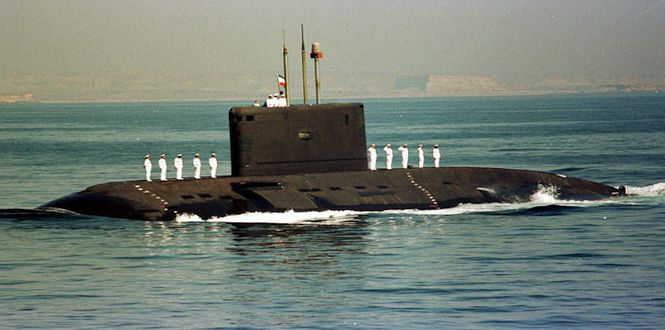
India’s journey in conventional submarine development has historically been marked by dependence on foreign designs and technology. From outright purchase of Kilo-class submarines from Russia to licensed production of German Type-209s at Mazagon Dock Ltd (MDL) in the 1980s-90s and the more recent Scorpene-class under Project 75, all major efforts have relied on foreign partners.
A comparable country in terms of conventional submarine force, South Korea, despite having started almost a decade after India, has set a notable precedent of becoming self-reliant in the arena of indigenous design and construction. After receiving technology transfer (ToT) from Germany twice, first for the Type-209 (KSS-I) and later for the Type-214 (KSS-II), Korea has successfully indigenized submarine design capabilities.
Their subsequent KSS-III program was entirely domestically designed, showcasing a clear trajectory of technological absorption. In contrast, as mentioned earlier, despite having technological collaboration with Germany, Russia and France over the last four and a half decades, India is yet to reach a stage of self-sufficiency in conventional submarines, with the upcoming P75(I) project also being dependent on foreign design.
Yet, despite foreign technology partnerships, almost all conventional submarine construction programmes have faced inordinate delays. Even the recent Scorpene program, which began in 2005, suffered significant delays. Although based on a frozen French design and without any indigenisation mandate, the project took nearly 19 years to complete, overshooting its contractual schedule of 12 years.
This historical lag in execution has exacerbated the Indian Navy’s shrinking conventional submarine force. With just 16-17 submarines, it is woefully short of its projected strength of 30. The urgency of fleet renewal must have been apparent to the Indian Navy leadership during Operation Sindoor, where deployment constraints underscored the Navy’s limited availability of modern, mission-ready submarines. If the shortage is not made up soon, growing Chinese undersea presence in the Indian Ocean Region may become a bigger challenge to the Indian Navy, a fine force currently handicapped by a low number of submarines.
As the discussion around the largest-ever conventional submarine contract under Project 75(I) likely to be awarded soon gathers pace, there is a need to assess the state of conventional submarine acquisition so far.
Project 75(I), envisioned as the successor to the Scorpene programme, is meant to bridge this critical gap by acquiring six Air-Independent Propulsion (AIP)-equipped submarines. But despite being over a decade in discussion, the programme faces yet another hurdle. It is not clear if the delay is because of reported high cost or over the government’s concern that the project may go against its own policy of requiring high indigenisation content in any future acquisition of big platforms.
The six Scorpene submarines now inducted under the 2005 programme operate on a combat management system that is supplied by the French company. The weapons, missiles, torpedoes, and sensors, which make up over 60 per cent of the cost, are all imported. If Project 75 (I) was to follow the same pattern and additionally be dependent on just one production line at Mazgaon Docks, then the Indian Navy’s plan to augment its submarine strength in double quick time is likely to remain a distant dream.
The tendering process for Project 75 (I) has gone through a lot of twists and turns of late, and finally, Mazagaon Docks’ bid in partnership with Germany’s thyssenkrupp Marine Systems (tkMS) seems to be under active consideration. The other player in the competition was Larsen and Toubro (L&T) in partnership with Navantia of Spain. However, there appears to be no further progress in the matter, giving sleepless nights to Indian Navy planners. So, what is the way out?
Aware of the urgency to acquire conventional submarines quickly, some creative solutions are called for. Fortunately, conversations with various stakeholders reveal a new line of thinking.
Decision-makers are now apparently looking beyond the standard terms and conditions of the tendering process and adopting a more pragmatic approach by engaging a broader domestic industrial ecosystem to ensure the success of this programme and a wider and deeper absorption of submarine technology in the country.
Harnessing the available capabilities and capacities of the two shortlisted Indian yards under this strategic partnership programme, i.e. MDL as the lead yard and L&T as the parallel yard, could give the much-needed impetus to the acquisition, which is the new thinking. MDL, which will also manage Scorpene follow-on orders and all retrofits in the existing Scorpene submarines concurrently, will struggle to deliver all six submarines within the 12-year schedule, especially with another capable and experienced yard (L&T’s) idling.
MDL’s experience in the Scorpene programme and L&T’s proven capabilities in strategic submarine programmes, some key decision-makers think, can prove to be a winning proposition. Not only does L&T possess the infrastructure for complex submarine construction, but it has also successfully undertaken detailed design, system integration, and indigenisation across critical systems in the past. Involving L&T in this aspect could be one way to reduce costs, as an indigenous company’s costs would invariably be lower than those quoted by a foreign company.
By integrating the two key Yards into the design transfer process, India can ensure that the learning is retained within its industrial base, building capacity for the next indigenous programmes such as P-76.
In sum, there is a compelling case for splitting the P75(I) order between MDL and L&T, with both constructing three submarines each. It would not only speed up delivery but also align with the 1999 CCS-approved 30-year submarine building plan, which envisioned two production lines to ensure continuity and technological absorption. This dual-yard model also mirrors global best practices, seen in the US, Japan and South Korea, where concurrency and competition between shipyards have helped meet tight timelines without compromising quality
Moreover, since P75(I) involves new design elements and a 60 per cent indigenisation target, a parallel production model between MDL and L&T could shorten delivery timelines by at least three years, helping bridge the Navy’s force level deficit faster while also saving cost.
Project 75(I) is not just another acquisition-it is India’s final window to import and its readiness to internalise critical submarine design capability. For the programme to succeed on time and within budget and meet the larger objective of achieving self-reliance in submarine technology, India must rethink its execution model.
While Project 75(I) falls under the Strategic Partnership framework, this is not merely about public vs private enterprise. It is about accelerating delivery, effectively absorbing design knowledge, and ensuring the Navy receives the submarines it desperately needs before it is too late. The path to self-reliance lies not in exclusivity but in collaboration.
Nitin A. Gokhale

Author, thought leader and one of South Asia's leading strategic analysts, Nitin A. Gokhale has forty years of rich and varied experience behind him as a conflict reporter, Editor, author and now a media entrepreneur who owns and curates two important digital platforms, BharatShakti.in and StratNewsGlobal.com focusing on national security, strategic affairs and foreign policy matters.
At the beginning of his long and distinguished career, Gokhale has lived and reported from India’s North-east for 23 years, writing and analysing various insurgencies in the region, been on the ground at Kargil in the summer of 1999 during the India-Pakistan war, and also brought live reports from Sri Lanka’s Eelam War IV between 2006-2009.
Author of over a dozen books on wars, insurgencies and conflicts, Gokhale relocated to Delhi in 2006, was Security and Strategic Affairs Editor at NDTV, a leading Indian broadcaster for nine years, before launching in 2015 his own digital properties.
An alumni of the Asia-Pacific Centre for Security Studies in Hawaii, Gokhale now writes, lectures and analyses security and strategic matters in Indo-Pacific and travels regularly to US, Europe, South and South-East Asia to speak at various international seminars and conferences.
Gokhale also teaches at India’s Defence Services Staff College (DSSC), the three war colleges, India's National Defence College, College of Defence Management and the intelligence schools of both the R&AW and Intelligence Bureau.
He tweets at @nitingokhale