China turned the brief but intense India–Pakistan military confrontation in May into a live proving ground for its latest weapon systems and then launched a coordinated disinformation campaign aimed at undermining the French-built Rafale fighter and boosting its own defence exports, a US congressional report has revealed.
The US-China Economic and Security Review Commission, in its annual assessment, said Beijing “opportunistically leveraged the conflict” not only to assess the combat performance of platforms such as the J-10C fighter, HQ-9 air defence system and PL-15 air-to-air missile, but also to aggressively market those results to potential customers. At the same time, Chinese state-linked networks ran online propaganda using fake social media accounts to circulate AI-generated images claiming that Rafales operated by India had been shot down by Pakistan using Chinese systems.
Beijing Seized the Moment to Market Its Weapons
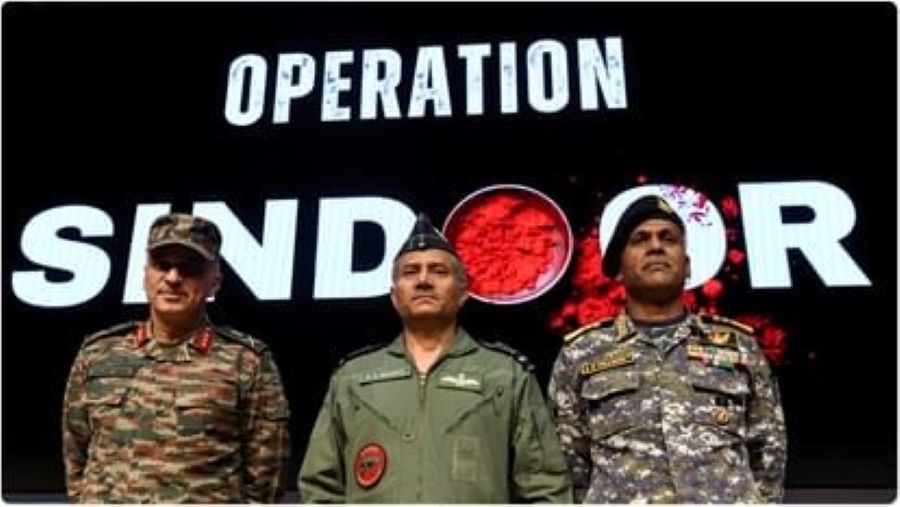
The India-Pakistan clash erupted after India launched Operation Sindoor in May, targeting terrorist infrastructure in Pakistan and Pakistan-occupied Kashmir following the Pahalgam massacre. The brief but intense exchange saw Pakistan launch drone strikes, to which India responded with attacks on multiple military installations and airfields across the border.
Pakistan claimed it shot down five Indian fighter jets, including Rafales, though New Delhi has never confirmed the loss of any aircraft of that type. Chief of Defence Staff Gen. Anil Chauhan acknowledged that India lost some aircraft during the fighting, but Indian forces have denied losing Rafales.
In October, Air Chief Marshal Amar Preet Singh claimed that the Indian Air Force destroyed both Chinese-made jets and US-built F-16s, including a large airborne surveillance aircraf during clashes with Pakistan during the conflict.
Chinese Systems Saw First Combat Use, Says US Panel
The US report said the conflict became a real-time testing ground for China’s modern military systems. Platforms such as the HQ-9 air defence system, PL-15 beyond-visual-range air-to-air missiles and J-10C fighter jets saw their first active combat deployment, allowing Beijing to assess performance in real operational conditions.
It noted that while calling the confrontation a “proxy war” would be an overstatement, Pakistan’s battlefield success served China’s strategic interests, including testing its systems against India and boosting its global defence sales.
Pakistan’s leaders openly credited Chinese platforms for claimed shoot downs of Indian aircraft. Addressing parliament in May, Pakistani Deputy Prime Minister and Foreign Minister Ishaq Dar stated that J-10C jets “shot down Indian Rafales” during the engagement.
Disinformation Drive Targeted Rafale Export Markets
The US report said Chinese embassies aggressively highlighted alleged successes of Chinese systems in the conflict to bolster international arms sales. It cited French intelligence claiming that China’s AI-based online propaganda campaign was explicitly aimed at disrupting Rafale sales in favour of Beijing’s J-35 fifth-generation fighter
The report said Chinese diplomats even succeeded in convincing Indonesia to suspend a Rafale purchase already under discussion, helping China expand its defence footprint in the region.
Pakistan’s Dependence on Chinese Arms Deepening
Pakistan remains one of China’s largest defence customers. In June, Beijing reportedly offered to sell Islamabad 40 J-35 fighters, KJ-500 airborne early warning aircraft and ballistic missile defence systems.
According to the Stockholm International Peace Research Institute, Chinese equipment accounted for 81 per cent of Pakistan’s defence imports in the last five years.
Report Flags Continued India-China Border Asymmetry
Regarding the broader bilateral relationship, the report noted that an “asymmetry” persists in India’s and China’s approaches to resolving border tensions. While China attempts to compartmentalise the issue to enable cooperation in other areas such as trade, India seeks a durable settlement before moving forward.
The commission said New Delhi has, in recent years, demonstrated a clearer recognition of the military threat posed by China along the Line of Actual Control.
Team BharatShakti