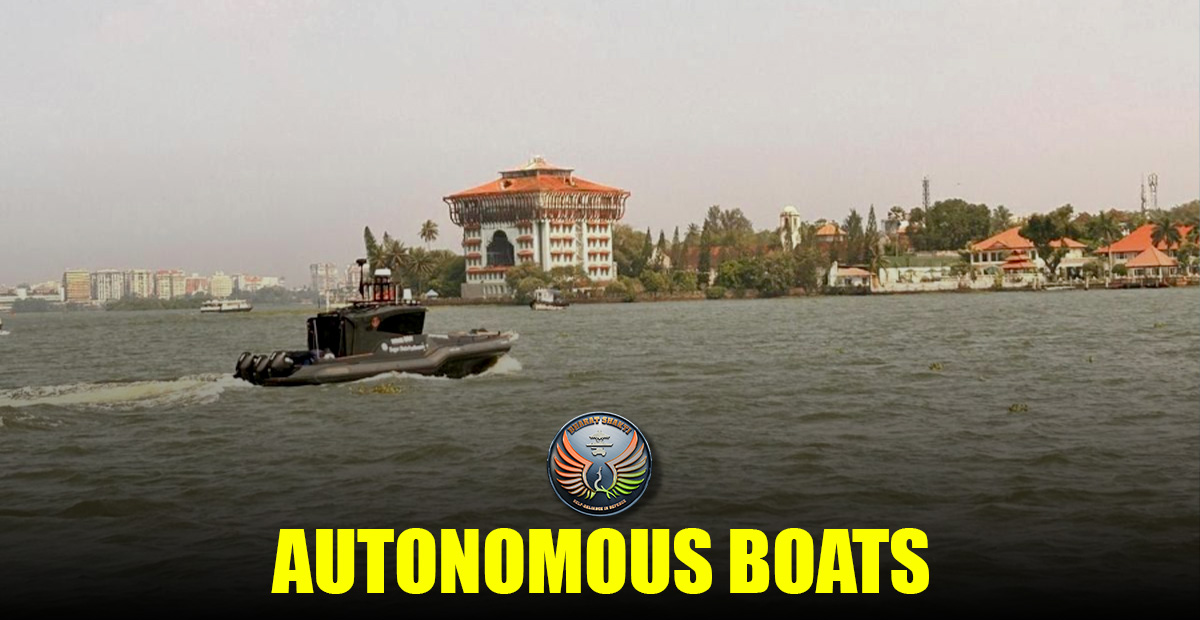
In a significant move towards modernising naval warfare and enhancing India’s maritime surveillance capabilities, the Ministry of Defence earlier this week cleared the procurement of Compact Autonomous Surface Craft (CASC) for the Indian Navy. These crewless vessels mark a technological leap in how India is preparing to tackle underwater threats, particularly enemy submarines, in a rapidly evolving security environment.
What Are Compact Autonomous Surface Craft (CASC)?
Simply put, CASCs are small, unmanned boats equipped with sensors, communication systems, and weapons, designed to operate without a human crew. These vessels can perform a range of missions, including reconnaissance, threat detection, target tracking, and even offensive operations, all while minimising human risk.
Once inducted, these drone boats will provide a critical new edge in anti-submarine warfare (ASW), a field that is becoming increasingly vital amid rising underwater threats in the Indian Ocean Region.
Why Does India Need Autonomous Boats Now?
Traditional naval operations, especially submarine hunting, rely on manned patrol vessels and aircraft. While effective, these are resource-heavy and limited in endurance. Autonomous boats, on the other hand, can operate for extended periods, cover vast maritime areas, and be deployed in high-risk zones without endangering personnel.
These vessels are expected to boost coastal and open-sea surveillance capabilities by: significantly
- Detecting and tracking submarines using sonar and other onboard sensors.
- Operating in both unmanned and optionally manned configurations.
- Carrying weapons to neutralise threats independently if required.
Notably, these boats are being developed indigenously under the Atmanirbhar Bharat initiative, supporting domestic defence manufacturing while addressing strategic needs.
A Tested Technology
The Indian Navy has already tested prototypes of autonomous boats at Swavlamban 2024, a defence innovation showcase held in New Delhi. The trials demonstrated their potential to operate in both surveillance and offensive roles, especially in areas with limited naval presence.
With enhanced range and endurance compared to conventional patrol boats, CASCs will play a key role in monitoring choke points, coastlines, and high-risk maritime corridors.
The Global Drone Boat Race
India’s move comes amid a growing international focus on unmanned naval platforms.
- China has already integrated several unmanned vessels into its navy. One of its larger models, a 200-ton drone ship, can operate in high-sea states and is capable of carrying missiles and torpedoes. China has also showcased versatile platforms like the 15-meter-long JARI Multi-Purpose Unmanned Combat Vessel, capable of surface, air, and subsurface warfare.
- The United States has taken unmanned naval warfare a step further with platforms like the Sea Hunter and the Large Unmanned Surface Vessel (LUSV), equipped with missile launch systems and long-range surveillance tools. Its fleet also includes Medium Unmanned Surface Vessels (MUSVs) and Extra-Large Unmanned Undersea Vehicles (XLUUVs), marking a shift toward fully autonomous battle groups.
What This Means for India’s Naval Strategy
India faces growing maritime security challenges, ranging from increased Chinese naval activity in the Indian Ocean to potential conflict scenarios across two fronts. In such a context, the introduction of Compact Autonomous Surface Craft is a strategic step forward.
By integrating AI-enabled, sensor-rich, unmanned platforms into its arsenal, the Indian Navy is:
- Strengthening its underwater threat detection and neutralisation capability.
- Enhancing its ability to conduct persistent surveillance in remote or contested waters.
- Reducing the risk to human life in dangerous or high-stakes operations.
In the years ahead, these autonomous boats could become the backbone of India’s distributed naval warfare strategy, capable of working independently or in swarms to counter enemy submarines, monitor hostile activities, and secure critical maritime zones.
Team BharatShakti