Nearly four weeks into the US–Iran war, the battlefield picture is still contested, often obscured by official denials, selective disclosures and outright propaganda. But a composite reading of military reporting, satellite imagery, and credible media investigations points to a harder truth: the United States has absorbed significant material and operational setbacks, even as it retains overall combat capability.
Fog of War and Competing Claims
On March 26, Iran claimed it had shot down a US F/A-18 near Chabahar, releasing video footage as proof. US Central Command (CENTCOM) dismissed the claim as false. The episode is emblematic of this conflict, claims and counterclaims, with independent verification often lagging behind.
Both Washington and Tel Aviv tightly control information flows around battlefield losses. Israel operates a formal military censor; the US relies on classification and delayed disclosure. Yet fragments have surfaced.
Over 20 US Air Force Aircraft Damaged or Destroyed
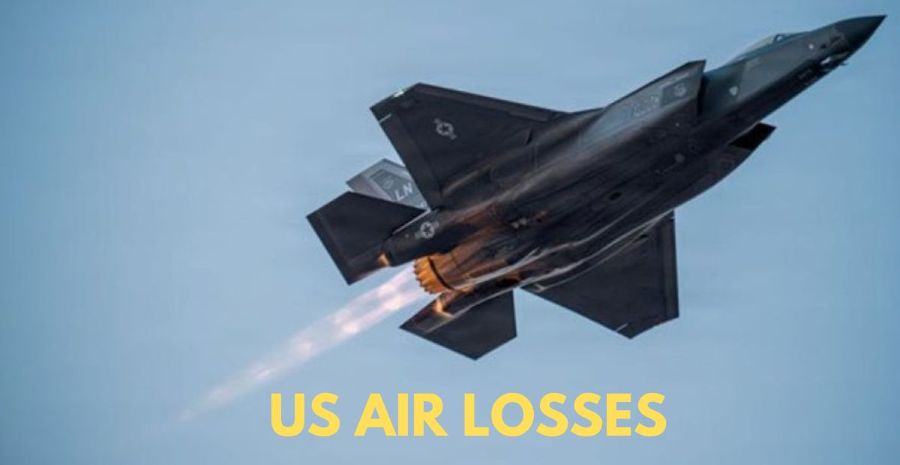
Reporting by Air & Space Forces Magazine suggests that roughly 20 US Air Force aircraft were damaged or destroyed within the first three weeks. Among the most notable incidents:
- One F-35A stealth fighter damaged by Iranian ground fire
- Three F-15E Strike Eagles lost to friendly fire over Kuwait
- One KC-135 tanker destroyed in a mid-air collision; another damaged
- Five KC-135s hit in Iranian strikes on airbases
- At least 12 MQ-9 Reaper drones downed (not formally acknowledged)
- One UH-60 helicopter damaged by a first-person-view (FPV) drone
Individually, these losses are manageable for a force of the US military’s scale. Collectively, they point to a battlespace where even high-end platforms are increasingly vulnerable to air defences, electronic warfare, and low-cost drones.
17 US Military Bases Under Fire
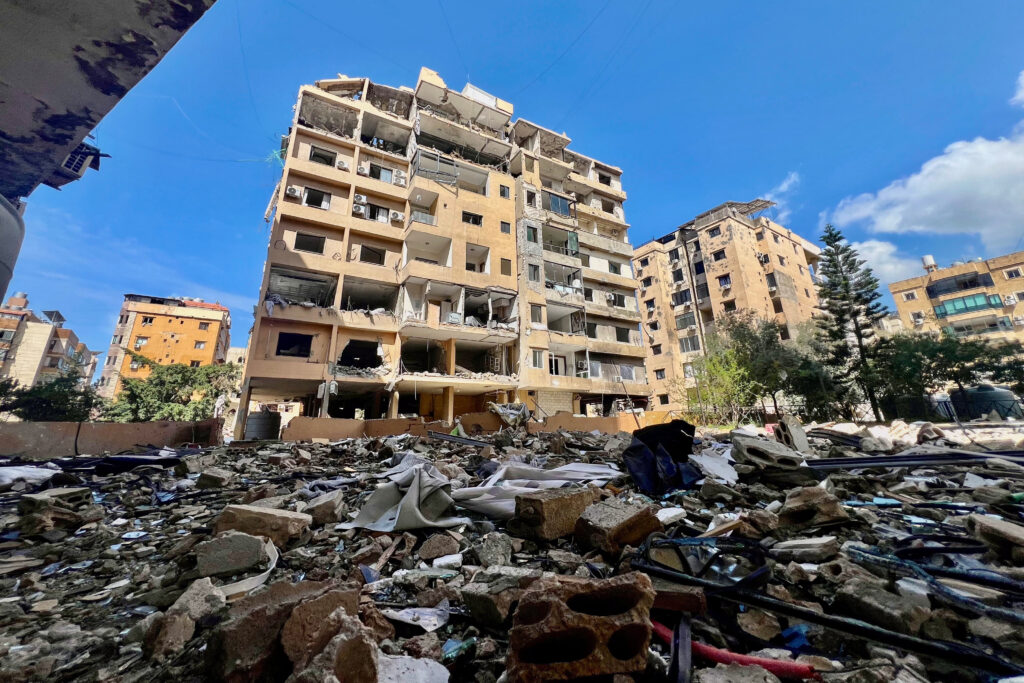
Far more consequential has been the systematic targeting of US bases across the Gulf.
A New York Times analysis, based on satellite imagery and verified strike footage, identified at least 17 US sites hit in the first half of March, including 11 military bases, nearly half of Washington’s regional footprint. Several were struck multiple times.
Kuwait appears to have taken the brunt:
- Ali Al Salem Air Base: extensive structural damage
- Camp Buehring: repeated strikes on communications and facilities
- Camp Arifjan: damage to satellite communications infrastructure
- Shuaiba Port: partial structural collapse after a drone strike
Elsewhere:
- Al Udeid Air Base in Qatar—hub of US air operations—sustained repeated hits
- The US Fifth Fleet headquarters in Bahrain suffered damage to buildings and communications systems
- Prince Sultan Air Base in Saudi Arabia saw strikes on refuelling and communications assets
- Al Dhafra in the UAE and facilities linked to THAAD systems were targeted
- In Jordan, a high-value air defence radar was destroyed
- Erbil in Iraq was also struck early in the campaign
Damage ranged from collapsed roofs and destroyed hangars to the loss of sensitive radars, satellite links and air-defence nodes. Some of these systems, like THAAD radars, run into hundreds of millions of dollars apiece.
Cost and Disruption
Early estimates suggest roughly $800 million in damage to US-used military infrastructure within the first two weeks alone. The more enduring cost, however, is operational disruption.
Several bases, especially in Kuwait, have been rendered partially or wholly unusable. Thousands of US personnel have been dispersed, with reports indicating troops operating out of hotels, office spaces, and temporary facilities across the Gulf and even in Europe.
Air operations continue, but the logistics chain has been stretched and decentralised. The war has forced a shift from concentrated basing to a more distributed, improvised posture, less efficient, but harder to target.
Casualties
US officials have acknowledged 13 personnel killed and nearly 300 wounded so far, many in missile and drone strikes on fixed installations. While not catastrophic in conventional terms, the casualty figures underscore the vulnerability of static bases in a missile-saturated environment.
Curious Case of Aircraft Carriers Pull Back
At sea, the optics are no less troubling.
The US deployed two carrier strike groups to the region. Neither is now operating close to the Iranian littoral.
The USS Gerald R. Ford, the Navy’s most advanced and expensive carrier, left the Red Sea following a reported onboard fire. Its departure coincided with renewed scrutiny of persistent technical issues flagged in Pentagon testing: unreliable launch systems, radar inconsistencies, and unresolved weapons elevator problems. Questions about combat readiness have lingered for years; the war has brought them into sharper focus.
The USS Abraham Lincoln has also repositioned significantly farther from the Iranian coast. While the Pentagon describes this as a routine tactical adjustment, the shift places both carriers beyond Iran’s effective anti-ship missile range.
In effect, the US entered the conflict with two carriers in theatre and now has neither operating in immediate proximity to the fight.
Strategic Takeaway
None of these amounts to a strategic defeat for the United States. Its airpower remains intact, its global logistics network is unmatched, and it continues to strike Iranian targets.
But the war has exposed limits that are harder to ignore.
Iran has demonstrated an ability to impose costs asymmetrically, through missiles, drones, and persistent targeting of fixed infrastructure. US bases once considered secure are now within reach. High-end platforms are not immune. Even carrier groups, long symbols of American dominance, are being pushed to operate at a distance.
What was intended as a demonstration of overwhelming force has, at the very least, revealed a more contested battlespace, one where technological superiority does not guarantee invulnerability, and where the price of presence is rising.
Ravi Shankar

Dr Ravi Shankar has over two decades of experience in communications, print journalism, electronic media, documentary film making and new media.
He makes regular appearances on national television news channels as a commentator and analyst on current and political affairs. Apart from being an acknowledged Journalist, he has been a passionate newsroom manager bringing a wide range of journalistic experience from past associations with India’s leading media conglomerates (Times of India group and India Today group) and had led global news-gathering operations at world’s biggest multimedia news agency- ANI-Reuters. He has covered Parliament extensively over the past several years. Widely traveled, he has covered several summits as part of media delegation accompanying the Indian President, Vice President, Prime Minister, External Affairs Minister and Finance Minister across Asia, Africa and Europe.