



India’s national security decision-makers have three or four major decisions to make in the coming months to acquire critical platforms for the three Services. As soon as the Monsoon session of the Parliament gets over, the Ministry of Defence (MoD) will likely push the process to build six conventional submarines under what is called the P-75 (I) programme. German OEM ThyssenKrupp Marine Systems – tkMS – and Indian shipyard Mazagaon Docks Ltd (MDL) have together emerged as the front runners in the long-delayed programme.
Besides, the government must take a quick call on the demand put forward by the Indian Air Force (IAF) to shore up its fighter jets’ strength. The decision to greenlight the development and manufacturing of a fighter jet engine for the Advanced Medium Combat Jet (AMCA) in India is also due soon. Three engine makers, US company General Electric (GE), the UK’s Rolls-Royce and the French Safran have been in contention to grab the opportunity to power India’s futuristic 5th Generation AMCA.
As detailed here (https://bharatshakti.in/a-possible-way-out-of-indias-submarine-acquisition-conundrum/), the Indian Navy wants six conventional submarines built as soon as possible, given its already depleted submarine strength. Moreover, India has to keep in mind that the Pakistani navy is set to acquire more submarines from China over the next couple of years. Once the P-75 (I) programme gets going, there is a distinct possibility that the same programme will get to build three additional submarines under a repeat order, according to indications available currently.
Fast-Tracking Two More Squadrons of Rafale Acquisitions
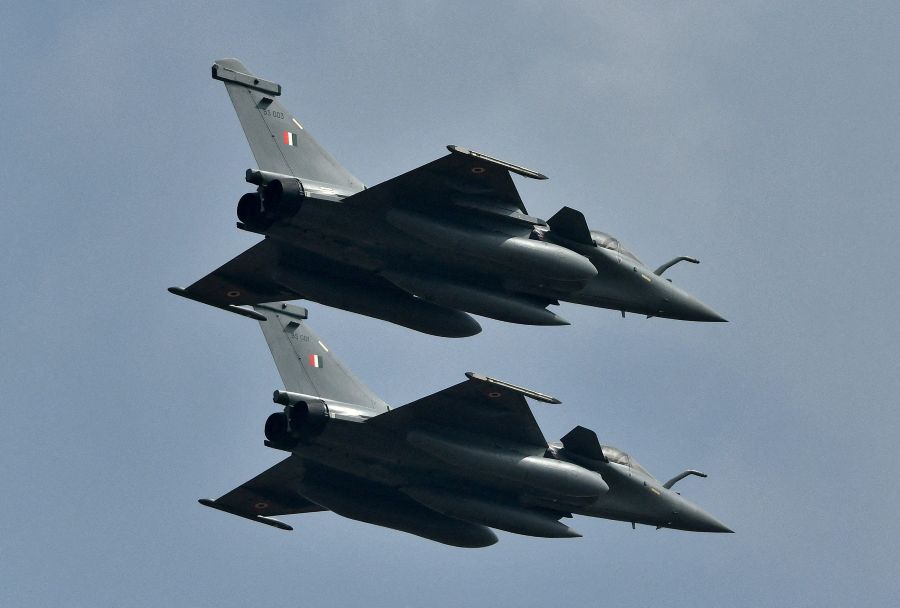
During the post-Operation Sindoor analysis, the Indian military leadership has identified critical gaps in its arsenal and has moved to fast-track some of the earlier proposals. One such step would be to decide on acquiring at least two more squadrons (36) of the Rafale fighter jets from France for the IAF, as an interim step to make up for the depleting numbers of fighter squadrons. As reported earlier, the Air Force leadership, aware of the delays and difficulties in going through another long-drawn process to acquire fighter jets through a multi-vendor contest, is in favour of acquiring another tranche of Rafales, first bought under a 2016 contract. It makes sense operationally and is also fiscally prudent since the two squadrons of Rafales have been well integrated into the IAF by now. Moreover, the infrastructure built for the first 36 planes can accommodate another 36, saving substantial cost to the exchequer.
Jet Engine Collaboration with Safran: Key to India’s AMCA Project
Linked to this decision is the government’s need to finalise a possible agreement with Safran of France to design, develop and manufacture an advanced jet engine jointly in India with co-ownership of the IP thrown in. This engine will potentially power India’s futuristic 5th-generation indigenous fighter, AMCA. France, which has emerged as India’s most trusted and least troublesome defence partner, would like to link the transfer of technology for an original jet engine to India deciding to buy outright the Rafale fighters. So far, however, there is no clear roadmap for such an arrangement.
However, the government is also keen to explore the possibility of squeezing the timelines for the AMCA. Indian defence majors and foreign OEMs are currently in multiple talks to form consortia that will build the AMCA over the next decade. The IAF is also in need of a fresh induction of a medium transport aircraft fleet to replace its ageing An-32 fleet and some IL-76 planes as well.
In the wake of Op Sindoor, the Defence Acquisition Council or DAC has already approved several key procurements. On August 5, it approved military procurement proposals valued at Rs 67,000 crore. The meeting, chaired by Defence Minister Rajnath Singh, focused on equipping the Army, Navy, and Air Force with cutting-edge systems and technologies vital for modern warfare .
Read: Govt Clears Defence Proposals Worth Rs 67,000 Crore to Enhance Operational Capabilities
As the world hurtles towards more chaos and realignments amongst big powers loom large, a strong military, capable of meeting a myriad of challenges, is a sine qua non for a rising economy such as India.
Nitin A. Gokhale

Author, thought leader and one of South Asia's leading strategic analysts, Nitin A. Gokhale has forty years of rich and varied experience behind him as a conflict reporter, Editor, author and now a media entrepreneur who owns and curates two important digital platforms, BharatShakti.in and StratNewsGlobal.com focusing on national security, strategic affairs and foreign policy matters.
At the beginning of his long and distinguished career, Gokhale has lived and reported from India’s North-east for 23 years, writing and analysing various insurgencies in the region, been on the ground at Kargil in the summer of 1999 during the India-Pakistan war, and also brought live reports from Sri Lanka’s Eelam War IV between 2006-2009.
Author of over a dozen books on wars, insurgencies and conflicts, Gokhale relocated to Delhi in 2006, was Security and Strategic Affairs Editor at NDTV, a leading Indian broadcaster for nine years, before launching in 2015 his own digital properties.
An alumni of the Asia-Pacific Centre for Security Studies in Hawaii, Gokhale now writes, lectures and analyses security and strategic matters in Indo-Pacific and travels regularly to US, Europe, South and South-East Asia to speak at various international seminars and conferences.
Gokhale also teaches at India’s Defence Services Staff College (DSSC), the three war colleges, India's National Defence College, College of Defence Management and the intelligence schools of both the R&AW and Intelligence Bureau.
He tweets at @nitingokhale


