



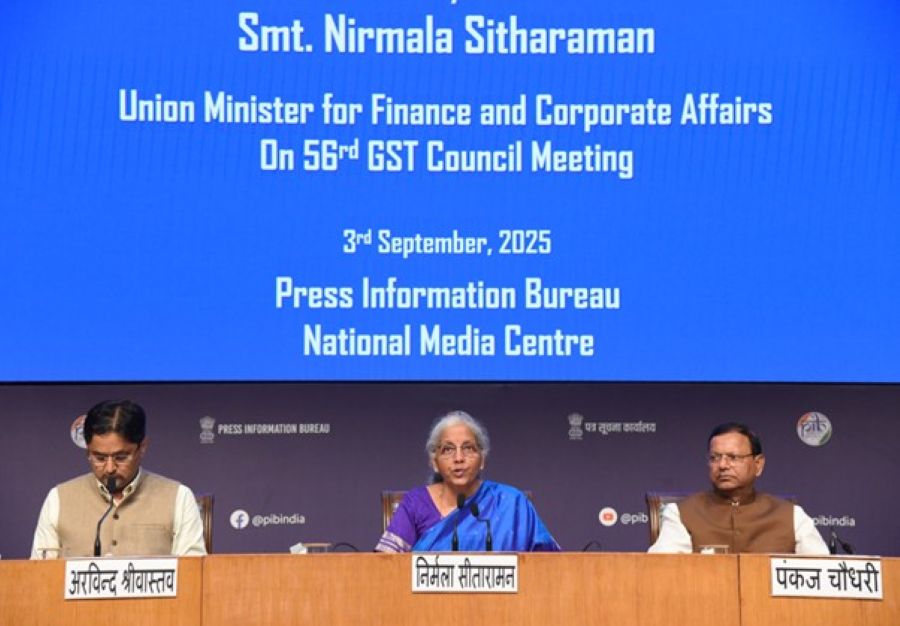
The Goods and Services Tax (GST) Council has brought sweeping reforms across various sectors, with the defence industry emerging as one of the biggest beneficiaries. The Council, led by Finance Minister Nirmala Sitharaman, has revised the GST rates by eliminating the 12% and 28% slabs. They have introduced a new two-tier tax rate of 5% and 18% for various items. This change is also designed to provide targeted relief to sectors that align with national priorities, particularly focusing on defence and indigenous manufacturing. The revised rates will take effect on September 22.
Zero GST on Key Defence Equipment
As part of a broader push to promote the ‘Make in India’ and ‘Atmanirbhar Bharat’ initiatives, the government has finally removed GST on a range of critical defence equipment and technologies. Previously taxed at 18%, these items will now attract 0% GST, significantly reducing acquisition and production costs for the armed forces and domestic manufacturers alike.
Defence items now exempt from GST include:
Military transport aircraft such as the C-130 (imported from the U.S.) and C-295 (being co-produced by Airbus and Tata in Vadodara)
Remotely Piloted Aircraft (RPA) for military use: Ship-launched missiles; Flight motion simulators; Underwater vessels and submersibles; Ejection seats used in fighter jets; 100 mm caliber rockets; Deep Submergence Rescue Vessels (DSRVs); Spare parts for guns and rifles, testing equipment; and Software-defined radio communication systems.
Reduced GST Rates on Other Defence-Linked Technologies
In addition to exemptions, several items have seen their GST rates reduced:
From 28% to 5%: Drones equipped with cameras
From 12% to 5%: Walkie-talkies; Tanks and armoured vehicles
These tax revisions are aimed at lowering the cost of critical technology and fostering greater participation from Indian manufacturers in defence production.
Atmanirbharta and Modernisation
Defence Minister Rajnath Singh hailed the move as a “bold decision” that aligns with India’s larger strategic goals.
“The Government of India under the leadership of Prime Minister Narendra Modi has announced next-generation GST reforms to bring relief across various sectors. This decision will significantly strengthen India’s self-reliance under the Atmanirbhar Bharat mission,” Singh stated in a post on Instagram.
Industry Reaction: A Welcome Move for Innovation and Scale
The defence and drone manufacturing sectors have responded positively to the tax reforms, calling them a timely intervention that will unlock innovation and domestic capability.
Ankit Mehta, Co-founder & CEO of ideaForge, said: “The GST rationalisation is a welcome step and will significantly boost India’s UAV capabilities across both defence and commercial sectors. With military UAVs now taxed at 0% and commercial drones at 5%, Indian manufacturers are better positioned to scale operations and deliver cost-effective, high-performance drones. This is a pivotal step toward aligning with the government’s defence modernisation goals and strengthening indigenous production.”
He added that the reforms would accelerate adoption in mission-critical domains like border surveillance, disaster response, mapping, and precision agriculture.
Sai Pattabiram, Founder & MD of Zuppa Geo Navigation Technologies, also praised the reform:
“The GST revision for the drone industry builds on earlier efforts to indigenise drone component development, particularly in control and communication electronics. It is a timely boost for local manufacturing and innovation. Raising customs duties on imported drone components, alongside this GST cut, would further incentivise domestic investment and reduce reliance on foreign imports.”
Strategic Tax Relief, Strategic Outcomes
The GST reforms announced in the 56th Council meeting are more than just fiscal adjustments – they are strategic enablers. By easing the tax burden on defence equipment and technologies, the government has taken a decisive step toward bolstering national security, promoting indigenous innovation, and accelerating self-reliance in one of the most critical sectors of the economy.
Huma Siddiqui