


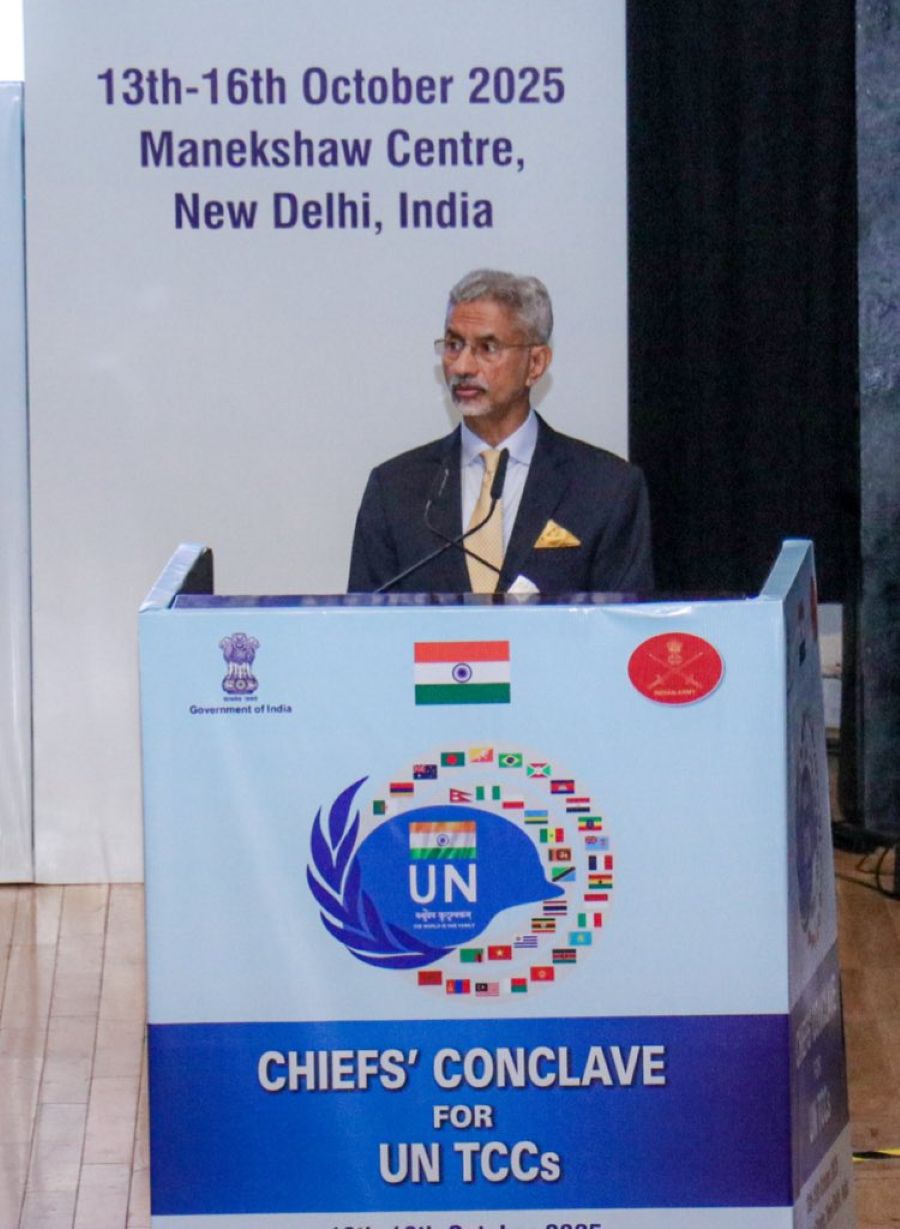
In a powerful call for change, India’s External Affairs Minister S Jaishankar declared that the United Nations must undergo urgent reform to remain credible and effective — starting with giving the Global South a decisive voice in peacekeeping and international security.
“The UN still reflects the world of 1945, not 2025,” Jaishankar said, warning that institutions which fail to adapt risk becoming irrelevant. Speaking at the United Nations Troop Contributing Countries Chiefs’ Conclave, he made a direct appeal to rethink global peace operations in light of today’s geopolitical and security realities — especially those affecting developing nations.
India stated that the majority of conflicts today are concentrated in the Global South, yet the regions most impacted have the least influence over how peacekeeping is designed and implemented. The Minister called for not just more inclusive representation, but for a complete shift in how peacekeeping is structured — from mandate design to resource allocation.
Global South at the Heart of Peacekeeping Reform
Framing India’s peacekeeping philosophy through its civilisational worldview of Vasudhaiva Kutumbha, the Minister stressed that peacekeeping must reflect fairness, justice, and equality. These values, he argued, are not abstract ideals but essential to sustainable peace.
India urged that peacekeeping mandates be rooted in the realities on the ground, particularly in the developing world. “The requirements of the Global South are distinct. They call for regional and even local solutions,” he stated.
He also criticised the slow pace of UN Security Council reform, which has allowed historical injustices to persist. He reiterated India’s willingness to shoulder greater responsibility in a reformed, representative United Nations.
A New Peacekeeping Paradigm: India’s 7-Point Agenda
In a detailed roadmap for the future of peacekeeping, the Minister proposed seven key changes:
- Inclusive Mandate Design – Host nations and troop contributors must be involved from the beginning.
- Mandates Matched with Resources – Missions must be adequately funded to meet their objectives.
- Realistic and Clear Objectives – Vague or overambitious mandates only weaken missions.
- Host Nation Responsibility – Protecting civilians begins with accountable local governance.
- Technology as a Force Multiplier – India pledged support to enhance digital and operational capabilities.
- Strategic Communication & ICT – To counter misinformation and improve engagement.
- Peacekeeper Safety – Attacks on peacekeepers must trigger swift justice and global condemnation.
Adapting to 21st Century Conflicts
Highlighting the evolution of global conflict from conventional wars to irregular, asymmetric threats, the Minister noted that peacekeepers today face a far more complex battlefield. With non-state actors, terrorist groups, and cyber warfare erasing traditional lines, the peacekeeping model must be reimagined.
He called for better-prepared missions, advanced training, investment in surveillance and cybersecurity, and stronger personal protection for peacekeepers. “The enemy no longer wears a uniform and respects no rules,” he cautioned.
India’s Legacy and Leadership
India reaffirmed its status as the largest troop-contributing country in UN history, having deployed over 300,000 personnel across decades. Indian peacekeepers are currently active in conflict zones such as South Sudan, Lebanon, Syria, and the DRC, often operating under the harshest conditions.
Jaishankar also highlighted India’s pioneering role in promoting women in peacekeeping. From hosting the first Global South conference for women peacekeepers in February to organising specialised UN training programs, India is proving that gender-inclusive peace operations are not optional but essential. “The question is no longer whether women can do peacekeeping, but whether peacekeeping can succeed without them,” he said.
The Road Ahead: Unity, Reform, and Responsibility
As UN peacekeeping faces budget constraints and operational challenges, India called for leaner, more focused missions and the phasing out of outdated deployments. But above all, the message was clear: a reformed multilateral system must reflect today’s world, not the post-war order of the past.
“Peace anywhere strengthens peace everywhere,” the Minister concluded. “The Global South is not just a frontline contributor to peacekeeping; it must be a full partner in shaping its future.”
Team BharatShakti