


As global conflicts become increasingly volatile and politically charged, the possibility of deploying UN peacekeepers to regions like Ukraine or Gaza remains remote, a senior Indian defence official stated Wednesday. The assessment reflects not only operational complexities but also geopolitical deadlock at the highest levels of the United Nations.
“It is highly unlikely that UN peacekeeping forces will be deployed in Ukraine or Gaza,” said Vishwesh Negi, Joint Secretary (International Cooperation), Ministry of Defence, in response to media questions.
“Given the composition of the UN Security Council, such a consensus is difficult to imagine at this point,” he added.
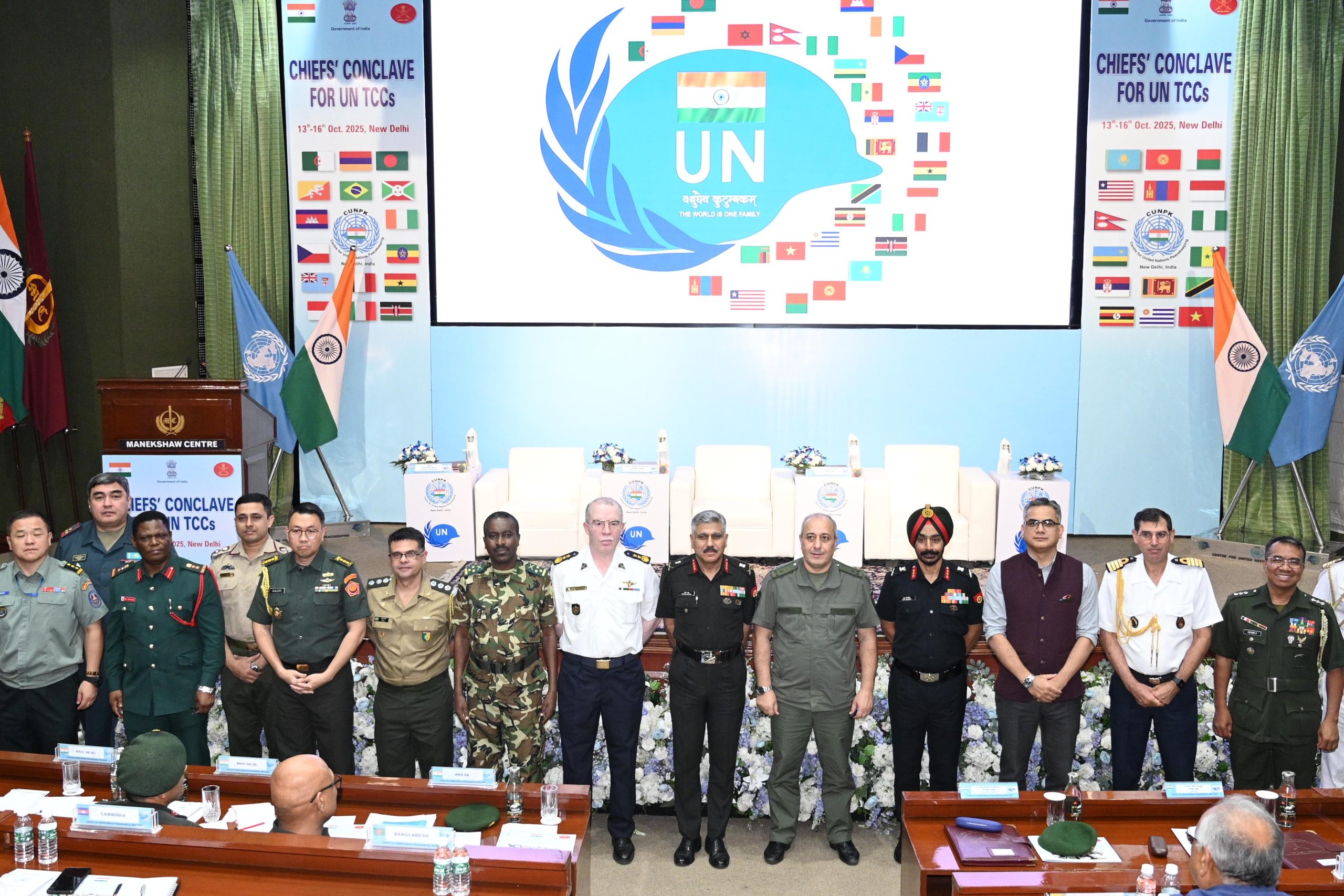
Negi addressed the media ahead of the Conclave of Army Chiefs of UN Troop-Contributing Countries (UNTCC), scheduled to take place in New Delhi from October 14 to 16. This high-level summit will host army chiefs and vice chiefs from over 30 countries, making it the largest gathering of its kind ever hosted by India.
India’s Leadership Role in Peacekeeping
India has long been a cornerstone of United Nations peacekeeping. With over 300,000 troops deployed across 50 missions over the past seven decades, and 182 fatalities, the highest among all nations, India’s involvement has been defined by both scale and sacrifice.
Lieutenant General Rakesh Kapoor, Deputy Chief of the Army Staff, stated India’s deep-rooted commitment to peacekeeping as a strategic and moral imperative. “Peacekeeping is not a transactional activity for us. It reflects our values, our foreign policy, and our belief in collective global security,” he said.
Gender Inclusion: From Firsts to Frameworks
India is once again using its platform to champion gender inclusion in peacekeeping. In 2007, it became the first country to deploy an all-women police unit, stationed in Liberia. Since then, Female Engagement Teams (FETs) have become a regular feature in all Indian contingents, working directly with local populations, especially women and children, in conflict zones.
“Women and children are often the most vulnerable in such environments. Our female peacekeepers not only offer support but also become role models,” Kapoor said. India is also deploying female psychological counsellors in mission areas, recognising the critical importance of mental health in conflict settings.
India is on track to meet the UN’s benchmark of 15–20% female participation, particularly in staff and observer roles, though efforts are ongoing to expand representation within combat units as well.
Technology and Indigenous Capability
The conclave will also serve as a stage for India to highlight its indigenously developed defence technologies. All Indian peacekeeping units now operate with homegrown equipment, ranging from cyber-secure communications tools and electro-optical surveillance devices to green energy infrastructure.
“Gone are the days when we leased equipment. Today, our peacekeeping contingents are powered by Indian solutions, and many of these are attracting interest from other countries,” he said.
India will also demonstrate technologies developed under its ‘Atmanirbhar Bharat’ (self-reliant India) initiative, including digital platforms for real-time mission awareness, encrypted systems, and counter-IED tools. A solar power plant, the largest deployed by any country in a UN mission, is also on its way to a conflict zone, further underscoring India’s focus on sustainable peacekeeping.
Funding, Reform, and the Voice of the Global South
Among the conclave’s core objectives is to drive discussion on UN peacekeeping reforms. India has been a vocal advocate for greater representation of troop-contributing countries (TCCs) in mandate formulation, transparent reimbursement frameworks, and stronger protection protocols for personnel on the ground.
“Countries sending troops must have a seat at the table when mandates are being drawn,” said Kapoor. “They are the ones putting lives on the line.”
India is also pushing for the formal aggregation of efforts among military, humanitarian, and civilian agencies within missions, arguing that integrated collaboration is key to creating sustainable peace, especially in non-traditional, asymmetrical conflicts.
Peacekeeping at a Crossroads
With many modern conflicts now involving non-state actors, cyber threats, and information warfare, traditional peacekeeping mandates are being stretched to their limits. The lines between combatant and civilian, military and humanitarian, have blurred.
Kapoor acknowledged these challenges, stating that peacekeeping must evolve in response to the changing times. “Today’s missions are no longer about just maintaining a ceasefire. They are multidimensional. Peacekeepers are being asked to do more, with less clarity and often with less support,” he said.
India’s contributions toward this evolution have not gone unnoticed. During its Presidency of the UN Security Council, India led the adoption of two key resolutions: one on accountability for crimes against UN peacekeepers and another on the use of technology for peacekeeping.
A Platform for Practical Solutions
The upcoming conclave is expected to deliver tangible outcomes, including:
- A shared understanding of on-ground operational realities
- Strategies to improve force protection and psychological welfare
- Roadmaps for leveraging digital tools and AI in conflict zones
- Proposals for funding innovation and streamlining logistics
- Reinforcement of the Five S framework – Samman (Respect), Samvad (Dialogue), Sahyog (Cooperation), Shanti (Peace), and Samriddhi (Prosperity) — introduced by Prime Minister Modi at the UNSC.
Building a Modern Model for Peace
As the international community grapples with the future of conflict and cooperation, India’s leadership in convening this dialogue marks a significant step.
“This conclave is not just about sharing our achievements,” said Negi. “It’s about strengthening a rules-based order, reaffirming our shared responsibilities, and ensuring that peacekeeping evolves to meet the challenges of tomorrow.”
According to sources, China and Pakistan have not been invited to this meeting.
Huma Siddiqui