


India is preparing to take a critical step in reshaping its military logistics and defence industrial strategy, with a request for proposal (RFP) for a Medium Transport Aircraft (MTA) expected to be issued next month. The timing of the tender is important as it comes amid heightened geopolitical volatility and ahead of an anticipated increase in defence allocations in the upcoming Union Budget.
Officials familiar with the process said the MTA programme is being viewed not merely as a fleet modernisation effort, but as a strategic lever to reduce India’s exposure to external supply shocks, sanctions regimes, and geopolitical disruptions that have increasingly affected global defence supply chains.
Strategic Airlift and the Case for Diversification
Recent conflicts have underlined how access to spares, maintenance support, and logistics networks can quickly become constrained by diplomatic realignments and export controls. For India, whose defence inventory has historically relied on a narrow set of supplier countries in key segments, diversification has become a strategic imperative.
Transport aircraft occupy a particularly sensitive space in this calculus. It underpins not only military operations but also disaster relief, humanitarian assistance, and rapid mobilisation across vast and contested geographies. Ensuring assured availability of these assets, regardless of global political turbulence, is now central to defence planning.
A senior government official involved in defence acquisitions said that new programmes are increasingly being evaluated through the prism of long-term resilience. “The emphasis is shifting from ownership to assured access, who can support the platform for 30 to 40 years, under all circumstances,” the official said.
The Indian Air Force, which currently operates a mixed fleet of Russian, American, and European transport aircraft, is expected to issue the MTA RFP next month. The platform is intended to replace ageing medium-lift aircraft and streamline logistics capability, with a requirement in the 18–30 tonne payload class and an estimated fleet size of around 80 aircraft.
Beyond performance parameters, officials said the selection process will weigh lifecycle costs, industrial participation, and the ability to sustain the fleet domestically.
Lockheed Martin Frames Local Sustainment as Strategic Insurance
Within this evolving framework, Lockheed Martin has positioned its India engagement around indigenous sustainment and capability-building rather than dependence on overseas supply chains.
“Our approach in India is very clear, industrial partnership and capability creation,” said Kiran Dambala, Director, Business Development (India), Air Mobility and Maritime Missions at Lockheed Martin. “The objective is to build systems, processes, and skills in-country so that India can increasingly sustain its critical defence assets independently.”
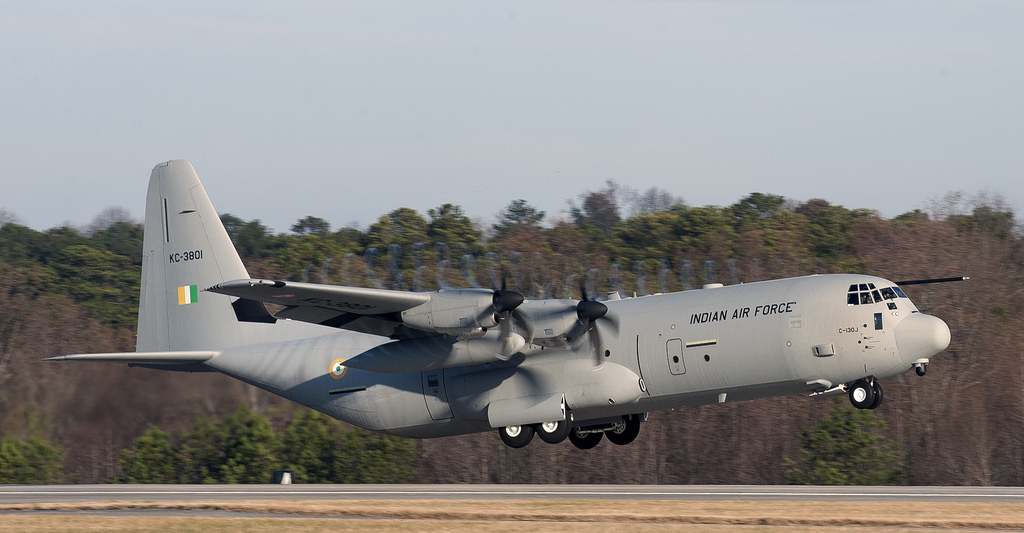
Lockheed Martin’s partnership with Tata Advanced Systems to establish a C-130J Maintenance, Repair and Overhaul (MRO) facility in Bengaluru is being cited by industry observers as an example of how foreign OEMs are adapting to India’s emphasis on strategic autonomy.
“The Bengaluru MRO is a significant step forward for India,” Dambala said. “It allows heavy maintenance activities that were earlier done overseas to be carried out domestically, reducing external dependencies.”
Michelle McClearn of Lockheed Martin said sustainment models are now being shaped by global uncertainty. “Sustainment is about readiness and resilience,” she said. “It’s ensuring platforms remain available and supported, regardless of disruptions elsewhere.”
Evaluating the MTA Through a Strategic Lens
The aircraft under consideration, Embraer’s KC-390 Millennium, Airbus’s A400M Atlas, and Japan’s Kawasaki C-2, reflect India’s broader effort to diversify its defence relationships beyond traditional partners. Each option brings different implications in terms of cost, industrial cooperation, and geopolitical alignment.
The KC-390 is viewed as closely aligned with India’s stated payload requirements and industrial ambitions, while Airbus’s A400M offers higher capacity but at a premium cost. Japan’s C-2 introduces another diversification vector but with a smaller global support footprint.
While the US-origin C-130J has proven its operational robustness, particularly in demanding environments, it is generally seen as more suited to specialised roles rather than forming the backbone of a medium airlift fleet in the current strategic context.
A Programme Shaped by Strategy, Not Just Specifications
The MTA programme is increasingly being framed as a test case for India’s evolving defence procurement philosophy, one that balances operational needs with geopolitical risk management and industrial self-reliance.
With defence spending expected to rise and global uncertainty becoming the norm, the strategic value of diversification may ultimately weigh as heavily as performance metrics in determining India’s choice.
Huma Siddiqui