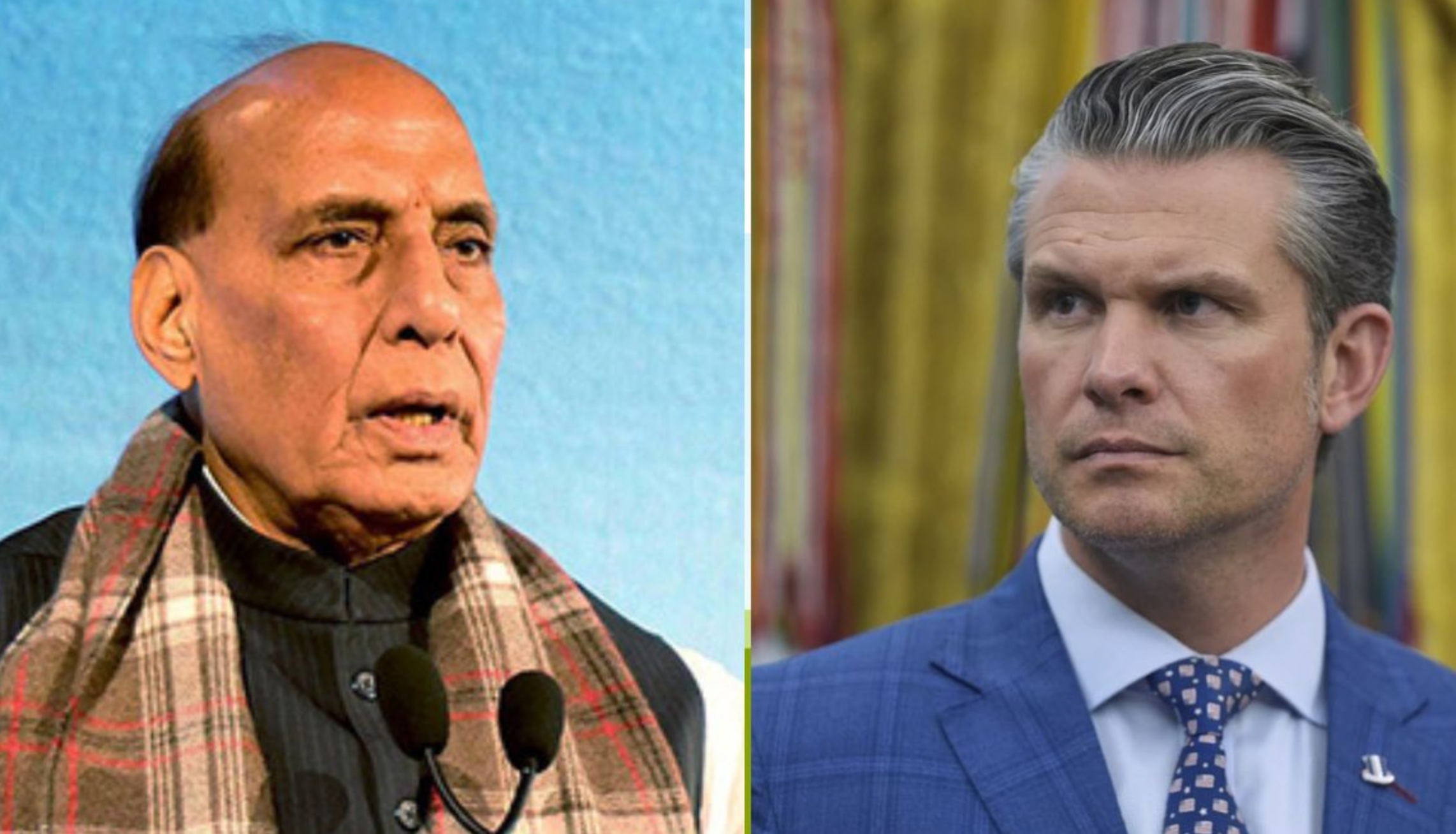
New Delhi is set to host two key defence engagements with the United States later this month, underscoring a deepening strategic partnership against a backdrop of regional volatility, including fresh nuclear threats from Pakistan’s military leadership.
Ministry of External Affairs (MEA) Spokesperson Randhir Jaiswal confirmed that a high-level U.S. defence policy team will arrive in mid-August, followed by a working-level 2+2 Intersessional Dialogue at the month’s end. Both meetings aim to advance defence cooperation and expedite pending procurement projects.
“The India–U.S. defence partnership, underpinned by foundational defence agreements, is an important pillar of the bilateral relationship,” Jaiswal said. “This robust cooperation has strengthened across all domains.”
Engine Deliveries and Procurement Priorities
A key focus will be the long-delayed delivery of F404 engines from General Electric (GE) for India’s Tejas Mk-1A fighter jets. The first two engines arrived recently, almost two years late, while a third is expected this month. GE has now committed to monthly deliveries, ramping up to two per month by October.
Negotiations for a follow-on F404 order are close to conclusion and could be finalised by the end of August. Talks on the more powerful F414 engines – earmarked for the Advanced Medium Combat Aircraft (AMCA) and Tejas Mk2, will also feature prominently. Technical discussions are complete, though a final agreement remains months away.
P-8I Maritime Surveillance Aircraft in Focus
The Indian Navy’s stalled plan to acquire six additional P-8I long-range maritime patrol aircraft is expected to resurface in the talks. The deal, delayed by broader diplomatic and tariff frictions, is still “actively under negotiation,” officials confirmed.
Yudh Abhyas 2025 in Alaska: Largest Joint Army Drill Yet
From September 1–14, over 400 Indian Army personnel, led by the Madras Regiment, will take part in the largest-ever edition of Exercise Yudh Abhyas in Alaska. Now in its 21st year, the drill will feature counter-terrorism operations under UN Chapter VII mandates, including tactical response scenarios, field operations, and strategic planning exercises.
The U.S. will also showcase its amphibious Stryker combat vehicle at India’s request, a demonstration that could influence future Indian procurement. This year’s edition holds added weight as the first major bilateral drill after India’s Operation Sindoor, a domestic campaign praised for integrating modern warfare elements. U.S. officials are keen to draw operational lessons from the exercise.
Resilience Amid Diplomatic Strains
Despite lingering tariff disputes dating back to the Trump era, defence ties remain resilient. Joint training, progress on engine procurement, and sustained strategic dialogue highlight the shared goal of regional stability and military modernisation.
Jaiswal reiterated that India–U.S. relations are “anchored in shared interests, democratic values, and robust people-to-people ties,” expressing optimism about the trajectory of the partnership.
Geopolitical Undercurrents: Pakistan’s Nuclear Posturing
The warming of India–U.S. defence cooperation comes amid renewed nuclear rhetoric from Pakistan. During his recent U.S. visit, Pakistan’s Army Chief, Field Marshal Asim Munir, issued veiled threats towards India, prompting concern in New Delhi.
Adding nuance to the equation, Washington recently lauded Pakistan’s “continued successes” against terrorism while designating the Balochistan Liberation Army (BLA) a foreign terrorist organisation, a move some Indian analysts view as a diplomatic overture to Islamabad.
Outlook
As India prepares for high-stakes defence talks and joint military drills, its partnership with the U.S. appears on an upward trajectory, driven by capability building, procurement cooperation, and a shared approach to regional security. Whether this momentum will yield breakthroughs on engines, P-8I aircraft, and joint production remains the key question.
Huma Siddiqui