The Russian Defence Ministry has accused the United States of using coercive tactics to weaken Moscow’s defence partnerships in the Asia-Pacific, including with India.
General Igor Kostyukov, head of the Main Intelligence Directorate (GRU), levelled the allegations at the Moscow International Security Conference, claiming Washington is “blackmailing” India, Indonesia, and the Philippines with threats of sanctions under the Countering America’s Adversaries Through Sanctions Act (CAATSA).
According to Kostyukov, the US is pressuring regional partners to cancel or delay contracts with Russia in order to expand its own strategic and defence footprint. “By weaponizing sanctions and political pressure, the US is trying to prevent countries like India from honouring existing military deals with Russia—ranging from S-400 air defence systems for India, to Sukhoi Su-35 fighters for Indonesia, and Mi-171 helicopters for the Philippines,” he said.
India’s S-400 Acquisition
India signed a $5 billion deal in 2018 to acquire five regiments of the Russian-made S-400 Triumf air defence system, despite strong objections from the United States. The contract was finalized during former President Donald Trump’s administration, but tensions escalated under President Joe Biden, with repeated warnings of CAATSA sanctions.
So far, three S-400 systems have been delivered and deployed, while the remaining two are expected by 2027, as recently reaffirmed by Russian officials.
At a press conference in New Delhi on August 20, 2025, Roman Babushkin, Chargé d’Affaires at the Russian Embassy, stated that the deliveries would proceed “according to schedule,” signalling Moscow’s commitment despite mounting geopolitical pressure.
S-400’s Crucial Role in Operation Sindoor
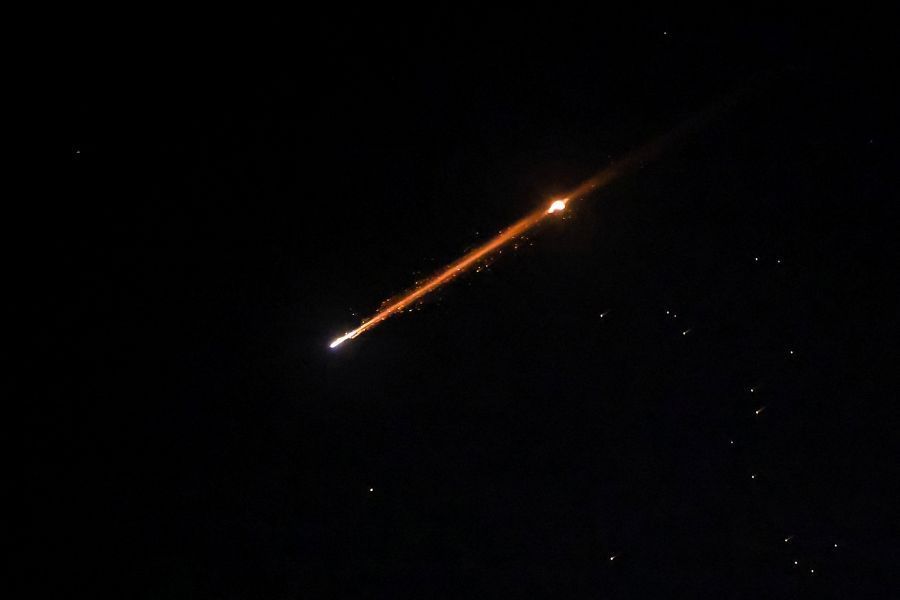
The S-400 system proved its operational value earlier this year during Operation Sindoor, where India faced a large-scale aerial offensive from Pakistan. In a coordinated and technologically sophisticated air defence effort, the S-400 regiments, along with Akash missile batteries and indigenous counter-drone systems, neutralized: over 15 incoming missiles; numerous drones and loitering munitions; and multiple airborne threats targeting Indian military installations in the northern and western sectors.
The successful interception showcased not only the efficiency of Russian-built technology, but also India’s integrated air defence network and rapid-response capability. Defence analysts hailed it as a landmark moment that validated India’s investment in the S-400 platform.
US Pressure and India’s Strategic Autonomy
Russia’s accusation comes at a sensitive time. External Affairs Minister S. Jaishankar is currently in Moscow, engaging in high-level meetings aimed at reinforcing India-Russia strategic ties. Meanwhile, Washington has increased its diplomatic and economic pressure on New Delhi, including a 50% tariff hike on certain trade sectors linked to Russian cooperation.
India, however, has consistently resisted US pressure, choosing to maintain an independent foreign policy and uphold its longstanding defence ties with Russia, while simultaneously deepening defence cooperation with France, Israel, and the US.
India’s Shift Toward Self-Reliance in Defence
Despite the controversy, it’s important to note that India has significantly reduced its overall defence imports in recent years, including those from Russia. Under the ‘Make in India’ and ‘Atmanirbhar Bharat’ initiatives, the country is increasingly focusing on domestic defence production.
According to data from the Stockholm International Peace Research Institute (SIPRI), Russian arms exports to India declined by 53% between the periods 2014–2018 and 2019–2023.
Still, Russian platforms like the S-400, Su-30MKI, and MiG-29 remain cornerstones of India’s defence architecture, and officials have reaffirmed that strategic partnerships will be guided by national interest, not foreign pressure.
Balancing Partnerships Amid Global Tensions
As the geopolitical chessboard continues to shift, India finds itself at a crossroads, balancing Western partnerships with historic ties to Moscow. While the S-400 delivery remains on track, the larger question revolves around India’s long-term strategic calculus and how it navigates growing friction between the world’s major powers.
Team BharatShakti