


India’s designation as a “major power” in the Lowy Institute’s 2025 Asia Power Index, securing third place behind the United States and China, is a long-sought marker of strategic arrival.
But the Index’s detailed breakdown — spanning 131 indicators across eight dimensions — sends a more complex message.
India’s ascent is real, measurable, and momentum-driven. But its strategic weight still lags behind the scale of its resources, and its gap with China continues to widen.
India’s power “continues to grow steadily but remains well below the potential of its resources,” says the latest edition of the Index, authored by Susannah Patton and Jack Sato.
It is both praise and warning. India’s trajectory is positive, but it still punches below its weight, particularly in diplomacy and defence partnerships, the two arenas where China and the United States are now locked in open contest.
India’s new status on the Index is primarily grounded in its economic and military capabilities. Its economy continues to expand rapidly, giving it the third-highest economic capability score in Asia, behind only the United States and China.
The Index’s authors note improvements in India’s “international leverage, connectivity, and technology,“ all of which enhance the geopolitical relevance of its growth model.
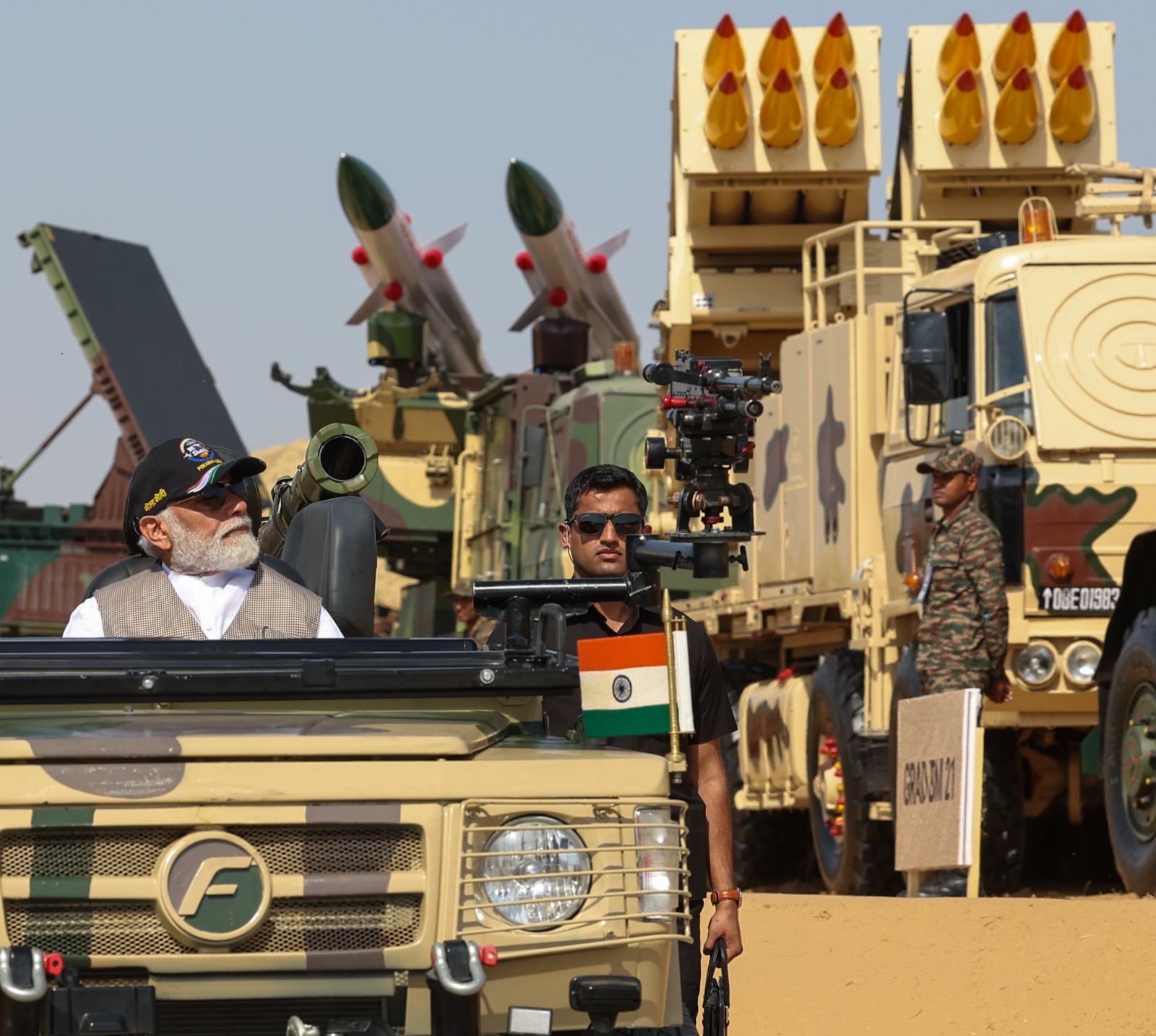
India’s military capability score rose to 48.0, placing it fourth in Asia. Much of this increase came from improved expert assessments of readiness, training, and operational experience — uplifted in part by India’s conduct of Operation Sindoor in May 2025, which contributed to a more positive appraisal of the country’s combat preparedness.
The Great Divide
Yet the capability gains also highlight a stark asymmetry. China’s military advantage continues to solidify, particularly in maritime and air warfare systems, while its posture in Asia remains stronger than that of the United States.
India’s improvements, though real, are not closing the gap; if anything, the Index finds that “the large capability gap with China has only widened“ in 2025, a trend that challenges India’s ambition to shape a multipolar Asian balance of power.
Even in the economic domain, where India is rapidly becoming a preferred destination for diversification-driven investment, the comparative picture is mixed. For the first time since the Index began in 2018, India improved its ranking for economic relationships, moving to ninth place.
This rise is driven largely by foreign investment flows: India now attracts more inward investment than any country in Asia except the United States, overtaking China in cumulative ten-year investment inflows. The Index attributes this shift to both geopolitical reorientation and India’s domestic attractiveness as a manufacturing and services hub.
But the same dataset also underscores India’s limitations. Its trade integration with Asia remains underdeveloped, a longstanding weakness that continues to depress its influence score. China’s dominance over Asian trade is reflected in its towering economic relationships score of 95.6.
Diplomacy presents a similarly mixed picture. India’s diplomatic influence increased slightly in 2025, positioning it fourth after China, Japan, and the United States. It has become more active in high-level diplomacy, and experts surveyed for the Index rated India’s diplomatic service more positively, citing improvements in quality and professionalism.
People-to-people exchanges — an often-overlooked but meaningful factor in India’s regional standing — also strengthened, driven by growing tourism flows, improved travel connectivity, and new direct air routes, such as the 2025 link with Brunei.
Yet India’s diplomatic leadership did not improve. Its scores for both regional and global leadership remained flat, and Prime Minister Narendra Modi did not climb in the leadership rankings. The Index notes that India’s diplomatic orientation — combining multi-alignment, strategic autonomy, and a Global South emphasis — does not translate automatically into expanded strategic influence. While this approach offers flexibility, it does not generate the kind of agenda-setting authority that China now wields.
Beijing recorded its highest-ever diplomatic influence score in 2025, ranking first in both regional and global leadership for the first time, aided by energetic diplomacy and efforts to present itself as a reliable partner amid uncertainty about U.S. policy in Asia.
India’s most significant weakness remains its defence networks. Despite improving military capability, India’s defence partnerships and regional military diplomacy did not advance in 2025. It continues to rank only 12th in this category. While India maintains close but flexible security relationships — especially with the United States, France, Japan, and Australia — it still avoids formal alliances and refrains from deeper institutionalised defence cooperation.
It limits its ability to convert capability into influence. In contrast, smaller powers such as Japan, South Korea, Australia, and even Singapore derive disproportionate strategic weight from their tightly knit defence networks. China, too, benefits from increasingly dense military ties, especially with Russia and North Korea.
These imbalances feed directly into India’s overall “Power Gap“ score — the divergence between expected power based on resources and realised influence. India registers one of the largest negative Power Gaps in Asia (–4.0), underscoring its status as an under-performer relative to its potential.
The Index suggests that while India’s capabilities are expanding, its platforms for projecting influence — trade networks, defence partnerships, and leadership in regional institutions — are not keeping pace.
Cultural influence is one area of relatively consistent strength. India ranks fourth, behind the United States, China, and Japan, driven by its diaspora, expanding tourist profile, and rising cultural visibility. The Index notes that India has become a more important travel destination for Asia, helped by both improved connectivity and the region’s growing familiarity with Indian culture and media. These forms of soft power matter in parts of Southeast Asia where public sentiment increasingly shapes political engagement.
The Asia Power Index 2025 presents a portrait of a rising India, but not yet a transforming one. Its economic and military foundations are strengthening; its appeal to investors and travellers is growing; its diplomacy is more active than it has been in years.
But its influence does not match its resources, and its primary strategic rival, China, continues to pull ahead in the very domains that matter most for shaping Asia’s direction.
Closing that gap — through deeper economic integration, stronger defence cooperation, and more assertive regional leadership — will determine whether India’s rise becomes a defining force in Asia, or merely one thread in a region increasingly shaped by others.
Ramananda Sengupta

In a career spanning three decades and counting, I’ve been the foreign editor of The Telegraph, Outlook Magazine and the New Indian Express. I helped set up rediff.com’s editorial operations in San Jose and New York, helmed sify.com, and was the founder editor of India.com. My work has featured in national and international publications like the Al Jazeera Centre for Studies, Global Times and Ashahi Shimbun. My one constant over all these years, however, has been the attempt to understand rising India’s place in the world.
I can rustle up a mean salad, my oil-less pepper chicken is to die for, and it just takes some beer and rhythm and blues to rock my soul.