


Editor’s Note
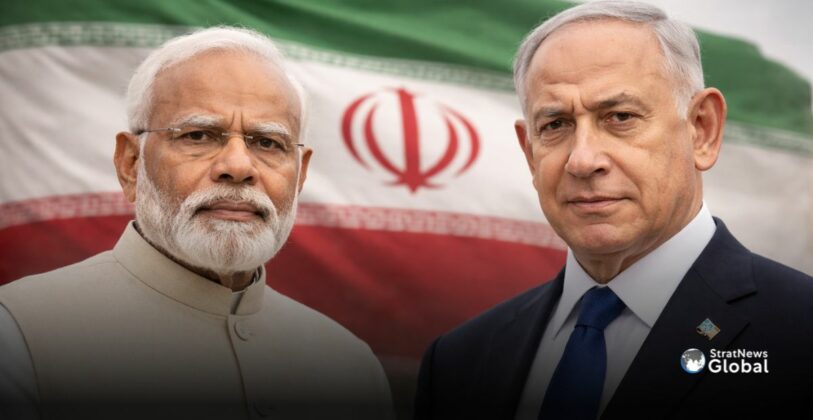
Amidst various shades of skullduggery being enacted, the present fighting is not a simple America plus Israel versus Iran war. Many countries are not kinetically part of the conflagration but are hedging their economic bets on the outcome(s). They could be surreptitiously working towards an outcome that suits them geopolitically and economically. This piece examines these shifting permutations, mapping the hedging strategies at play and assessing whether, from this complex and tangled landscape, any clear winner is beginning to emerge.
A War at the Edge, Not at the End
Operation Epic Fury is at an inflection point. Military assessments show that the coalition enjoys air dominance over Iran, and Iran’s strike tempo has reduced under sustained US–Israeli attacks (estimates of a 70–90 per cent reduction in missile and drone salvos as launchers, depots and production sites are hit). Amidst US strikes and destruction, Iran’s missiles and drones, however, are still able to find their targets and threaten Gulf states and US interests in the region.
There are reports that Iran has targeted US and UK bases in Diego Garcia. Despite the second wave of decapitation strikes, Iran’s core military–political structure is still resolute and capable of rebuilding. The political end‑state is very hazy. Despite strong tactical gains by the US–Israel, multiple indicators show that the conflict is still unstable and unresolved. Miscalculations, if any, will be catastrophic.
The operative phrase here is “delicate balance.” The campaign has degraded Iran’s capabilities but also hardened its resolve. A wounded Iran is proving more unpredictable and more hostile.
Escalation Without an Exit
The Israeli strike on the South Pars gas field, disrupting roughly 12 per cent of production, marks a significant escalation. Iranian responses targeting Qatari gas infrastructure and threats to the Strait of Hormuz have widened the conflict’s footprint, pushing it towards global economic disruption.
Even as US and Israeli leadership celebrate the precision and effectiveness of decapitation strikes, a key question remains unanswered: has enough leadership been left intact on the Iranian side to negotiate an end?
No one is asking the US that, amid its claims of “total dominance,” whether it has fully secured key zones like the Hormuz Strait?
Despite the announcement of success, oil and LNG prices are rising, the Strait of Hormuz remains closed, and the US is sending more warships loaded with marines.
The likely tilt of this balance is an obvious question. Let us discuss the two basic military scenarios.
Two Paths, Both Risky
Scenario One: A Frozen Conflict
The US and Israel may choose to avoid overreach and freeze the conflict at its current stage. But this would be a deeply uneven pause. Iran, battered and humiliated, would demand concessions that Israel and now even the Gulf states may find unacceptable.
Unlike earlier episodes, Gulf Cooperation Council (GCC) states have now been directly hit. They are unlikely to accept a pause that allows Iran to regroup and rearm. At the same time, Iran is unlikely to accept any external mechanism policing its military recovery. Any such arrangement risks collapse under competing pressures.
Scenario Two: Escalation to Exhaustion
Alternatively, the US–Israel combine may push for total military objectives—further degrading the regime and securing the Strait. This is a far more demanding path.
Iran has signalled it is prepared for escalation. Its strategy appears centred on targeting the global economy—specifically the Strait of Hormuz—as the conflict’s primary “centre of gravity.” By choking energy flows, Tehran can impose costs not just on its adversaries, but on the world at large.
A prolonged conflict under this scenario risks spiralling into a wider economic and geopolitical crisis. Iran seems prepared to ensure that if it goes down, others will bear the cost alongside it.
Questions Over US Leadership
The conflict also raises uncomfortable questions about US leadership. Washington has acted without explicit UNSC sanction or NATO backing, setting precedents it has previously criticised in others. The diversion of THAAD systems from South Korea to the Middle East underscores the strain on US global commitments.
Signals from the Indo-Pacific add another layer of complexity. Chinese military activity around Taiwan dipped and then surged during key phases of the conflict, a timing that invites interpretation, if not firm conclusions.
President Donald Trump’s public posture has further complicated matters. His criticism of allies for not contributing to securing the Strait of Hormuz, despite their exclusion from the decision to go to war, exposed fissures within traditional alliances. His remarks questioning why the US should secure a route that benefits others, particularly China, reflect a transactional approach that may carry long-term costs.
The oscillation between ultimatums and overtures, threatening Iran with destruction one day, hinting at negotiations the next, adds to the uncertainty. Tehran, for its part, denies any talks even as the conflict grinds on.
Strategy, Ego, and Opportunity
Classical strategic thought offers an interesting lens. Kautilya warns against the lubdha, the arrogant conqueror driven by ego. Sun Tzu sees such behaviour as a vulnerability to be exploited. Whether by design or default, the conflict is increasingly reflecting these traits.
Iran has already warned that any attack on its energy infrastructure will trigger a complete closure of the Strait of Hormuz. The stakes, clearly, are not just military; they are systemic.
Who Gains?
On the battlefield, the US and Israel have inflicted significant damage. Some analysts believe Iran’s conventional and nuclear capabilities have been set back by years. Yet, the regime remains intact and more belligerent.
Meanwhile, the global economic fallout is mounting. Oil prices have surged from under $60 a barrel in January to over $100 by mid-March. Gas prices have more than doubled. The closure of the Strait of Hormuz threatens to push this further.
In this churn, Russia emerges as a clear beneficiary. Higher energy prices boost its revenues, potentially strengthening its position in Ukraine. As a major fertiliser producer, it could also gain from disruptions in Gulf supply chains. The conflict offers Moscow both economic advantage and a propaganda opportunity to deflect criticism of its own actions.
China’s position is more complex. It faces short-term risks due to energy dependence on the Gulf, but its diversified energy mix and access to Russian supplies offer buffers. In the longer term, Beijing could benefit from a distracted United States and strained US–Gulf relations. Delays in US military deployments to the Indo-Pacific may also work in China’s favour.
Israel, for its part, has achieved several of its immediate objectives, degrading Iranian capabilities and weakening regional proxies like Hamas and Hezbollah. Whether these gains translate into lasting strategic advantage remains to be seen, particularly given domestic political timelines.
No Clean Winner
Three broad conclusions stand out. The US and Israel retain overwhelming conventional superiority. Iran, however, continues to wield asymmetric leverage, particularly through its ability to disrupt global energy flows. And above all, the prospect of a clean, decisive victory for any side remains remote.
Absent a negotiated settlement, the most plausible outcome is a prolonged stalemate, one in which all sides claim success, but all emerge diminished.
In that sense, the real verdict may be this: even the strongest may win the battles, but in a conflict of this scale and complexity, they are unlikely to win the peace.
Air Vice Marshal Prashant Mohan (Retd)

Air Vice Marshal Prashant Mohan, a fighter pilot superannuated from IAF on 31 Mar 25. A Qualified Flying Instructor commanded a frontline fighter squadron and two front line fighter bases. The Air Officer was India’s Defence and Air Attaché to UK from May 19 to Oct 22.