



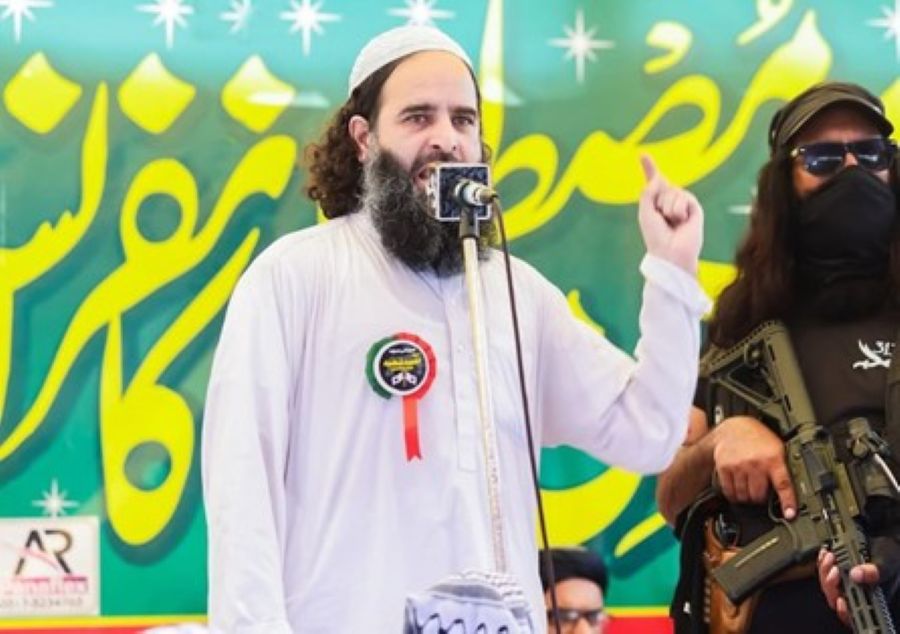
Pakistan-sponsored terror outfits are on the move. Following India’s Operation Sindoor precision strikes in May that destroyed nine major terror hubs in Pakistan, groups like Jaish-e-Mohammed (JeM) and Hizbul Mujahideen (HM) are shifting their bases from Pakistan-occupied Kashmir (PoK) and Punjab deeper into Khyber Pakhtunkhwa (KPK), along the Afghanistan frontier.
From PoK to KPK: Retreat or Reinvention?
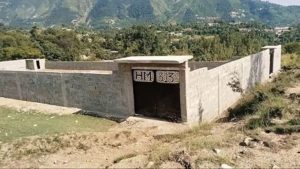
Intelligence sources confirm to BharatShakti that JeM has been expanding its Markaz Shohada-e-Islam facility in Mansehra, while Hizbul, under ex-SSG commando Khalid Khan, is building a new camp codenamed “HM-313” in Bandai, KPK. Construction began soon after the Sindoor strikes, with imagery showing boundary walls and training structures nearing completion. The “313” designation deliberately echoes Al Qaeda’s Brigade 313, signalling HM’s push for global jihadi recognition.
JeM is also preparing a recruitment drive in Peshawar on September 25, commemorating Yusuf Azhar, Masood Azhar’s brother, who was killed in Operation Sindoor. At the rally, the group is expected to announce a new alias, al-Murabitun (“defenders of Islam’s land”), mimicking an Al Qaeda affiliate in West Africa.
Why KPK?
For terror groups, KPK offers depth and sanctuary. Its rugged geography, porous Afghan frontier, and legacy jihadi networks from the Afghan jihad make it ideal for regrouping. Indian strikes inside PoK have made earlier strongholds vulnerable, prompting outfits to reposition KPK as a rear command zone while retaining PoK as a forward infiltration base.
According to an intelligence assessment, the move is not just tactical survival but a deliberate recalibration to link with Afghan militant circuits. “This is about building resilience – dispersing assets and embedding deeper into jihadi ecosystems,” one source said.
State Patronage in Plain Sight
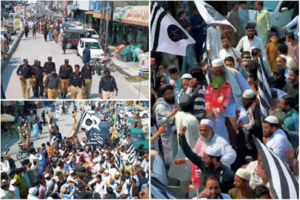
The relocations are happening in full public view. JeM rallies in Mansehra and Peshawar have been held under police protection, with the backing of political-religious outfits like Jamiat Ulema-e-Islam (JUI). At one recent gathering in Garhi Habibullah, JeM commander Masood Ilyas Kashmiri, alias Abu Mohammad, addressed crowds guarded by both armed JeM cadre and local police officers.
Kashmiri openly glorified Osama bin Laden as “Shohada-e-Islam” and “Prince of Arab,” aligning JeM’s narrative with Al Qaeda’s legacy. His presence underscores the complicity of Pakistan’s security structures, with intelligence noting “direct GHQ orders” referenced in his speeches.
The Kashmiri Factor
Masood Ilyas Kashmiri, central to JeM’s restructuring, is no ordinary commander. Born in Rawalkot, PoK, he fought NATO in Afghanistan, later masterminded the 2018 Sunjuwan Army Camp attack in Jammu, and was named in India’s NIA chargesheet alongside Masood Azhar. He now heads JeM’s KPK command while simultaneously running the Hilal-ul-Haq Brigade, later rebranded as PAFF (People’s Anti-Fascist Front) to mask Pakistani state links under an “indigenous” Kashmiri cover.
Kashmiri’s dual role – front-facing PAFF in Kashmir and JeM’s rear infrastructure in KPK – makes him a critical force multiplier in Pakistan’s proxy war strategy.
Strategic Implications
The shift westward signals a recalibrated Pakistan terror architecture:
- Reduced Vulnerability – KPK offers depth against Indian precision strikes.
- Enhanced Networks – Proximity to Afghan militants provides recruitment and operational synergies.
- State Collusion – Police presence at JeM rallies and political cover from JUI point to systemic facilitation.
- Global Messaging – Symbolism like “HM-313” and “al-Murabitun” seeks legitimacy within transnational jihad.
For India, the message is clear: terrorist groups are adapting, not retreating. The Pakistan establishment, while posturing internationally – even chairing the UN Security Council – continues to shield and facilitate proscribed groups on its soil.
As one intelligence officer put it, “Operation Sindoor forced them to move, but it didn’t break their spine. KPK is becoming the new rear base of Pakistan’s proxy war.”
Ravi Shankar

Dr Ravi Shankar has over two decades of experience in communications, print journalism, electronic media, documentary film making and new media.
He makes regular appearances on national television news channels as a commentator and analyst on current and political affairs. Apart from being an acknowledged Journalist, he has been a passionate newsroom manager bringing a wide range of journalistic experience from past associations with India’s leading media conglomerates (Times of India group and India Today group) and had led global news-gathering operations at world’s biggest multimedia news agency- ANI-Reuters. He has covered Parliament extensively over the past several years. Widely traveled, he has covered several summits as part of media delegation accompanying the Indian President, Vice President, Prime Minister, External Affairs Minister and Finance Minister across Asia, Africa and Europe.


