



Ukrainian President Volodymyr Zelensky’s latest message signalled both urgency and cautious readiness. In a post on X, he confirmed a lengthy call with Donald Trump, saying Ukraine was prepared to “work with maximum effort to achieve peace.” He endorsed Trump’s proposal for a trilateral meeting with Russia, while stressing the need for European involvement to secure lasting guarantees. Zelensky is due to meet Trump in Washington on Monday to discuss “ending the killing and the war.”
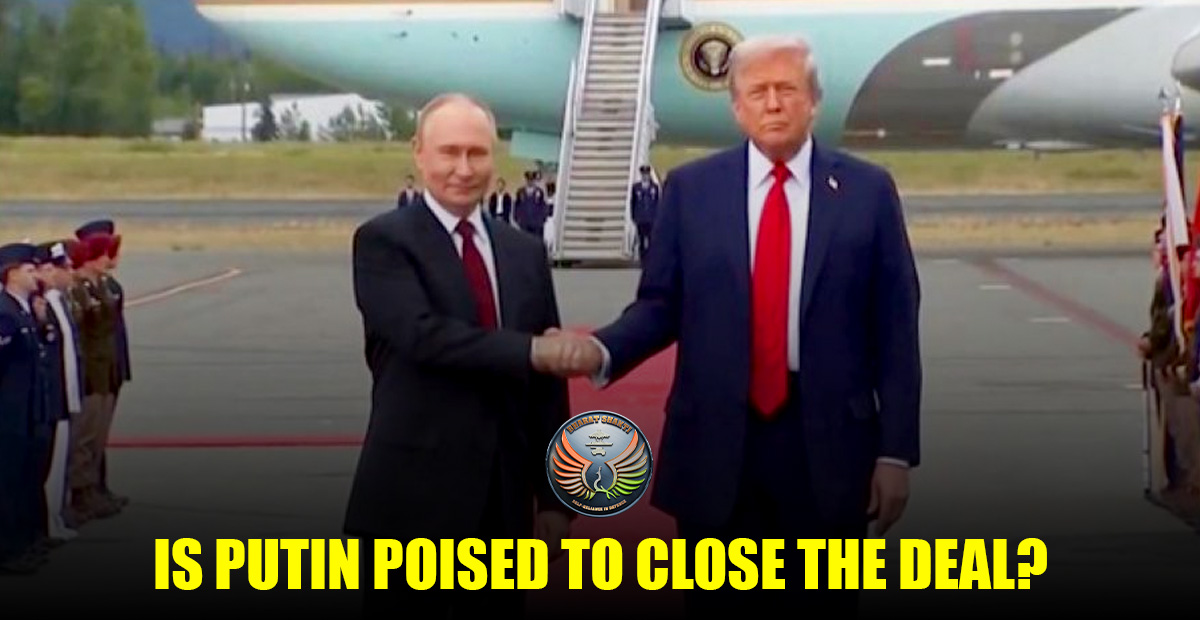
The announcement comes after the high-profile but inconclusive Alaska Summit, where Trump and Russian President Vladimir Putin spoke for more than two hours. Trump said “headway” had been made, while Putin referred to an “understanding” on Ukraine and warned Europe against undermining progress. If all goes well, Russian President Vladimir Putin, Ukrainian President Volodymyr Zelensky, and U.S. President Donald Trump could soon share the same negotiating table – this time on Russian soil. The symbolism alone would be profound, and the strategic implications potentially game-changing.
On Saturday, India welcomed the developments with cautious optimism. The Ministry of External Affairs (MEA) issued a statement noting: “India welcomed the Summit meeting in Alaska between US President Donald Trump and President Vladimir Putin of Russia. Their leadership in the pursuit of peace is highly commendable. India appreciates the progress made in the Summit. The way forward can only be through dialogue and diplomacy. The world wants to see an early end to the conflict in Ukraine.”
Attention now shifts to Moscow. If the trilateral meeting materialises there, Putin will not just be a participant but the host. Those staging matters. Lt Col Manoj K. Channan, Indian Army veteran, argues that hosting adversaries in the Kremlin allows Putin to reframe the optics: “He is no longer the isolated aggressor but the host of potential peace. This is classic Putin – calculated, ruthless, and opportunistic. First, it sends a powerful message of control. By bringing adversaries into the Kremlin’s orbit, both literally and symbolically, Putin reframes the power dynamic.”
Trump, for his part, may view Moscow as the ultimate stage for a legacy-defining deal. His instinct for strongman-style diplomacy and appetite for spectacle align neatly with Putin’s stagecraft. “Trump, driven by legacy and personal ambition, may be drawn to the idea of brokering a historic ceasefire. A potential handshake in Moscow could feed into his narrative of global statesmanship,” adds Channan.
Zelensky’s position is more precarious. The agenda will be fraught. Concessions on Crimea, eastern Ukraine, and NATO membership are likely to top Russia’s demands. In return, Moscow would need to demonstrate genuine movement toward ceasefire. Ukraine faces the risk of being pressured into compromises that erode its sovereignty. Yet, with the war locked in attrition and Western support showing signs of fatigue, Kyiv cannot afford to dismiss the chance for talks. “If Zelensky steps into the Moscow arena, it will not be as a subordinate but as a leader under pressure seeking a path to peace that doesn’t sacrifice sovereignty,” analysts note.
What makes the Moscow round potentially decisive is its fusion of spectacle and substance. Three leaders in one room, under the Kremlin’s roof, could generate the momentum needed for at least a temporary halt in hostilities. Putin understands that every war ends at the negotiating table; his challenge now is to shape an outcome that preserves strength without appearing defeated.
As Lt Col Channan warns: “Every war ends at the negotiating table. The question is not whether talks happen, but on whose terms. In Moscow, Putin will seek to dictate those terms.”
India’s carefully worded statement reflects the wider global yearning for resolution. As one of the world’s largest democracies and a consistent advocate of dialogue, New Delhi’s endorsement lends moral weight to the chorus demanding peace. The world will be closely watching, as developments in Moscow could not only influence the outcome of the Ukraine war but also shape the future of great-power diplomacy.
Huma Siddiqui