


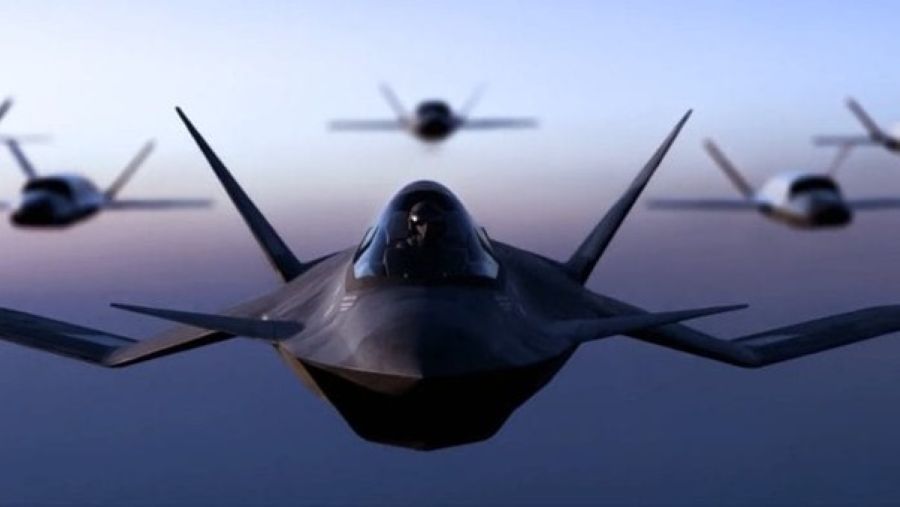
India has stepped up its push for a sixth-generation fighter capability, with the Defence Ministry informing Parliament that it has initiated efforts to join the French-led Future Combat Air System (FCAS) programme.
The development assumes added significance after France and Germany abandoned their joint FCAS fighter project in June following prolonged differences between Dassault Aviation and Airbus over workshare and programme leadership. France has since indicated that it could pursue the next-generation fighter programme on its own or with new partners.
The Ministry’s position was disclosed in its Action Taken Reply to the Parliamentary Standing Committee on Defence.
“The Ministry of Defence has initiated efforts in a concerted manner to co-join the 6th Generation Fighter Aircraft Development Programme viz. Future Combat Air System (FCAS) spearheaded by the French Government.”
The committee tabled its 25th Report during the ongoing Monsoon Session on Friday.
The panel had earlier asked the government to draw up a clear trajectory for acquiring a sixth-generation combat aircraft, citing rapid advances in fighter technology and the increasingly air-centric nature of modern warfare.
It had been informed that two major sixth-generation programmes were under development – one involving the UK, Italy and Japan under the Global Combat Air Programme (GCAP), and the other involving France, Germany and Spain under FCAS.
The committee had recommended that India should move quickly to ensure that the Indian Air Force does not fall behind in the sixth-generation race.
The latest Action Taken Reply indicates that the government has now moved beyond merely examining the two options and has begun efforts to “co-join” FCAS.
However, the parliamentary panel has sought greater clarity. It has asked the Defence Ministry to submit a detailed status report on the development and acquisition of sixth-generation aircraft, along with any roadmap prepared and a tentative timeline for their acquisition.
The committee has also sought an update on the Advanced Medium Combat Aircraft (AMCA) programme.
The move follows initial India-France discussions on possible Indian participation in FCAS. India had been exploring co-development and co-manufacturing opportunities under the programme since early this year.
FCAS enters a new phase
The latest development comes at a critical juncture for FCAS.
The programme was launched in 2017 by France and Germany, with Spain joining later. It was conceived as a broader combat-air system comprising a next-generation fighter, unmanned aircraft and a secure combat cloud.
But disagreements between Dassault and Airbus over industrial responsibilities and control eventually derailed the project. France and Germany announced in June that the joint fighter project would not proceed in its original form.
For India, the breakdown could create a different opportunity – a direct partnership with France on next-generation combat aviation.
A French-led arrangement could also build on the longstanding India-France defence relationship, including the Rafale programme and ongoing cooperation in advanced fighter-engine technology.
AMCA remains the parallel track
India’s interest in FCAS does not replace the indigenous AMCA programme.
AMCA remains India’s principal fifth-generation fighter project. Participation in a sixth-generation programme could, however, provide access to technologies and operational concepts beyond the current AMCA architecture, including manned-unmanned teaming, advanced networking, combat-cloud capabilities, artificial intelligence, stealth and next-generation propulsion.
The challenge will be ensuring that a foreign sixth-generation partnership strengthens rather than distracts from AMCA.
India’s earlier experience with the Indo-Russian Fifth Generation Fighter Aircraft programme also remains relevant. New Delhi withdrew from the project in 2018 after differences over workshare, technology and the aircraft’s capabilities.
The parliamentary panel has therefore sought a clear roadmap before India commits itself to the next generation of combat aviation.
The immediate question is no longer whether India wants a sixth-generation fighter. The government has indicated that it wants to explore FCAS.
The bigger question is what role India will secure – customer, partner or genuine co-developer – and how that partnership will fit alongside AMCA.
Ravi Shankar

Dr Ravi Shankar has over two decades of experience in communications, print journalism, electronic media, documentary film making and new media.
He makes regular appearances on national television news channels as a commentator and analyst on current and political affairs. Apart from being an acknowledged Journalist, he has been a passionate newsroom manager bringing a wide range of journalistic experience from past associations with India’s leading media conglomerates (Times of India group and India Today group) and had led global news-gathering operations at world’s biggest multimedia news agency- ANI-Reuters. He has covered Parliament extensively over the past several years. Widely traveled, he has covered several summits as part of media delegation accompanying the Indian President, Vice President, Prime Minister, External Affairs Minister and Finance Minister across Asia, Africa and Europe.