


Defence Minister Rajnath Singh on Saturday called for faster technological innovation, greater self-reliance in defence manufacturing and deeper international cooperation, saying future military strength would depend increasingly on the speed of sensing, decision-making and action rather than the number of platforms a country possesses.
Addressing participants of the second edition of Exercise Tarang Shakti 2026 at Air Force Station Jodhpur, Singh said modern warfare was expanding beyond land, sea and air to include space, cyber, the electromagnetic spectrum and information operations. Unmanned systems, artificial intelligence, electronic warfare and long-range precision weapons were reshaping military capabilities, he said.
“Future military power will be defined less by the number of platforms we possess. It will be determined by the speed of sensing, understanding, deciding and acting,” Singh said, stressing the importance of information superiority, precision and integration in contemporary warfare.
The Defence Minister highlighted India’s expanding aerospace and defence manufacturing base, citing the Tejas light combat aircraft, Dhruv and Rudra helicopters, Prachand light combat helicopter, Light Utility Helicopter and Akash air defence system. He also pointed to advances in AESA radars, electronic systems and unmanned technologies.
Singh described the Advanced Medium Combat Aircraft (AMCA) programme as a key step towards developing indigenous fifth-generation stealth fighter capability. He stressed the importance of advanced aero-engine development and co-production, while inviting cooperation with like-minded countries in research, co-development, manufacturing, maintenance, training and innovation.
“The defence relationships of the future will be about technology and trust, not just about platforms,” he said, underscoring the need for trusted partnerships and resilient supply chains.
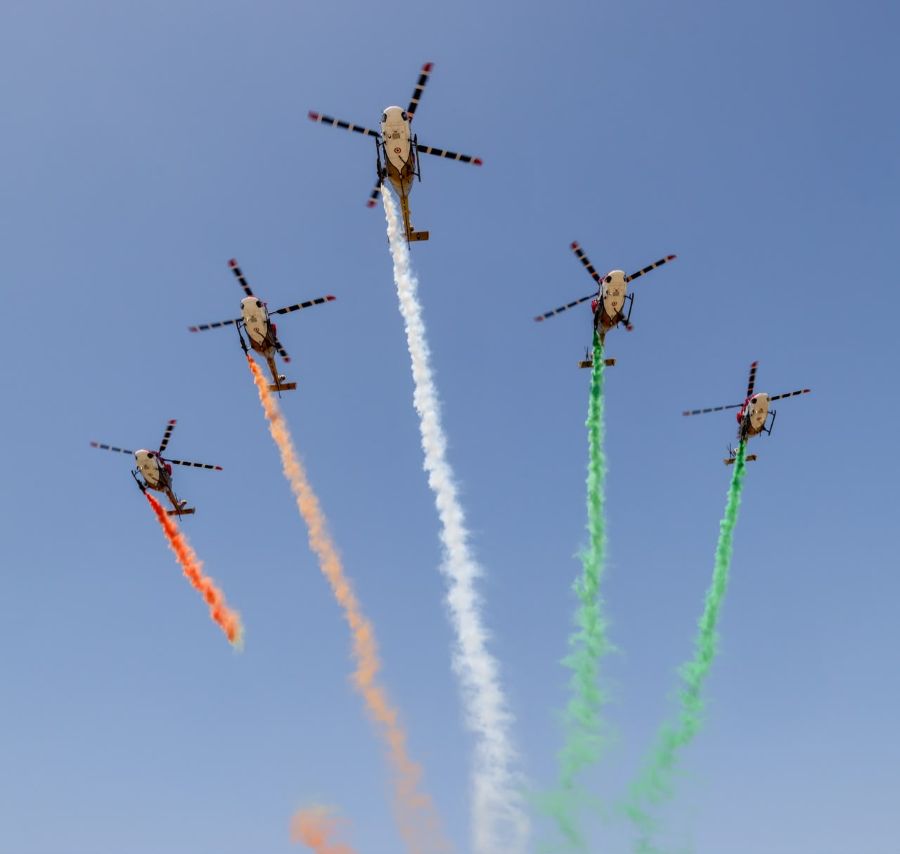
Hosted by the Indian Air Force from September 26 to October 12, the exercise brings together air forces from Australia, Bangladesh, France, Germany, Sri Lanka, the United Arab Emirates and the United States, alongside 32 observer nations. It involves combat, transport, surveillance and air-to-air refuelling capabilities, with joint mission planning and operational coordination central to the engagement.
“Different nations, different aircraft, different experiences, but one sky. That is the message of Tarang Shakti,” Singh said, adding that the exercise’s value lay not merely in sorties flown but in the ability of participating forces to communicate, coordinate and operate together.
The participation of indigenous platforms, including the Tejas and Prachand, also showcases India’s progress in aerospace design and manufacturing. The exercise builds on the inaugural edition held in 2024 and reflects New Delhi’s emphasis on defence engagement and interoperability with partner nations.
The Defence Ministry also cited the Indian Air Force’s role in Operation Sindoor as underscoring the importance of operational preparedness, integrated planning and precision air power in a complex security environment.
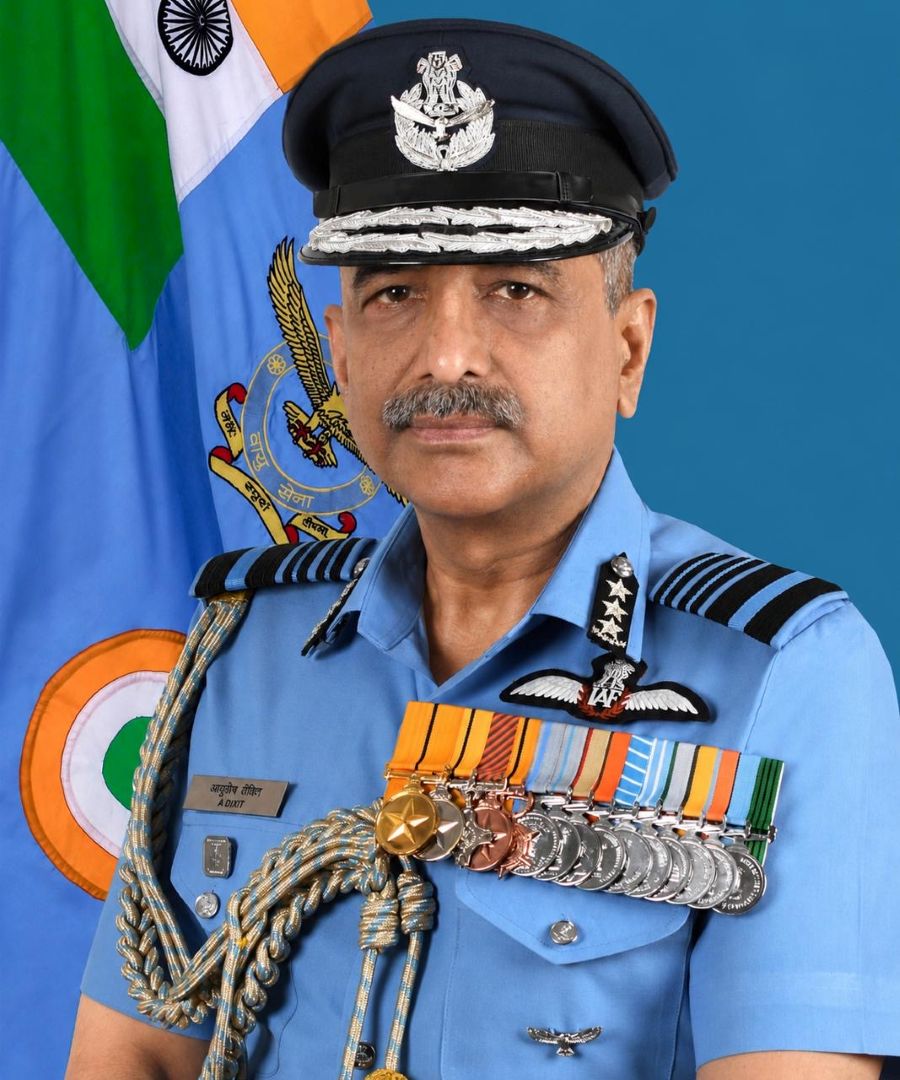
Chief of Defence Staff General N. S. Raja Subramani, Chief of the Air Staff Air Chief Marshal A. P. Singh and Chief of the Naval Staff Admiral Krishna Swaminathan attended the event, along with senior defence officials and representatives of participating countries. The exercise also included professional engagements, industrial visits and cultural interactions.
Team BharatShakti