




India is examining a Japanese proposal for the licensed production of upgraded Mogami-class multi-mission stealth frigates in Indian shipyards, with technology transfer, as New Delhi looks to expand its naval capabilities and strengthen its domestic warship-building ecosystem.
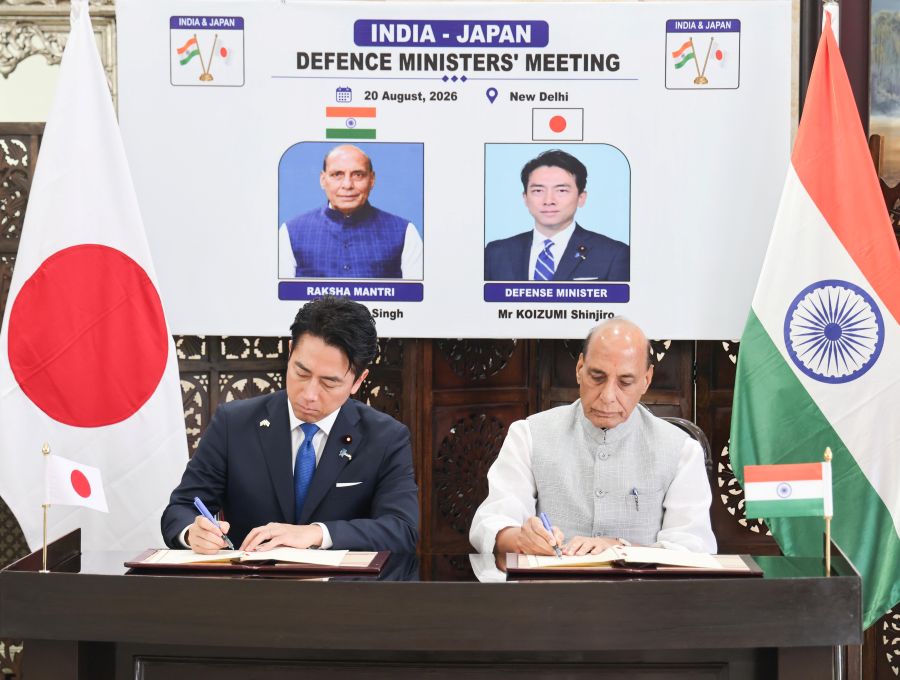
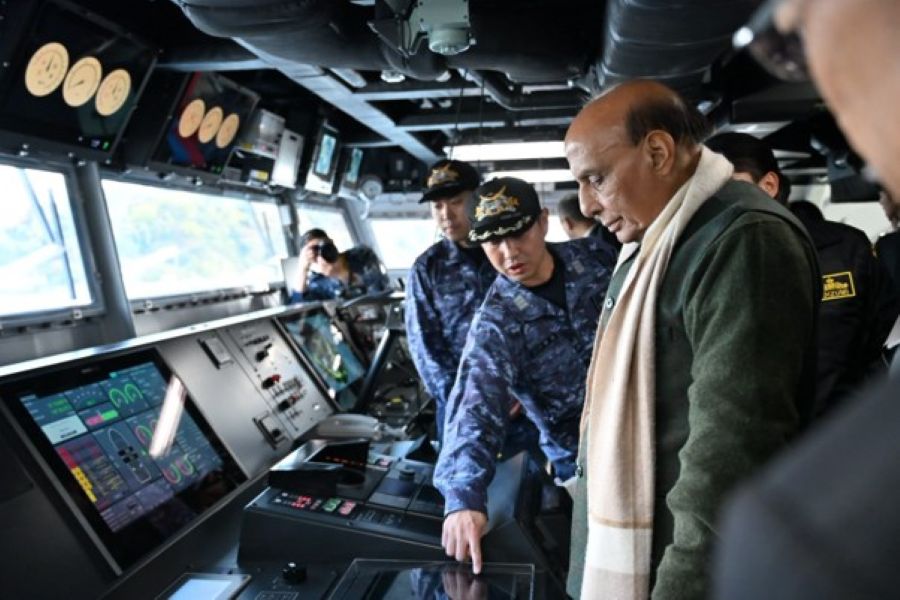
Defence Minister Rajnath Singh got a first-hand look at Japan’s advanced frigate programme on November 18 when he toured the Mogami-class warship JS Natori at the Japan Maritime Self-Defense Force (JMSDF) naval base in Yokosuka, accompanied by his Japanese counterpart Shinjiro Koizumi. The visit comes ahead of the fourth India-Japan Foreign and Defence Ministers’ Dialogue (2+2), scheduled to be held in Tokyo on November 19.
The proposed Mogami-class collaboration is emerging as an important dimension of the expanding India-Japan defence partnership. Japan has offered upgraded versions of the multi-mission frigates for licensed production in India, potentially combining Japanese stealth and combat-system technologies with India’s growing shipbuilding capabilities. Discussions are continuing on pricing, technology transfer, production arrangements and the Indian Navy’s operational requirements. No final agreement or production contract has been concluded.
The Mogami-class frigates feature a low-observable stealth design, integrated sensor and combat systems, and a high degree of automation that allows them to operate with a relatively small crew. The proposed collaboration, if finalised, could provide a significant boost to India’s naval modernisation and defence manufacturing ambitions.
The visit to Yokosuka also carried a wider strategic message. Sharing his impressions on X, Singh said the growing maritime cooperation between India and Japan reflected the deep trust and shared commitment of the two countries towards a free, open and rules-based Indo-Pacific.
“Today, I visited the Japan Maritime Self-Defense Force base in Yokosuka with Defence Minister Shinjiro and inspected the Mogami-class multi-mission frigate JS Natori,” he posted, underlining the importance of maritime cooperation between the two countries.
Singh’s inspection of the Japanese warship follows recent operational engagements between the two navies, including bilateral naval exercise JAIMEX 2026, in which the Indian Navy’s INS Sahyadri operated alongside JMSDF ship JS Ise on November 13–14. The exercise involved tactical manoeuvres, communication drills and cross-deck landings, reinforcing interoperability and operational familiarity.
The maritime engagements assume added significance as the two countries prepare to review their broader defence and strategic partnership at the 2+2 ministerial dialogue. Singh and External Affairs Minister S Jaishankar will meet Koizumi and Japanese Foreign Minister Toshimitsu Motegi in Tokyo. Defence industrial cooperation, maritime security, technology collaboration and expanding the scale and complexity of joint military exercises across all three services are expected to figure prominently.
Earlier, upon his arrival in Japan, Singh was received by Koizumi at the Japanese Ministry of Defence, where he was accorded a ceremonial Guard of Honour. The two ministers held a brief interaction before travelling by a Japan Self-Defense Forces helicopter to the JMSDF base at Yokosuka.
During his visit, Singh also interacted with members of the Indian diaspora at an event organised by the Indian Embassy in Tokyo. Highlighting India’s economic transformation, he said the country had emerged as one of the world’s fastest-growing major economies despite global uncertainties, including the continuing challenges arising from the West Asian situation.
Referring to the growth of India’s defence manufacturing sector, Singh said domestic defence production had crossed a record Rs 1.80 lakh crore, compared with Rs 48,000 crore a decade ago. Defence exports, he added, had risen from around Rs 600 crore to an all-time high of Rs 38,000 crore, reflecting the expansion of indigenous capabilities and India’s growing presence in the international defence market.
Singh’s two-day visit is aimed at imparting fresh momentum to the India-Japan Special Strategic and Global Partnership. The proposed Mogami-class frigate collaboration, alongside expanding naval exercises and maritime engagement, illustrates the potential to move bilateral defence ties beyond military exchanges towards deeper industrial and technological cooperation.
Team Bharatshakti