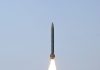






The Philippines is looking to expand its BrahMos missile arsenal and have the Indian supersonic cruise missile customised for its archipelagic terrain, signalling Manila’s growing interest in India as a strategic defence partner as tensions with China intensify in the South China Sea.
The proposed purchase, potentially worth $700 million to $800 million, could provide the Philippines with five additional BrahMos systems and nearly 60 missiles, substantially strengthening its ability to threaten hostile naval forces approaching its coastlines and contested maritime approaches.
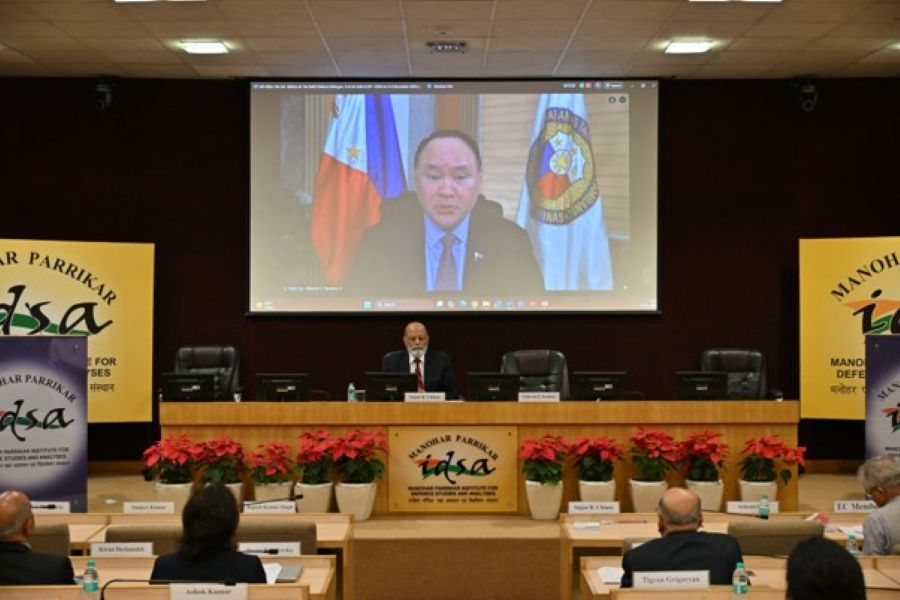
Philippine Defence Secretary Gilberto Teodoro Jnr told a security summit in New Delhi last week that Manila wanted to build on its 2022 acquisition of BrahMos to reinforce its external deterrence.
Indian sources subsequently told Reuters that negotiations for an additional supply were in their final stages.
Teodoro also disclosed that Manila had submitted a wish list to India seeking modifications to make BrahMos better suited to Philippine operational requirements.
“We have also shared a wish list on the BrahMos to the Indian authorities to make it more tailor-fitted for the Philippine environment,” he told the Delhi Defence Dialogue via video link, citing the logistical challenges of moving missile systems across an archipelago comprising thousands of islands.
The Philippines became the first Southeast Asian country to acquire BrahMos, marking a significant breakthrough in India’s defence exports and its strategic engagement with the region.
Teodoro said India’s decision to supply the missiles reflected its confidence that Manila would employ them responsibly and exclusively for defensive purposes consistent with international law.
A Missile Wall Against Chinese Naval Pressure
For the Philippines, BrahMos is more than a high-speed cruise missile acquisition. It offers a way to impose substantial operational costs on a technologically superior adversary without matching its naval strength.
The Philippine military has traditionally lacked a credible land-based long-range strike capability. BrahMos changes that equation by giving Manila the ability to threaten hostile surface combatants well before they approach vulnerable coastal areas or strategically important maritime corridors.
The missile’s combination of supersonic speed, precision and low-altitude flight makes it particularly difficult to detect, track and intercept during its terminal approach. Its deployment from mobile coastal launchers also complicates an adversary’s targeting calculations.
A Manila-based think tank said BrahMos could help the Philippines establish a coastal “missile wall” along its western and northern approaches, substantially strengthening its ability to deny access to hostile naval forces.
The system is particularly relevant to Manila’s emerging strategy of sea denial – preventing an adversary from operating freely in contested waters rather than attempting to establish conventional naval superiority.
BrahMos allows the Philippines to turn its geography into a military advantage. Mobile launchers dispersed across coastal positions can threaten approaching warships, forcing them to operate at greater distances, devote more resources to missile defence and reconsider the risks of entering contested maritime zones.
The proposed acquisition of five additional transporter-erector-launchers would more than double the Philippine military’s existing BrahMos battery strength, significantly expanding its coastal coverage and operational flexibility.
The next tranche could also feature more capable variants, potentially enhancing the system’s reach and lethality.
India’s Strategic Opening
BrahMos has traditionally been associated with anti-ship warfare, but India is progressively expanding its operational versatility across land, sea and air domains.
For Manila, the missile offers a relatively rapid route to building credible deterrence without the expense and complexity of acquiring a large fleet of advanced combat aircraft or warships.
India, meanwhile, is emerging as an alternative supplier at a time when American missile inventories and production capacity are under pressure from prolonged conflict in the Middle East.
The Manila-based think tank observed that the Philippines was impressed by BrahMos but was also examining a market in which some alternative systems might not be readily available.
The opportunity extends beyond a commercial arms transaction. India’s willingness to equip a Southeast Asian partner with a potent defensive capability underscores the growing convergence between New Delhi and Manila amid China’s increasingly assertive behaviour in the South China Sea.
Ravi Shankar

Dr Ravi Shankar has over two decades of experience in communications, print journalism, electronic media, documentary film making and new media.
He makes regular appearances on national television news channels as a commentator and analyst on current and political affairs. Apart from being an acknowledged Journalist, he has been a passionate newsroom manager bringing a wide range of journalistic experience from past associations with India’s leading media conglomerates (Times of India group and India Today group) and had led global news-gathering operations at world’s biggest multimedia news agency- ANI-Reuters. He has covered Parliament extensively over the past several years. Widely traveled, he has covered several summits as part of media delegation accompanying the Indian President, Vice President, Prime Minister, External Affairs Minister and Finance Minister across Asia, Africa and Europe.