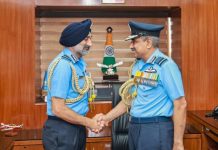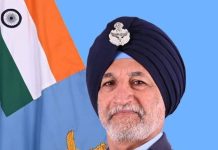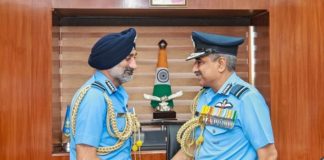






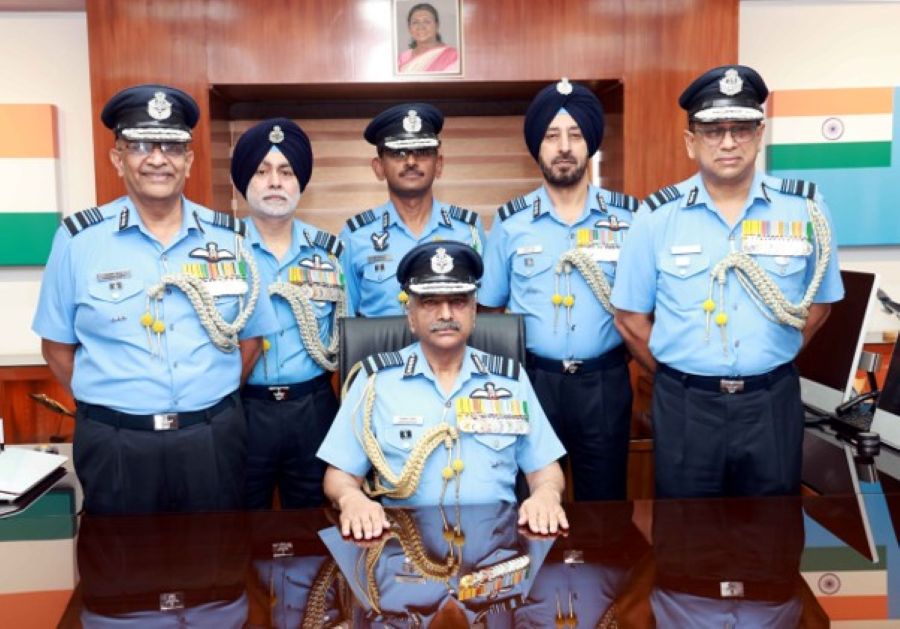
Air Marshal Ashutosh Dixit on Saturday took over as the 29th Chief of the Air Staff (CAS), assuming the rank of Air Chief Marshal, succeeding Air Chief Marshal Amar Preet Singh, who retired after 42 years of distinguished service in the Indian Air Force (IAF).
Air Chief Marshal Dixit takes charge at a critical juncture for the IAF, which faces the twin challenges of rebuilding its depleted fighter strength and preparing for a rapidly changing air warfare environment characterised by fifth-generation combat aircraft, unmanned systems and increasingly sophisticated air defence networks.
A fighter pilot with nearly four decades of service and more than 3,500 hours of flying experience, ACM Dixit has operated a wide range of combat and trainer aircraft, including the Mirage-2000, various MiG platforms, Jaguar and Tejas. An Experimental Test Pilot and Qualified Flying Instructor, he brings extensive operational and technical experience to the top post.
His immediate priorities are likely to include accelerating the modernisation of the IAF, addressing delays in the induction of new combat aircraft and strengthening its surveillance, air defence and network-centric warfare capabilities.
The government has approved several capability enhancement measures for the IAF in the aftermath of Operation Sindoor. These include improved communication networks, additional surveillance aircraft, long-range air defence systems, a wider range of unmanned aerial vehicles (UAVs) and new fighter aircraft. Translating these approvals into operational capabilities will be a major test of the new leadership.
Another significant issue awaiting ACM Dixit is the proposed restructuring of the armed forces through geographically defined integrated theatre commands. The IAF has consistently expressed reservations about dividing its fighter assets among separate theatre commands, arguing that air power requires centralised control and the flexibility to be deployed across multiple operational theatres.
His previous association with the formulation of joint doctrines and the Defence Forces Vision 2047, under the Chief of Defence Staff, gives him an understanding of the larger integration agenda. As Air Chief, however, he will have to reconcile the requirements of jointness with the operational imperatives and institutional interests of the IAF.
Ravi Shankar
Dr Ravi Shankar has over two decades of experience in communications, print journalism, electronic media, documentary film making and new media.
He makes regular appearances on national television news channels as a commentator and analyst on current and political affairs. Apart from being an acknowledged Journalist, he has been a passionate newsroom manager bringing a wide range of journalistic experience from past associations with India’s leading media conglomerates (Times of India group and India Today group) and had led global news-gathering operations at world’s biggest multimedia news agency- ANI-Reuters. He has covered Parliament extensively over the past several years. Widely traveled, he has covered several summits as part of media delegation accompanying the Indian President, Vice President, Prime Minister, External Affairs Minister and Finance Minister across Asia, Africa and Europe.