




India and Japan have agreed to significantly expand defence and maritime cooperation, including more complex military exercises, live-fire training by Japanese forces at Indian firing ranges and exploration of joint naval shipbuilding and design, signalling a deeper strategic alignment in the Indo-Pacific.
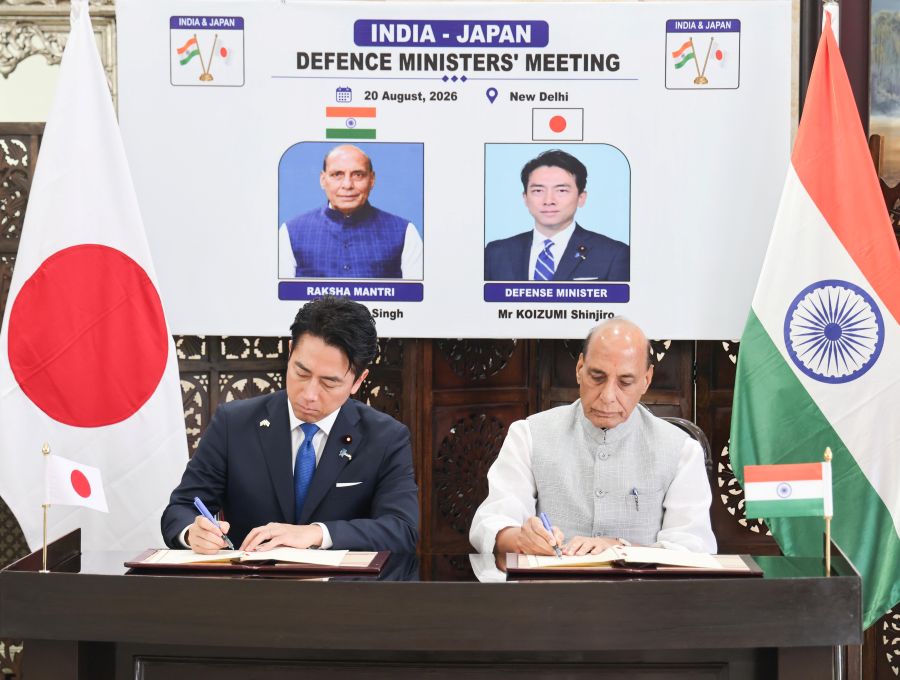
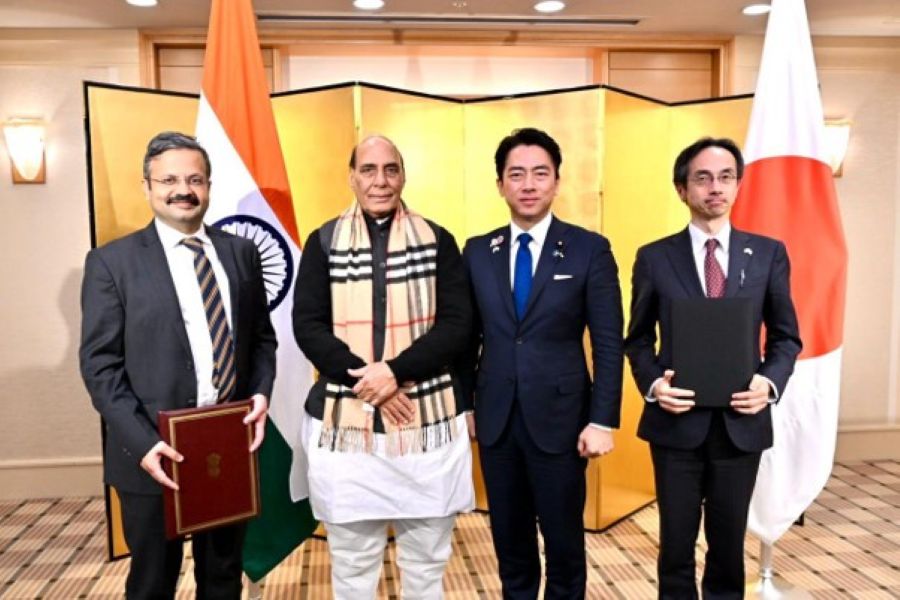
The decisions were announced following the fourth India-Japan Foreign and Defence Ministers’ Dialogue (2+2) in Tokyo on November 19, co-chaired by Defence Minister Rajnath Singh and External Affairs Minister S Jaishankar with their Japanese counterparts, Shinjiro Koizumi and Toshimitsu Motegi.
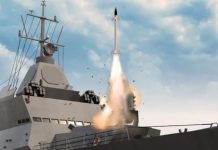
A major outcome was the signing of a Letter of Intent for the Japan Self-Defense Forces (JSDF) to utilise firing ranges in India. This will enable Japanese forces, for the first time, to conduct live-fire training in India, including exercises involving surface-to-ship missiles. Both sides agreed to accelerate coordination to operationalise the arrangement.
The ministers also called for greater complexity in bilateral military exercises, integration of unmanned systems and the possibility of conducting bilateral and multilateral exercises at short notice. They cited the first-ever deployment of Japan Air Self-Defense Force fighter aircraft to India for the Veer Guardian 26 exercise as a significant milestone in expanding air force cooperation.
On the industrial front, the two countries reaffirmed their commitment to strengthening defence manufacturing under the framework of “Design with Japan, Make in India”. They called for early progress on the UNICORN-related arrangements and looked forward to India’s Acceptance of Necessity (AoN) by February 2027. The ministers also welcomed the third India-Japan Defence Industries Forum held in Tokyo in October.
Naval cooperation gains strategic weight
Maritime security and naval industrial collaboration emerged as another major pillar of the discussions. Welcoming the recently signed Memorandum of Arrangement on Maritime Security Cooperation, the ministers agreed to translate it into concrete operational outcomes between the Indian Navy and the Japan Maritime Self-Defense Force.
The areas identified include Maritime and Air Domain Awareness, search and rescue, information sharing, and humanitarian assistance and disaster relief. Both sides also committed to strengthening mine countermeasure capabilities and exploring the possibility of joint development in naval shipbuilding and design.
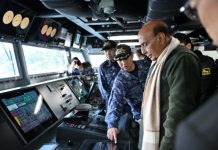
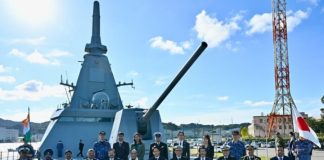
The naval shipbuilding initiative assumes particular significance against the backdrop of Japan’s proposal for licensed co-production of upgraded Mogami-class multi-mission stealth frigates in Indian shipyards. During his visit to Japan, Singh toured the Mogami-class frigate JS Natori at Yokosuka alongside Koizumi, highlighting the growing interest in Japanese naval technology and industrial collaboration.
While the 2+2 joint statement does not announce a final agreement on Mogami-class frigate production, its reference to exploring joint naval shipbuilding and design provides a wider framework for advancing maritime industrial cooperation.
Indo-Pacific and wider strategic convergence
Beyond bilateral defence engagement, the two countries emphasised closer coordination to maintain a free, open and rules-based Indo-Pacific. The ministers welcomed greater synergy between India’s Indo-Pacific Oceans Initiative (IPOI) and MAHASAGAR vision and Japan’s updated Free and Open Indo-Pacific (FOIP) strategy.
They also underlined the importance of reinforcing Quad initiatives through bilateral cooperation, particularly in maritime and transnational security, critical and emerging technologies, economic security and humanitarian assistance.
Cooperation with ASEAN countries was another priority, with the ministers welcoming the first India-Japan-Philippines Trilateral 1.5 Dialogue and the first trilateral naval passage exercise involving India, Japan and Indonesia in February 2026.
The joint statement also highlighted cooperation in securing undersea communication cable networks, cybersecurity, artificial intelligence and space, recognising their growing importance to regional security and strategic resilience.
The ministers strongly condemned terrorism in all its forms, including cross-border terrorism, and called for concerted action against UN-listed terrorist organisations and their support networks.
The fourth 2+2 Dialogue marks a further consolidation of the India-Japan Special Strategic and Global Partnership. With operational military cooperation, defence technology, maritime security and industrial collaboration gaining momentum, both countries are seeking to translate their strategic convergence into tangible capabilities and a stronger regional security framework.
Team BharatShakti

Dr Ravi Shankar has over two decades of experience in communications, print journalism, electronic media, documentary film making and new media.
He makes regular appearances on national television news channels as a commentator and analyst on current and political affairs. Apart from being an acknowledged Journalist, he has been a passionate newsroom manager bringing a wide range of journalistic experience from past associations with India’s leading media conglomerates (Times of India group and India Today group) and had led global news-gathering operations at world’s biggest multimedia news agency- ANI-Reuters. He has covered Parliament extensively over the past several years. Widely traveled, he has covered several summits as part of media delegation accompanying the Indian President, Vice President, Prime Minister, External Affairs Minister and Finance Minister across Asia, Africa and Europe.