





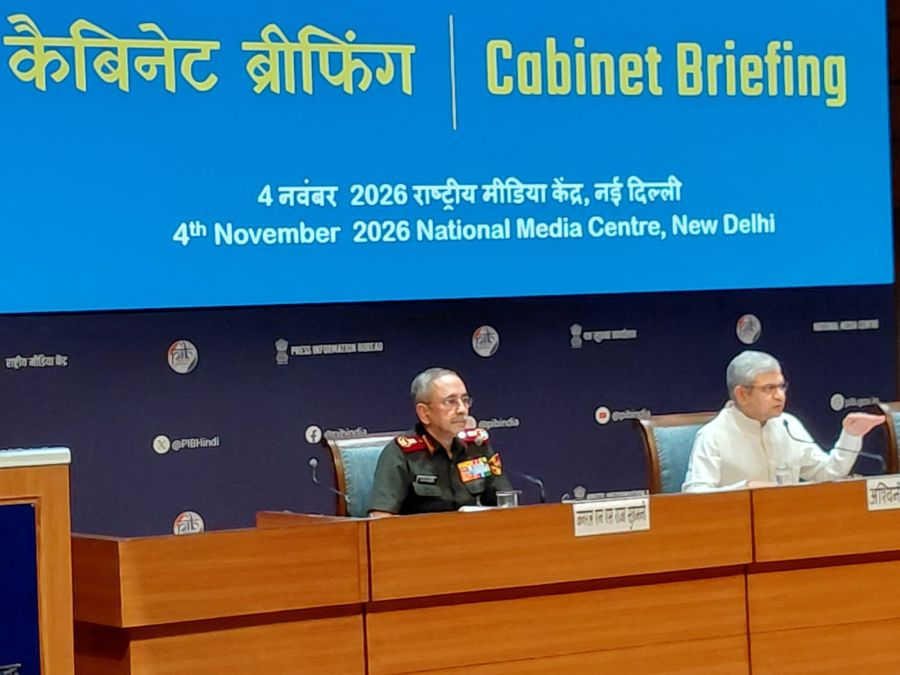
In a pathbreaking recalibration of the Agnipath recruitment scheme, the Union Cabinet on Wednesday approved a second two-year engagement for Agniveers not selected for regular service after their initial four-year tenure, opening another opportunity for them to join the Armed Forces as regular soldiers.
The decision marks a substantial modification of the original scheme, under which only 25 per cent of Agniveers were to be retained in the three services, with the remaining 75 per cent exiting after four years with a financial package.
Under the revised arrangement, the initial four-year Agnipath tenure will remain unchanged. The 25 per cent selected for regular service will continue to be absorbed under the existing provisions. The remaining 75 per cent will be offered an additional two-year engagement, after which they will have another opportunity to enter the Armed Forces as regular personnel, provided they meet the prescribed selection criteria, meaning no exit yet for over three lakh Agniveers employed with the Armed Forces.
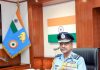
Announcing the decision in the capital, Chief of Defence Staff General N S Raja Subramani said the change followed a sustained assessment of Agniveers’ performance over the past four years and recommendations from the three services.
“When the Agnipath scheme was first introduced, we emphasised that it was not set in stone. We stated that we would evaluate the performance of the Agniveers and conduct continuous reviews,” he said.
A centralised database had been maintained across the three services to track their performance, with annual assessments forming the basis of the review. The Armed Forces had recommended the additional engagement after evaluating operational requirements, organisational efficiency and the performance of Agniveers, he said.
The proposal had been under discussion for the past three to four months before receiving Cabinet approval.
Second engagement, higher pay
The revised scheme provides for enhanced remuneration during the additional two-year engagement. Agniveers will receive Rs 43,500 in the first year and Rs 47,500 in the second, compared with the initial starting salary of Rs 30,000 under the original scheme.
Those opting to leave after the extended engagement will also receive an enhanced Seva Nidhi package. The government’s contribution will rise to 70 per cent of the package, compared with the original arrangement in which the Agniveer and the government contributed equally.
The second engagement is expected to provide greater operational experience and an opportunity for Agniveers to improve their relative standing for regular enrolment. Selection will remain subject to objective criteria, including adaptability, discipline and a clean vigilance record.
General Subramani stressed that the revised arrangement did not mean the Agnipath scheme had been discontinued.
“The Agnipath scheme has not been discontinued. It will continue. Secondly, this second engagement period of two years gives those Agniveers who have not been selected in the first four years a chance to serve longer,” he said.
He described the arrangement as a “win-win situation”, allowing personnel who had not made the initial cut to acquire additional experience and skills while giving the Armed Forces a larger pool of trained manpower for future selection.
Performance review drives policy change
The CDS said the Armed Forces’ assessment had highlighted the strong performance of Agniveers in physical fitness, motivation, morale and technological proficiency.
The review, he said, had also taken into account the need to preserve a youthful profile while building a more experienced and technologically capable military.
The revised arrangement is expected to sustain competition among Agniveers for regular enrolment while providing those who do not make the initial selection a longer period of service, improved remuneration and another opportunity for a military career.
The government also believes that the additional engagement will reduce the need to rely on reservations in paramilitary forces as the principal post-service avenue for Agniveers, by widening their opportunities within the Armed Forces themselves.
Defence Minister Rajnath Singh welcomed the decision, thanking Prime Minister Narendra Modi for approving the additional two-year “Second Tour of Duty”.
“This decision is a continuation of long-term structural reforms of our defence forces, aimed at creating a younger, fitter, technologically equipped and future-ready military. It is not merely a recruitment policy; it is a way forward to prepare India’s military for the changing character of warfare,” Singh said in a post on X.
First batches nearing completion of tenure
The decision comes as the first batches recruited under Agnipath approach the completion of their four-year engagement.
The first batch of Agniveers in the Indian Navy is due to complete its tenure this month, followed by the first batches in the Army and the Indian Air Force at the end of next month.
More than three lakh Agniveers are undergoing training or serving at various stages across the three services. The Army accounts for around 2.8 lakh, with approximately 19,000 personnel expected to complete their initial four-year tenure in the coming cycle.
The services had earlier sought a substantial increase in the retention percentage after the initial engagement, with several rounds of communication with the Department of Military Affairs on the issue.
Launched in 2022, Agnipath was designed to bring down the average age of the Armed Forces through short-term recruitment, with Agniveers serving four years and only a quarter being retained as regular personnel. It was also designed to help decrease the growing defence personnel costs related to salaries, allowances, and pensions.
The latest revision preserves that recruitment framework but introduces a second stage of engagement, giving a larger number of Agniveers an extended opportunity to serve and compete for regular enrolment.
Ravi Shankar

Dr Ravi Shankar has over two decades of experience in communications, print journalism, electronic media, documentary film making and new media.
He makes regular appearances on national television news channels as a commentator and analyst on current and political affairs. Apart from being an acknowledged Journalist, he has been a passionate newsroom manager bringing a wide range of journalistic experience from past associations with India’s leading media conglomerates (Times of India group and India Today group) and had led global news-gathering operations at world’s biggest multimedia news agency- ANI-Reuters. He has covered Parliament extensively over the past several years. Widely traveled, he has covered several summits as part of media delegation accompanying the Indian President, Vice President, Prime Minister, External Affairs Minister and Finance Minister across Asia, Africa and Europe.