



The Defence Acquisition Council (DAC) on Monday cleared a Rs 1.10 lakh crore military acquisition package, giving the armed forces a broad capability boost spanning battlefield mobility, mine warfare, CBRN protection, electronic warfare, surveillance and naval propulsion. Significantly, around 98% of the procurement is to come from Indian industry, underlining the growing emphasis on indigenous defence production.
The approvals, accorded at a meeting chaired by Defence Minister Rajnath Singh, come as the armed forces seek to plug operational gaps exposed by an increasingly technology-intensive and contested battlefield.
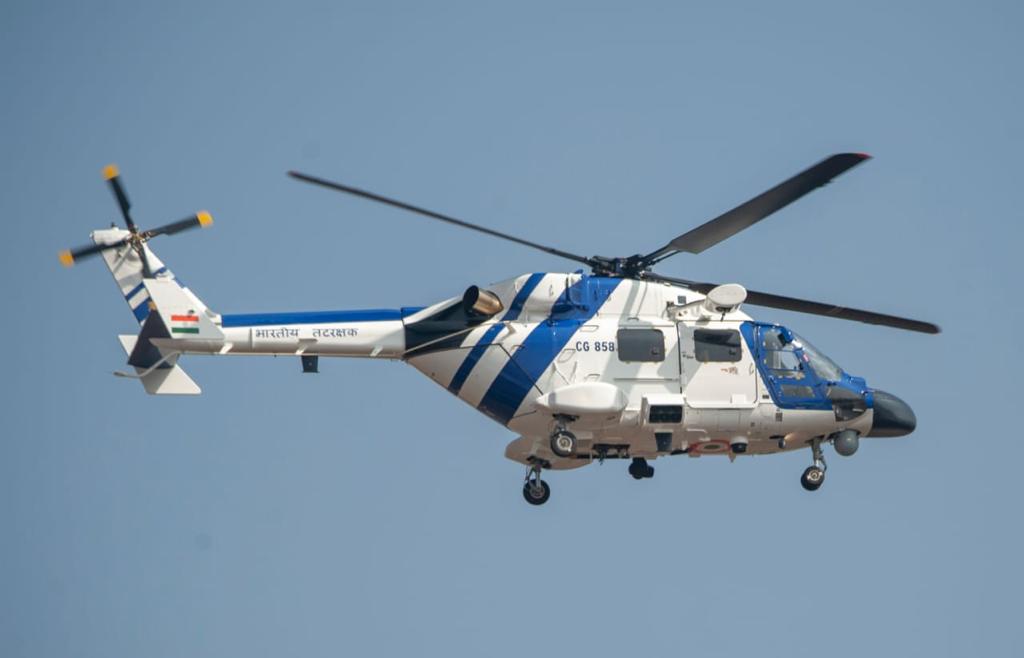
For the Army, the package focuses heavily on mobility and survivability in difficult terrain. The DAC cleared acquisition of CBRN reconnaissance vehicles, high-mobility vehicles, self-propelled mechanical mine layers, Advanced Light Helicopters (ALHs), Trawl Tanks and the Sarvatra Bridge System.
The combination points to a requirement for faster movement and manoeuvre while retaining the ability to operate across obstacle- and mine-ridden terrain. CBRN reconnaissance vehicles will provide the Army with the ability to detect, identify, monitor and mark contaminated areas, while mechanical mine layers will enable rapid minefield deployment.
The ALHs will provide greater rotary-wing flexibility for complex missions across varied terrain for the Army and the IAF. Trawl Tanks and the Sarvatra Bridge System will enhance the ability of fighting formations to cross obstacles during operations – an increasingly important capability in high-altitude and riverine environments.
The Navy’s approvals have a strong indigenisation dimension. The DAC cleared procurement of Arudhra radars and the design, development and subsequent procurement of Marine Gas Turbines (MGTs).
Arudhra will replace legacy Air Route Surveillance Radars at naval air stations. More strategically, the MGT programme seeks to build a domestic capability in a critical area of warship propulsion and reduce the Navy’s dependence on foreign suppliers for marine gas turbines.
For the IAF, the approvals focus on strengthening the survivability and combat effectiveness of its air assets. Alongside proposals covering fighters, transport aircraft and helicopters, the DAC cleared procurement of Ground-Based Multi-Purpose Jammers (GBMPJs).
The jammer programme is particularly significant as electronic warfare becomes an increasingly central component of air operations. The GBMPJs are intended to disrupt adversary radars, giving the IAF an additional ground-based electronic attack capability in a battlespace where control of the electromagnetic spectrum can determine the effectiveness of conventional air power.
The DAC also approved the Defence Forces Secure Access Card (DEFSAC) system, replacing paper-based identity cards, passes, and permits with an interoperable RFID-based smart card system.
The latest package therefore goes beyond conventional platform acquisition, combining battlefield mobility, obstacle-crossing, CBRN preparedness, electronic warfare, surveillance, and critical technology development.
The most striking feature, however, is the sourcing pattern. With approximately 98% of the total AoNs earmarked for Indian industry, the approvals reinforce the government’s effort to shift military procurement from an import-dependent model towards a domestic defence-industrial ecosystem.
For the armed forces, the challenge now will be to translate these approvals into time-bound contracts, indigenous production and timely induction, the stage at which several major Indian defence programmes have faced delays in the past.
Team BharatShakti