




It happened exactly 40 years ago but in my mind’s eye, it is as fresh as this morning’s newspaper. I was then working with The Sentinel, the Guwahati-based newspaper, then seen as an upstart in comparison to the older and staid Assam Tribune. In two years since joining The Sentinel, I was an important member of the desk, handling editing, production and generally leading the young newsroom (not that I was old at 23!).
The State was abuzz with rumours about a likely agreement between the Centre and the leaders of the Assam movement (not agitation) against foreigners. In anticipation, on 13 and 14 August, we had requested a couple of analysts to write a commentary on the likely fallout of the agreement. We had prepared a timeline of the movement that had begun in 1979; fished out various photographs that had chronicled the events in the previous six years.
The expectation was the agreement would be signed by the evening of 14 August in Delhi and the next day’s newspaper would carry the headlines. We all waited in great anticipation. I remember stationing a reporter and a photographer at Gauhati University, on the outskirts of the city. The University hostels was the de facto Headquarters of the All Assam Students Union (AASU) since its to top-most leaders Prafulla Kumar Mahanta and Bhrigu Kumar Phukan, still stayed on the campus and jubilant celebrations were expected at the University campus, although both were leading the delegation to Delhi.
In Delhi, our correspondent was at hand to give us the latest. By 9 pm, we had prepared two versions of the Editorial page (one with commentary on the big breakthrough of the accord, assuming it was already signed, and the other with a routine article, perhaps lecturing Ronald Regean on some such world leader—a staple diet in those days). The rest of the newspaper, including the front page with routine news stories were ready to print too. But hope springs eternal. We decided to wait until the very last moment possible. However, finally, when no news came until 2.30 am (remember they were pre-cellphone days), we decided to send the paper to ‘bed’ (sending it for print) and headed home.
Also See: Assam Accord: The Back Story
To catch some much-needed sleep. Next day was to be a holiday in any case, not because of Independence Day alone because the AASU and other allied organisations had called for a state-wide bandh in case the agreement didn’t come through.
Around 9 am, my father, watching Prime Minister Rajiv Gandhi’s Independence Day speech from the ramparts of the Red Fort live on Doordarshan, shook me out of deep sleep. “Some Assam accord seems to have happened,” he announced. I just heard the Prime Minister speaking about it, he said. I was now wide awake.
My first thought was to rush to the office. Then, with a start, I realised, there was no newspaper to be published the next day because of the Independence Day holiday. We didn’t have a phone at home. So, I went to our house owner’s house to try and call the Editor and the owner. His phone was dead too. Still scratching my head on the next steps, it suddenly occurred to me that our readers will not be able to read about such an important and historical event until 17 August morning since there will be no newspaper published on 16th August! That’s unfair, my inexperienced but alert mind thought. It went into an overdrive.
How about bringing out a special issue of the newspaper with whatever information was available? But today is a holiday for everyone. How do we reach the essential staff, was my immediate thought. Let that decision be taken by the Editor and the owner, I said to myself. So, I begged my father to lend me his Lambretta scooter for the day, quickly grabbed a bite and rushed to our editor’s house. The Editor was irrepressible DNB (Dhirendra Nath Bezboruah). He was surprised to see me at his residence. When I pitched my idea, he was half interested. I could sense his hesitation. Who will print the paper? Who will typeset the news and articles? What about other Editorial hands? He shot back.
Being a good boss, he asked: any solution to those practical issues? Being totally involved in the full process of producing the newspaper, I had an instant answer. Let’s ask Shanker-da, I said. I knew Shanker Rajkhowa, the intrepid entrepreneur who had assembled a bunch of young but passionate professionals to take on an established newspaper like Assam Tribune, would be always willing to go that extra distance to support my proposal. So we dialled him from DNB’s residence. As expected, he was more than willing, so off I drove to the office on GS (Guwahati-Shillong) Road on my scooter and DNB said he would follow soon.
The roads were deserted and except Shanker-da there was no one in the office (he stayed a floor above the office that time). How do you want to go about it, was Shankar-da’s first question. “We have some articles, some graphics, a bunch of photographs and if you can give me access to the STD (long distance) phone connection, I can make some calls, we can try to get reactions from Mahanta or Phukan and maybe we can get some senior analysts/writers to give us a quick analysis,” was my response. “Will it fill 8 full size pages,” Shanker-da asked. Clearly not, I said. But can we not do 4 pages or a smaller size, I replied. “Let’s figure that out later. You try and call some editorial hands, let me get the typesetters and at least one machine man. The rest we can manage ourselves and of course how we distribute the paper, let me figure it out,” Shankar-da said.
So off I went to the empty newsroom, fished out the articles that we had kept ready, started editing them and calculating how many pages can be filled with the available material etc. Another young trainee (yes, we had trainees younger than me – a 23-year Chief Sub-Editor!) who had managed to get through to, came in. After telling him to look at the wires (PTI and UNI) for any material they were putting out, I sauntered into DNB’s room. Shanker-da was also sitting there. “I don’t think we can print more than four pages of a tabloid size special issue, given the material and time available to us (We wanted to bring out the issue as soon as possible).
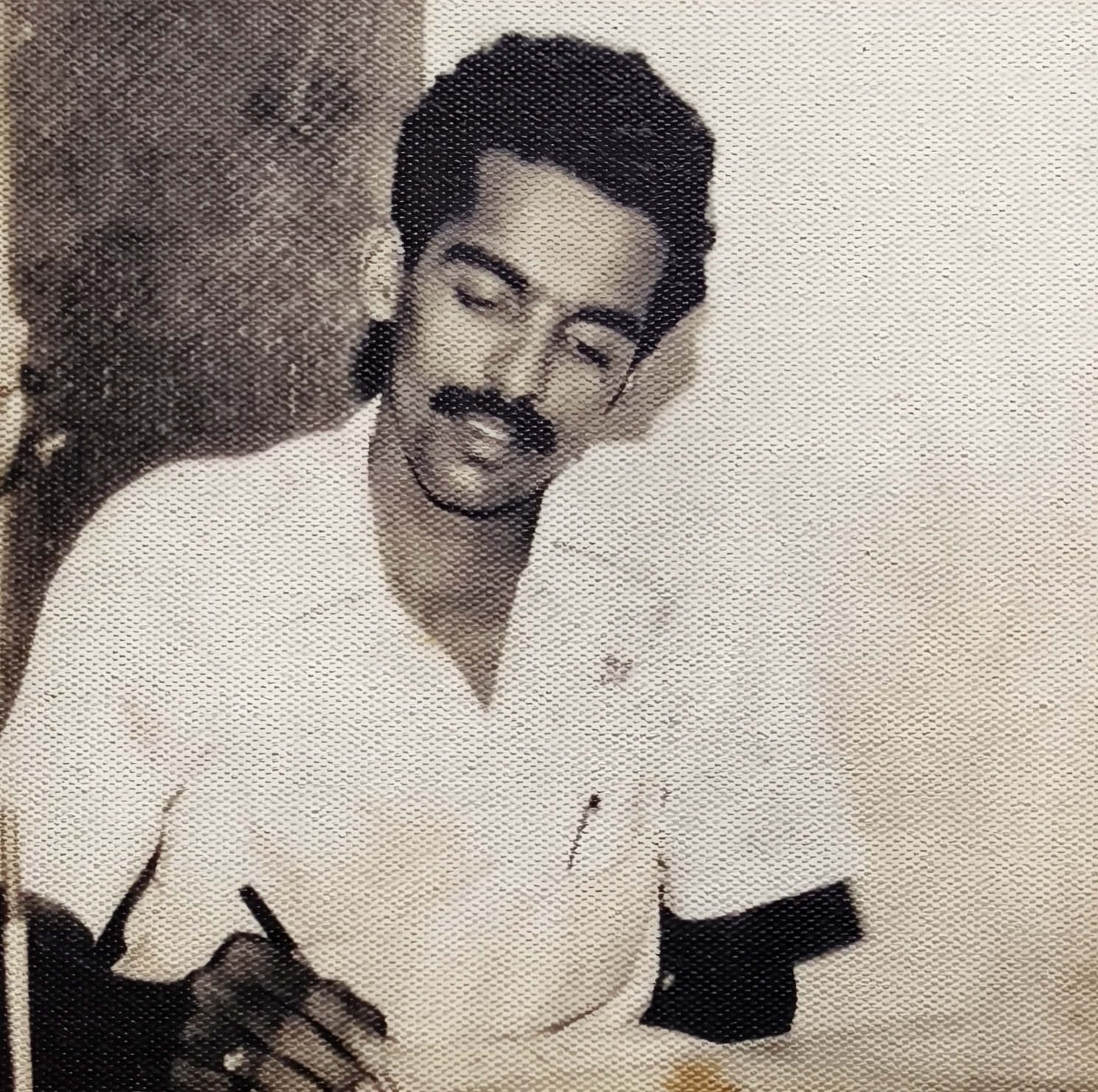
Both the seniors immediately agreed. Let’s go for a 4-page tabloid, they concurred. Now, all that I needed was to start dialling Delhi. After several attempts, I managed to get through to Mahanta. He was obviously rushed for time.
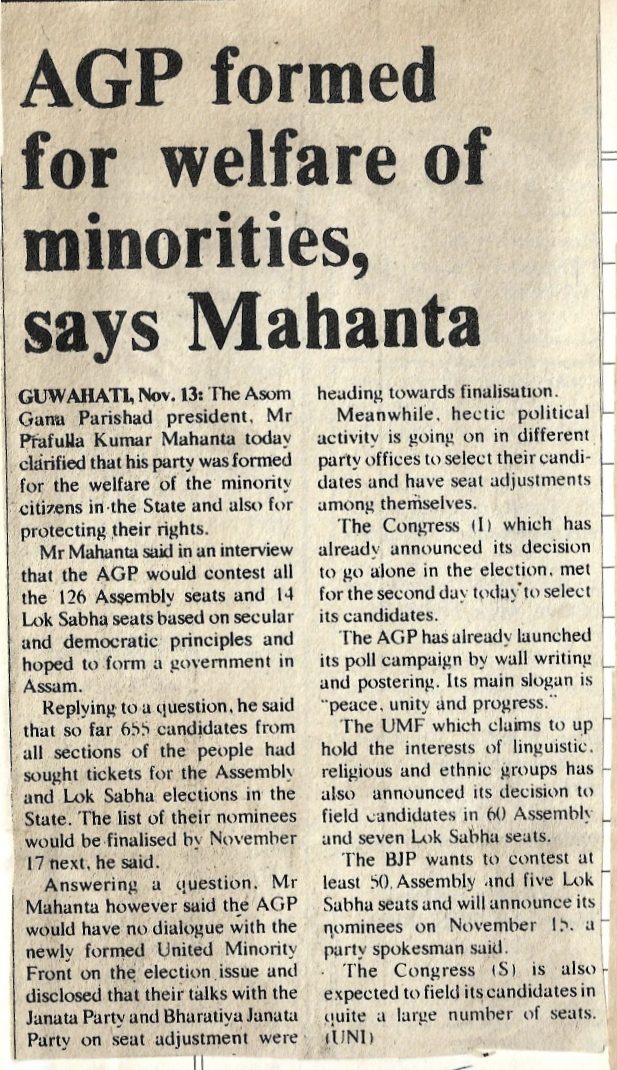
The future Chief Minister rattled out three-four salient points and disconnected. Our Delhi Correspondent (Mr Barthakur, if I memory serves me right), had meanwhile sent a longish telegram summarising how the accord was arrived at, who were the signatories, what time it was signed and what next etc. He had also mentioned at the end of the telegram that Mr Kuldeep Nayyar (the famous journalist/editor) had also agreed to write a short analytical piece.
With the content ready, now we had to put the paper together. With me, the trainee and I think one more colleague from the desk, we finally produced a four-page tabloid. I think 5,000 copies were printed. Hawkers were deployed at various crossroads in Guwahati city around 4 pm. Within minutes the copies were understandably sold out. There was euphoria across the city.
We were, at The Sentinel, naturally elated. I was exhausted but on top of the world but being part of an historical event, even if on the periphery. I distinctly remember Shankar da arranging for food and yes, some beer to celebrate and pat us on our back at the end of it all.
Unfortunately, I never kept a copy of that special issue, but the memory of that day is so deeply entrenched in my mind that I don’t need any pictures. Maybe the current management at The Sentinel will fish out the special issue someday.
Postscript: As the AASU and other leaders of the Assam movement returned home to a triumphant welcome, they formed a political party (the Asom Gana Parishad or AGP), rode to power in November 1985, defeating Hiteshwar Saikia and Bhrigu Kumar Phukan became the Home Minister. The Sentinel became a worthy second alternative to the older Assam Tribune.
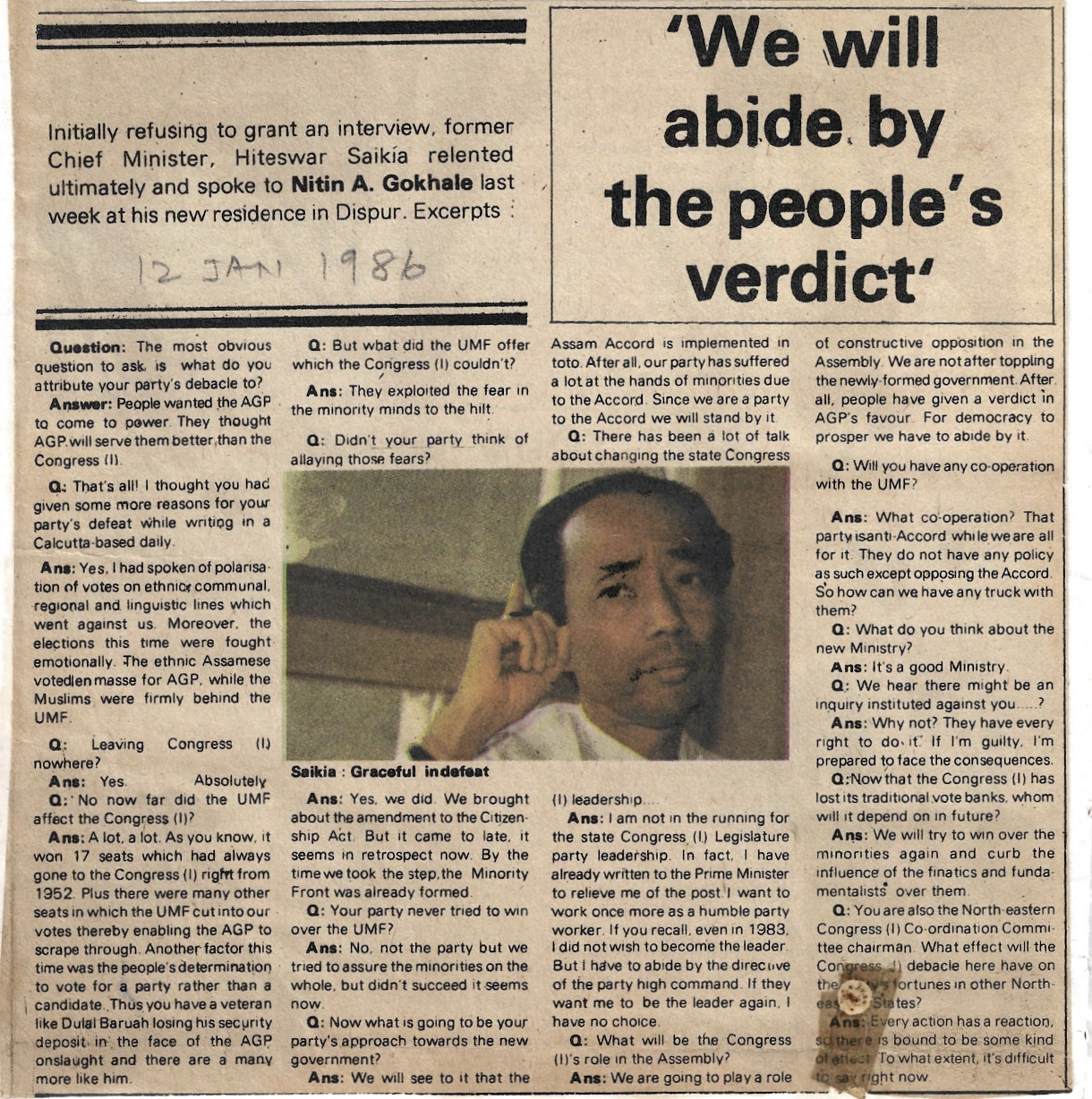
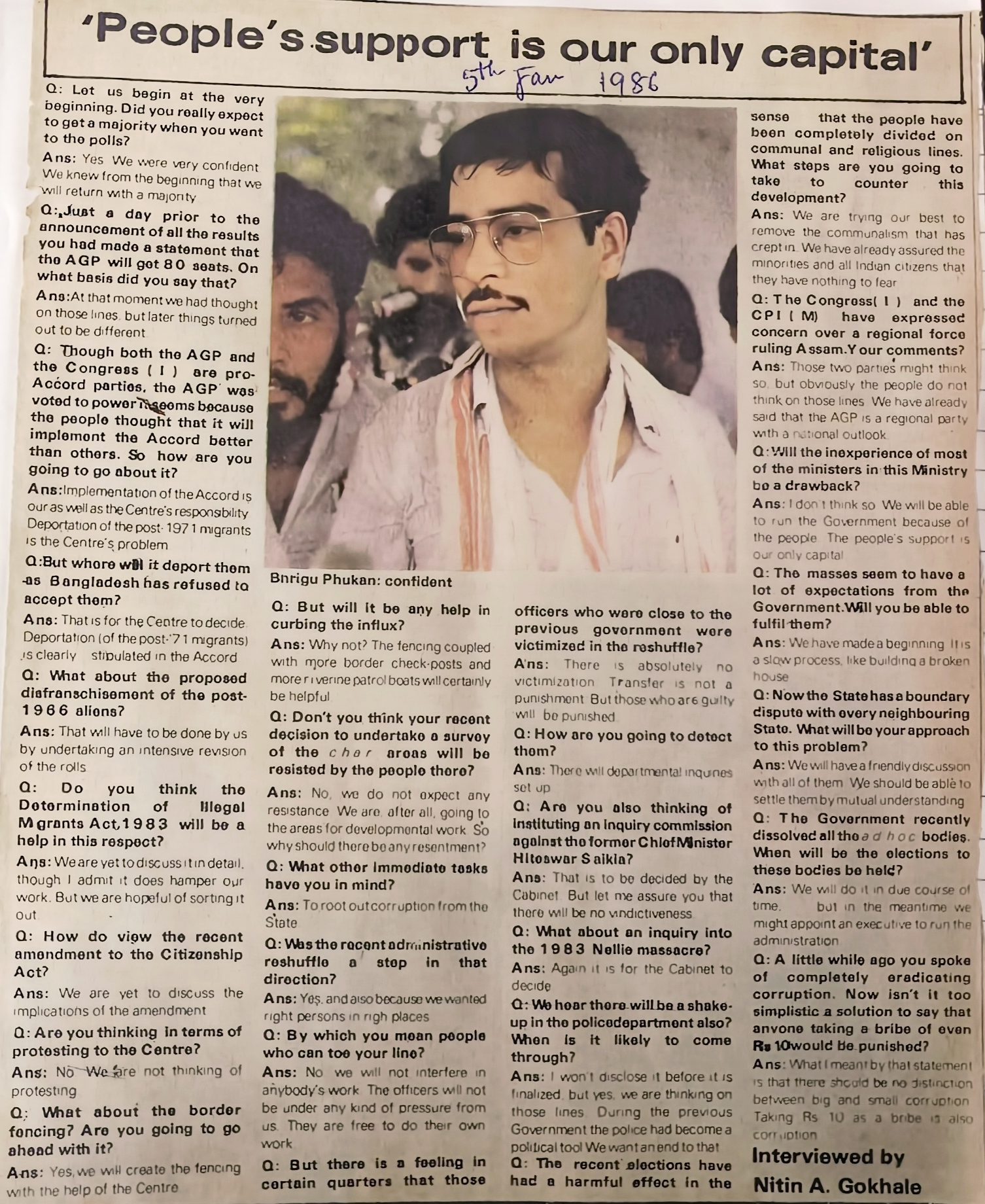
I cut my teeth in journalism through such memorable experiences; did all kinds of reporting from covering the Reliance Cricket World Cup of 1987, several state assembly elections and various insurgencies in the north-east, interviewed visiting politicians (including Atal Behari Vajpayee) film stars and prominent personalities such as Soli Sorabjee, Asha Parekh, Farooq Sheikh, Clive Lloyd and wrote editorials too. Those were heady days. Forty-two years later, I wouldn’t want to do anything different if I was, by some miracle, to turn back the clock. The thrill of bringing out a newspaper is unparalleled, in my view just as running three digital platforms to the best of our abilities now is.
(The author, Founder and Editor-in-Chief of the BharatShakti Group, started his career in 1983 in The Sentinel in Guwahati, spent 23 years reporting on and in the north-east until 2006, before relocating to Delhi as NDTV’s Security and Strategic Affairs Editor)

Author, thought leader and one of South Asia's leading strategic analysts, Nitin A. Gokhale has forty years of rich and varied experience behind him as a conflict reporter, Editor, author and now a media entrepreneur who owns and curates two important digital platforms, BharatShakti.in and StratNewsGlobal.com focusing on national security, strategic affairs and foreign policy matters.
At the beginning of his long and distinguished career, Gokhale has lived and reported from India’s North-east for 23 years, writing and analysing various insurgencies in the region, been on the ground at Kargil in the summer of 1999 during the India-Pakistan war, and also brought live reports from Sri Lanka’s Eelam War IV between 2006-2009.
Author of over a dozen books on wars, insurgencies and conflicts, Gokhale relocated to Delhi in 2006, was Security and Strategic Affairs Editor at NDTV, a leading Indian broadcaster for nine years, before launching in 2015 his own digital properties.
An alumni of the Asia-Pacific Centre for Security Studies in Hawaii, Gokhale now writes, lectures and analyses security and strategic matters in Indo-Pacific and travels regularly to US, Europe, South and South-East Asia to speak at various international seminars and conferences.
Gokhale also teaches at India’s Defence Services Staff College (DSSC), the three war colleges, India's National Defence College, College of Defence Management and the intelligence schools of both the R&AW and Intelligence Bureau.
He tweets at @nitingokhale


