


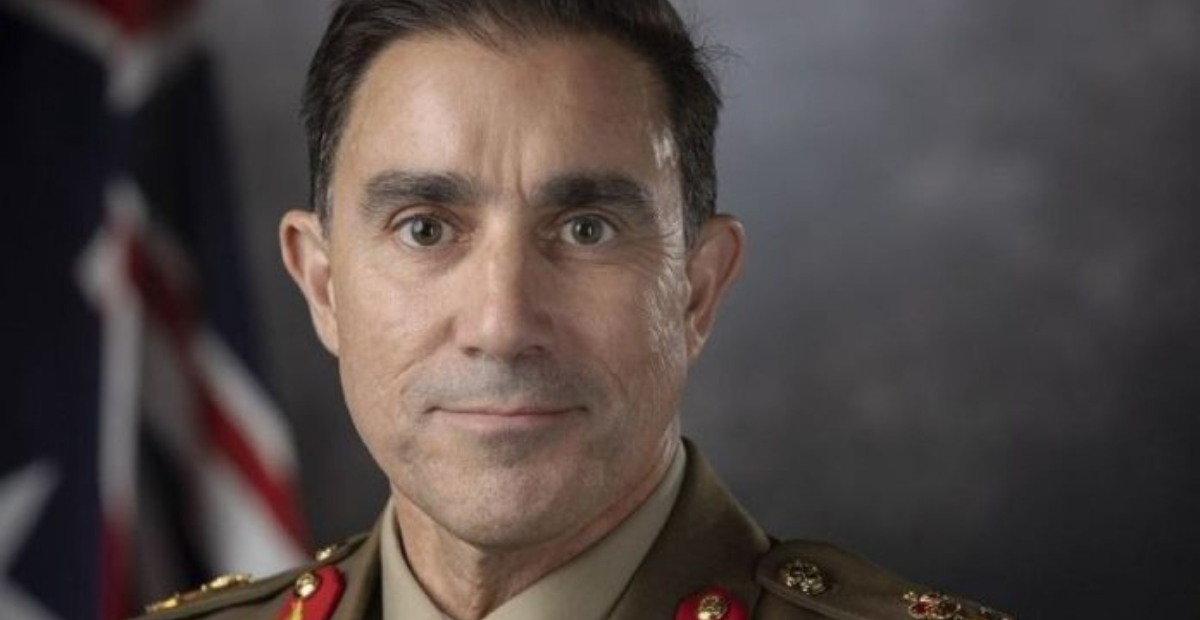
As the Indo-Pacific region navigates evolving security dynamics, the Australian Chief of Army, Lieutenant General Simon Stuart, has arrived in India for a five-day official visit (August 10–14), signalling a renewed push to deepen military cooperation between the two strategic partners.
The visit, which includes meetings with Indian Army Chief General Upendra Dwivedi and senior defence officials, comes at a critical moment, just months ahead of the expected Quad Leaders’ Summit. The agenda reflects the growing convergence between India and Australia across traditional security cooperation, emerging threats, and humanitarian assistance and disaster relief (HADR) efforts.
Strengthening the Indo-Pacific Framework
Humanitarian operations, particularly in response to natural disasters, have become a central pillar of India-Australia defence engagement. Both nations, with considerable experience in regional disaster relief, are increasingly aligning their military capabilities under the broader Quad HADR initiative, launched in 2022.
Lieutenant General Stuart’s visit will assess ongoing coordination mechanisms under the Comprehensive Strategic Partnership and seek to enhance joint readiness in the Indo-Pacific. Defence sources confirmed discussions will cover logistics collaboration, training interoperability, and regional contingency planning.
Australia’s Darwin and India’s Andaman and Nicobar Islands are being looked at as potential dual hubs for coordinated rapid response. This strategic concept could provide agile deployment options across Southeast Asia and the Pacific.
Building on a History of Shared Training
Adding depth to the strategic agenda is a more personal and long-term diplomatic tool: Defence Alumni Diplomacy. Both General Stuart and General Dwivedi share a bond that dates back to their time as coursemates at the United States Army War College in 2015. This shared training experience is emblematic of a broader effort by the Indian Army to institutionalise military alumni networks as a strategic asset.
Under a new initiative called Alumni Connect, the Indian Army is developing mechanisms, including a digital platform and formal tracking systems, to maintain links with officers trained in India and abroad. The aim is to transform personal rapport into operational trust and smoother bilateral coordination.
“Friendships forged during military training can outlast assignments and even governments,” said a senior Indian official. “These relationships often make the difference when countries need to coordinate under pressure, whether it’s disaster response or de-escalating regional tensions.”
Expanding the Institutional Canvas
The Centre for Land Warfare Studies (CLAWS) in New Delhi is expected to formalise a memorandum of understanding with its Australian counterparts during the visit, paving the way for regular exchanges on land warfare doctrine, counter-terrorism strategies, and joint research.
This collaboration complements on-ground engagement such as the annual Exercise AUSTRAHIND, which will next take place in Australia in November 2025. Other initiatives, from young officer exchanges to mutual participation in jungle warfare and counter-insurgency courses, continue to reinforce interoperability.
In addition, defence industrial collaboration is gaining momentum. Indian defence firms are supplying protected vehicles and ISR systems tailored for the rugged demands of the Indo-Pacific theatre. Talks are also underway between India’s Army Design Bureau and Australia’s Digger Works to co-develop mission-ready platforms for humanitarian operations.
Strategic Timing Ahead of Quad Summit
The timing is significant. With the Quad Leaders’ Summit anticipated later this year, Canberra and New Delhi appear to be harmonising positions on regional priorities, particularly in areas where the armed forces have a direct role, such as HADR, maritime security, and capacity-building in Southeast Asia and the Pacific.
Observers note that the growing frequency and substance of India-Australia defence engagements reflect a mutual understanding that future challenges in the Indo-Pacific will demand not only shared interests but shared infrastructure, training, and trust.
Team BharatShakti