


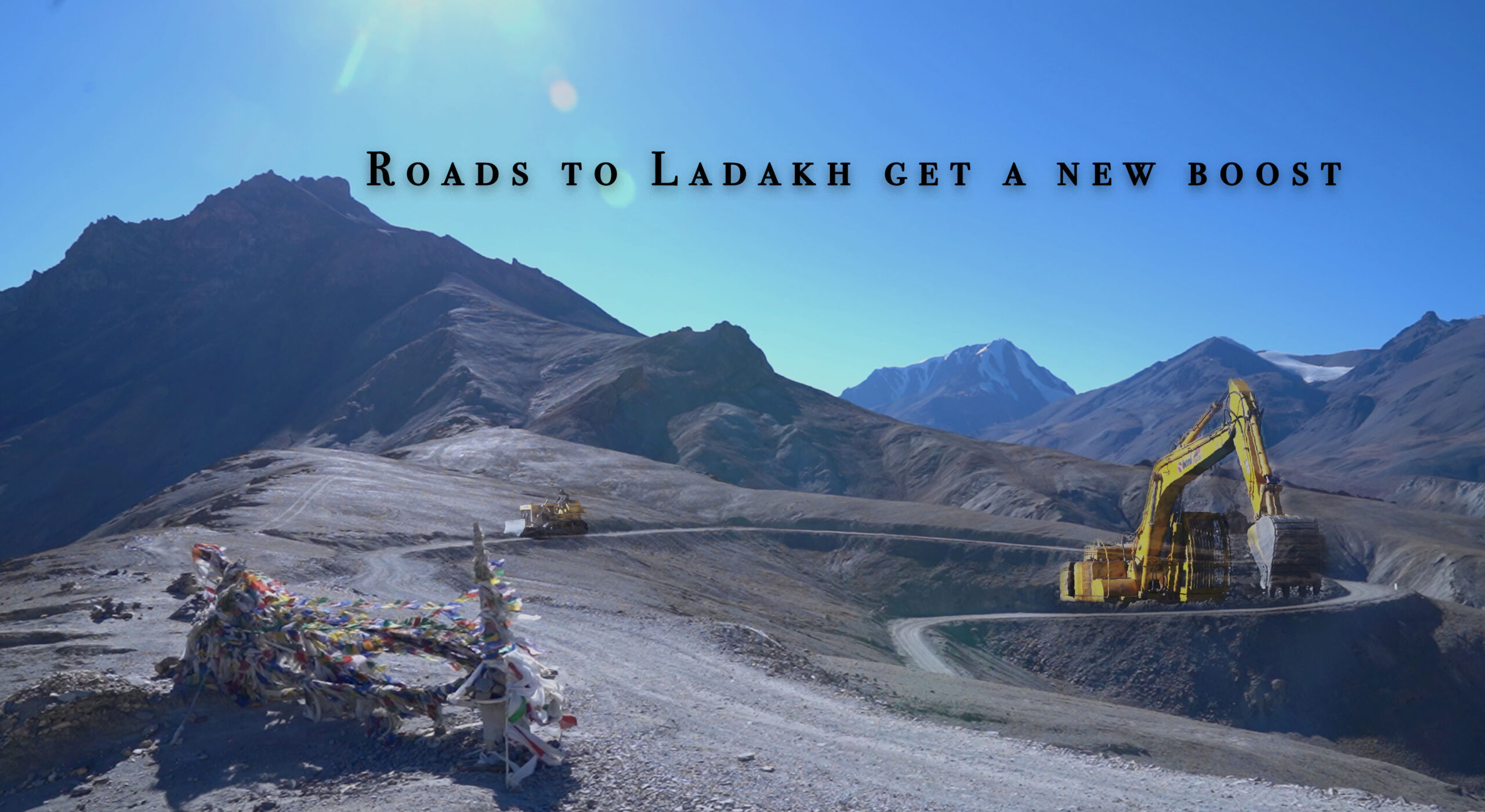
In a major push to strengthen infrastructure and military logistics near the Line of Actual Control (LAC), India is nearing completion of a new 130-km alternate road to the strategic military outpost of Daulet Beg Oldie (DBO), which is being built by the Border Road Organisation (BRO). It lies just south of the Karakoram Pass along the China border. The road, cutting across some of the most challenging terrain in the Himalayas, is expected to be fully operational by November 2026.
India’s New Sasoma-DBO Axis Takes Shape
Branching off from Sasoma in Ladakh’s Nubra Valley, the new axis will run through Saser La, Saser Brangsa, and Gapshan, before converging with the existing Darbuk-Shyok-DBO (DSDBO) route at Murgo. It provides a crucial alternative for the Indian Army to access the sensitive Sub Sector North (SSN), including the Depsang plains—an area of continued friction between Indian and Chinese troops.
“More than 70% of the construction between Saser Brangsa and Gapshan is already complete,” a senior defence official familiar with the project told BharatShakti. “By late next year, the entire route should be travel-ready.”
A Game-Changer for Mobility and Security
Once complete, the new road will shorten the travel distance from Leh to DBO by 79 kilometres, bringing it down from 322 km via DSDBO to 243 km. It will cut travel time from two days to nearly 12 hours, offering a significant boost in terms of troop mobility, supply chain efficiency, and emergency response capabilities in the strategically vital region.
Enhancing its capabilities, the route features nine bridges rated for 40-ton military vehicles, with plans to upgrade these to a 70-ton capacity, allowing the movement of heavier armoured equipment and advanced weaponry to forward positions.
“The infrastructure will support rapid deployment, both for deterrence and combat preparedness,” the official added.
Tunnel Plans at 17,660 Feet
To ensure year-round access, the Border Roads Organisation (BRO) is preparing a Detailed Project Report (DPR) for an 8-km tunnel under Saser La, situated at an altitude of 17,660 feet. The tunnel, once approved, is expected to take approximately 4 to 5 years to build and is anticipated to overcome one of the region’s biggest logistical hurdles: severe winter snow and weather-induced inaccessibility.
Strategic Context: Border Stand-Off and Security Imperatives
The road project has gained urgency in the aftermath of the 2020 India-China military standoff, which exposed vulnerabilities in India’s access to forward locations in eastern Ladakh. Despite multiple rounds of military talks, full de-escalation is still pending, making redundant connectivity a top priority.
Unlike the existing DSDBO road, which runs close to Chinese observation posts and is considered vulnerable, the new alignment is designed to minimise exposure to enemy surveillance and firepower. It also enhances India’s ability to support forces at DBO, home to the world’s highest airstrip and a key logistic node in the region.
The Galwan Valley, where a violent clash in June 2020 led to casualties on both sides, is also situated near this corridor, underscoring the strategic sensitivity of the area.
Cost, Execution, and Dual Project Leadership
The project has been split between two key BRO initiatives:
Project Vijayak is overseeing the Sasoma–Saser Brangsa stretch, with an estimated cost of Rs 300 crore.
Project Himank is handling the remaining segment toward DBO, with a budget of around Rs 200 crore.
Both projects are integral to ensuring faster logistics, enhanced acclimatisation support, and better access to the Siachen base camp, which acts as a vital staging ground for troops deployed further north.
New Sasoma-DBO Axis to Counter China Moves
India’s focus on building durable, high-capacity road networks in high-altitude, friction-prone areas is a clear reflection of its long-term border strategy. The upcoming Sasoma-DBO route not only enhances operational readiness but also sends a strong signal about India’s intent to consolidate control over its frontier territories amid an evolving geopolitical climate.
As work progresses on the ground, the project serves as a testament to how modern engineering and strategic foresight are being combined to strengthen India’s presence on one of the world’s most challenging and contested borders.
Ravi Shankar

Dr Ravi Shankar has over two decades of experience in communications, print journalism, electronic media, documentary film making and new media.
He makes regular appearances on national television news channels as a commentator and analyst on current and political affairs. Apart from being an acknowledged Journalist, he has been a passionate newsroom manager bringing a wide range of journalistic experience from past associations with India’s leading media conglomerates (Times of India group and India Today group) and had led global news-gathering operations at world’s biggest multimedia news agency- ANI-Reuters. He has covered Parliament extensively over the past several years. Widely traveled, he has covered several summits as part of media delegation accompanying the Indian President, Vice President, Prime Minister, External Affairs Minister and Finance Minister across Asia, Africa and Europe.