In a decisive move to plug security gaps in military unmanned systems, the Ministry of Defence on Thursday released a draft drone security framework mandating stringent testing protocols and “secure-by-design” architecture to eliminate vulnerabilities arising from foreign, particularly Chinese, components.
Prepared by the Army Design Bureau (ADB), the framework is open for stakeholder feedback until April 8. It will subsequently be incorporated into the upcoming Defence Acquisition Procedure (DAP) 2026, signalling a structural shift in how India vets and procures drones across categories.
The move formalises a process that has been underway for some time. BharatShakti had earlier reported that the Army was tightening checks on imported components and preparing a comprehensive framework to weed out vulnerable elements from its drone ecosystem.
Also Read: Indian Army Cracks Down on Chinese Components in Drones and Weapons
Trigger: Operational Vulnerabilities and Security Breaches
The push gained urgency following operational concerns, including an incident in 2024 where an Indian Army UAV deployed along the northern borders was reportedly hijacked. The breach was traced to a Chinese-origin autopilot system, underlining the risks posed by embedded foreign hardware and software.
The issue also came into sharper focus after Operation Sindoor, which exposed the dangers of technological infiltration in critical military platforms.
Senior officials had indicated a zero-tolerance approach. Major General C.S. Mann, Director General of the ADB, to Bharatshakti, had earlier stated that all military equipment, especially surveillance and logistics drones, would undergo rigorous audits to ensure complete exclusion of Chinese-origin components.
Seven Key Threat Vectors Identified
The framework identifies seven principal threat vectors that could compromise drone operations:
- Interception of communication links between drones and ground control stations
- GPS jamming and spoofing
- Control hijacking through compromised firmware
- Data exfiltration
- Internet-enabled data leakage
- Malicious firmware updates from foreign entities
- Expanded data capture via networked peripherals
Warning that “each point of connection is a potential target,” the document highlights risks such as unencrypted communication links, weak navigation systems and compromised firmware that could enable hostile takeover or mission disruption.
Secure-by-Design Procurement
The draft strongly advocates procurement of drones built on “secure-by-design” principles, emphasising that vulnerabilities must be addressed at the design, development and manufacturing stages rather than retrofitted later.
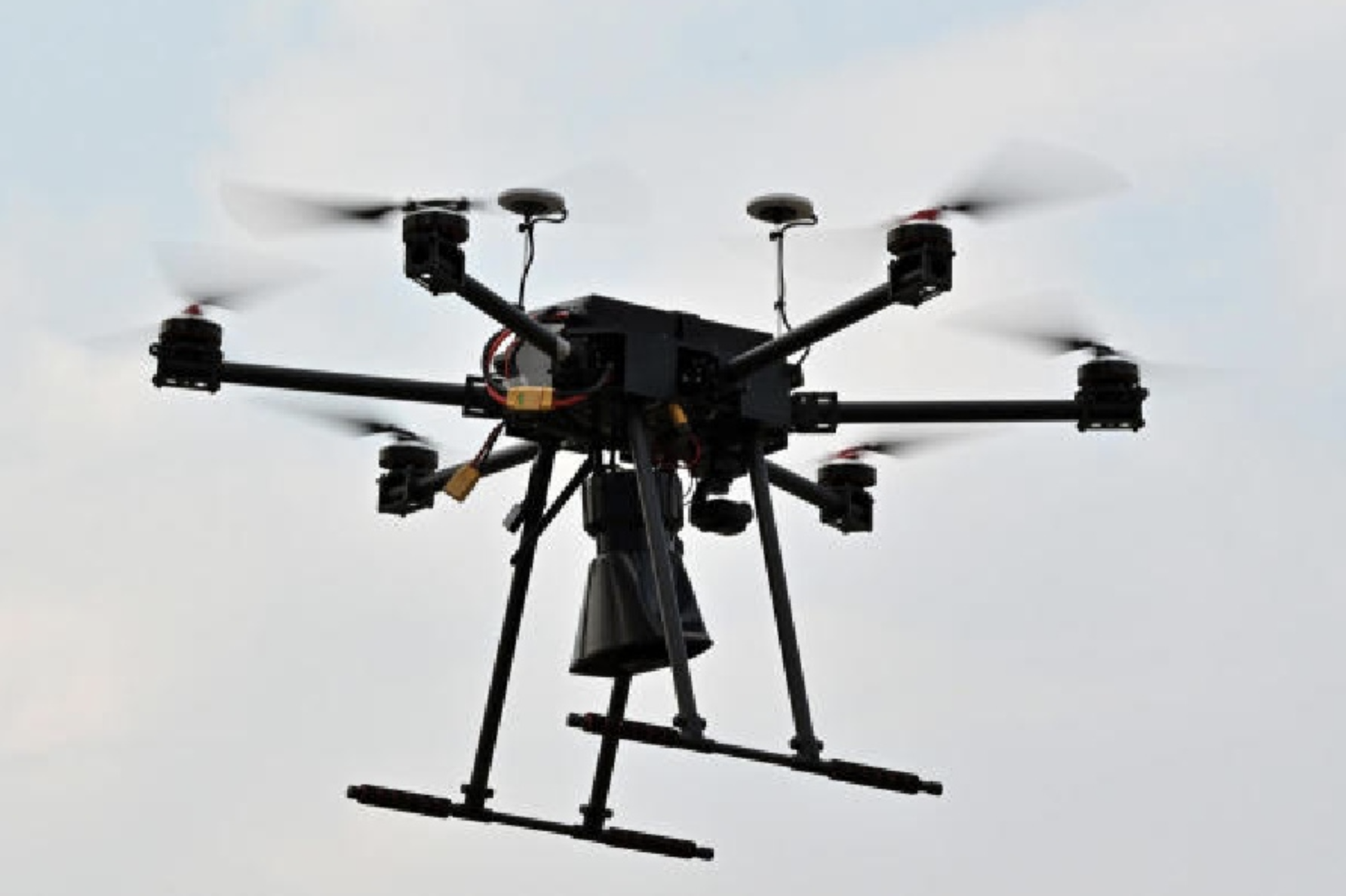
It applies immediately to all “low, slow and small” (LSS) drones, including nano, micro and small UAVs such as quadcopters and hexacopters. It is intended as a precursor to a wider framework covering larger MALE and HALE platforms.
20-Point Testing Regime
At the core of the framework is a mandatory 20-point evaluation system that vendors must clear before entering the defence acquisition pipeline.
It includes:
Hardware validation (10 tests):
Integrated circuit analysis, tamper resistance checks, secure boot verification, PCB inspection, encrypted inter-board communication, and full design traceability.
Software penetration testing (10 tests):
Cryptographic key validation, memory protection protocols, trusted execution environment integrity, secure data transmission (TLS), firmware pinning, and anti-rollback safeguards.
Eight components have been designated as “critical,” including the flight controller, firmware, transmission systems, INS/GPS module, sensors, and ground control software, areas seen as most vulnerable to external compromise.
Compliance, Audits and Vendor Accountability
Testing will be conducted by NABL-accredited or internationally recognised laboratories within India. Currently, the Quality Council of India is the only entity equipped to conduct the full spectrum of tests, while the Directorate General of Quality Assurance is setting up a dedicated facility in Secunderabad.
The Ministry is also moving to establish specialised audit teams to examine existing inventory and detect Chinese-origin components already in service.
Vendors have been put on notice: any falsification of component origin will invite immediate suspension or blacklisting. A centralised database of cleared vendors will be maintained by the Department of Defence Production, with certified systems exempted from repeat testing unless modified.
Push for Indigenisation
While the framework acknowledges that chip-level self-reliance remains a long-term objective, it marks a clear policy thrust towards eliminating foreign dependency in critical subsystems, as stressed by the Defence Minister Rajnath Singh, who said, “India must become a global hub of drone manufacturing in the next few years amid current geopolitical instability”.
“From the drone’s moulds to its software, engines, and batteries, everything must be manufactured in India. This is no easy task. In most countries where drones are manufactured, a significant number of critical components are currently imported from China,” he said at the National Defence Industries Conclave 2026 held on March 19.
Taken together, the measures underscore a broader doctrinal shift, tightening technological sovereignty in defence systems at a time when drones are rapidly becoming central to modern warfare.
Ravi Shankar

Dr Ravi Shankar has over two decades of experience in communications, print journalism, electronic media, documentary film making and new media.
He makes regular appearances on national television news channels as a commentator and analyst on current and political affairs. Apart from being an acknowledged Journalist, he has been a passionate newsroom manager bringing a wide range of journalistic experience from past associations with India’s leading media conglomerates (Times of India group and India Today group) and had led global news-gathering operations at world’s biggest multimedia news agency- ANI-Reuters. He has covered Parliament extensively over the past several years. Widely traveled, he has covered several summits as part of media delegation accompanying the Indian President, Vice President, Prime Minister, External Affairs Minister and Finance Minister across Asia, Africa and Europe.