



The Indian Experience
In my opinion, many of these issues, concerns, biases, delays, and territorial sensitivities have shaped the discussions we have had over the past two decades in India. It’s particularly unfortunate that, despite the valuable contributions of the Kargil Review Committee, the Group of Ministers in 2003, and many aspects of the Naresh Chandra Committee, we are hindered by certain human shortcomings. These drawbacks prevent us from effectively reorganising a Higher Defence Organisation (HDO) and executing integrated commands in warfare.
Next, and this may sound somewhat heretical to some of you. Let me phrase a thesis like this: “No major country and large armed forces such as ours have more joint training and professional military education opportunities than India. Likewise, no major nation or armed forces of that nation have lesser jointness or integration to show for it.”
Let me elaborate. The NDA was created with noble intentions by an enthusiastic, aware, and cooperative group of cadets who would become young officers and later advance to senior positions with a commitment to jointness as an attitude, rather than just a hopeful aspiration. I would like to highlight a few key points:
- Almost 70 years of joint initial training and academic education for three years at the NDA.
- Since around 1991, my assessment shows that all Service Chiefs, except for three Air Force Chiefs and one Chief of Naval Staff, have been graduates of the National Defence Academy. At times, all three have been course-mates or from the same squadron. Often, the two have been course mates.
- Similarly, due to the benefit of age, a vast majority of CINC’s have been from NDA.
- Few countries, perhaps none, have had a Joint Staff College for nearly seven decades.
- Or War colleges with a composite Colonel/equivalent level student base and topped off with a Joint Capsule of several weeks.
- Or a College of Defence Management again for several decades geared towards issues of higher defence and methodical studies.
- Or a NDC for over six decades.
- In general, for most individuals who have reached mid- and higher-level positions, the several years of joint training and professional military education (PME) should have led to improved jointness and reduced barriers created by the individual defence services to defence reorganisation.
Here’s an uncomfortable chronological perspective: During the 1971 War, despite several shortcomings in joint operations, some positive developments occurred. At that time, the highest rank achieved by an ex-NDA officer was Lieutenant Colonel. However, by the time of the IPKF Operations, some officers had reached two and three-star ranks. By the Kargil conflict and OP Parakram, even more officers had advanced to higher ranks. Is this discomfort justified? There may be merit to Admiral Nadkarni’s observation, as quoted by Major General Mrinal Suman: “Jointmanship is not backslapping in public, playing golf together and stating that they all belong to one course in NDA.”
- Jointness, thus, perhaps has less to do with opportunities for training together, being educated together, celebrating together, playing together, having a beer together and so on. It is more an attitude, it is more about a culture of teamwork, about warfighting, not infighting, about substance rather than the Indian preference for symbolism over substance.
- Finally, and less directly impinging on the form of ITCs, are two big observations of the civil-military relationship debate. It has greatly lost focus on the centrality of the civ-mil relationship to weld together a more effective military instrument of the state, from deterrence, to warfighting and maintenance of internal security when and where necessary, to discussions on protocol, pay, perks, equivalence, prestige, etc. The second is the increasingly adversarial positions that come so easily in all walks of life in India. There are deep rifts within the civil services and inventive ways of creating more rifts. Within each Military Service, there are internal rifts that do no real good, including to warfighting. When shall we make the mental transition from being armed forces to being an armed force on the lines that the Australians say about themselves: Three Services, One Force. The ADF stands for Australian Defence Force, in the singular.
Let us consider several important parameters for evaluating ITCs..
Right now, and for some time to come, India’s military theatres are largely defined by our land borders and emanate outwards across waters to a considerable extent.
We have two clear and present adversaries. In time to come, there is enough reason to believe that:
- Their adversarial positions are likely to harden even more, and,
- Their alliance increases the likelihood that they may collude against us, or if we confront one of them, we may have to confront the other as well.
- While we currently do not have an adversarial relationship with some neighbouring countries, we cannot guarantee that our relations with Bangladesh, Sri Lanka, Nepal, or Myanmar will only improve in the future. While smart statecraft can enhance these relationships, setbacks may still occur.
- A higher level of nuclear deterrence will be required against both China and Pakistan in case of trouble with either/both.
- Their collusion in a whole range of scenarios can bring interesting twists for all three services in India. We need jointness of thinking, planning, conventional deterrence and warfighting preparedness.
Next, let us analyse geography from the perspective of operational art. Indian warfighting can generally benefit from both interior and central positions, as well as interior lines of operations. In a maritime context, these considerations are particularly relevant, especially given the strategic advantages offered by the Andaman and Lakshadweep groups of islands.
Geography, therefore, allows us to:
- Move forces around with greater ease and alacrity. To make this feasible, we need to enhance our air mobility, improve operational logistics flexibility, and develop air and maritime expeditionary capabilities.
- The difficulty is that, in a continental sense, our adversaries also can deploy and redeploy, taking advantage of their own interior lines, singly and even more significantly in combination. In some areas of the Northeast, especially at the operational and tactical levels, our lines of operation are vulnerable to counterattacks.
- Even in maritime geography, a PN-PLAN combination can operate on interior lines. Give PLAN the advantages of a few more bases in the IOR littoral, and we have interesting complications on hand.
In much of what has been written about the contours of theatre commands, we must be cautious about a few matters:
- We must avoid using this merely as a method to gain additional four-star billets while keeping the existing structure of the 15 geographic commands, along with one training command each from the IAF and the Army, and one maintenance command from the IAF. When discussing stars, we should take inspiration from General George Marshall, the US Army Chief during World War II, who chose not to upgrade his rank to five stars. When he could avoid it no longer, he accepted only on condition that Eisenhower and Hap Arnold also get theirs. It contrasted with Admiral King’s position, who was canvassing for himself for quite some time! (books by Uldrich, Pogue, Bornemann).
- It is quite disconcerting to hear that the only integrated joint command in the ANC is being recommended for disintegration by the Navy. What could be the logic? What is the unsaid redistribution of “spoils” if one may be permitted to put it bluntly, between the Services? How is this much different from the horse trading in politics when coalition governments are formed?
- The second angle is the angst and even resentment of how the theatre commands are to be tenanted. I may be mistaken, but it seems that the allocation is meant exclusively for the Army and Navy in a 3:1 ratio. This approach appears unwise, as it not only excludes the Air Force but also overlooks the importance of air power in all theatres of operation. It is also because the type of strategic and operational leadership that may be required in some of the theatres, if not every single theatre, may have less to do with the colour of the uniform than the personal professionalism, vision, and leadership that an individual senior officer may bring to it. It is interesting to note that while some US theatre and functional commands were led by one specific service until 1985 (called the traditional era by Rumbaugh, JFQ 75, Autumn 2014), there has been a great mixing up during the Rumsfeld and post-Rumsfeld era. The Marines came to the fore for the first time only in 1986 and have increasingly occupied more and more commands. Even in the 1950s and ‘60s, the EUCOM under SACEUR was sometimes headed by the USAF. Only the USPACOM has remained an unbroken Navy-headed command, but even that is not necessarily etched in stone.
- Some geographic commands may need to be retained not only to maintain certain ratios among the services, but also due to the characteristics, extent, and forces involved.
- With a reduction of the total number of current single-service geographic commands, some realignment in Theatre command locations, and co-locations of major component commanders may become easier.
- We need to immediately put an end to the practice of two-year rotations in a metronomic sequence for joint billets. This approach is overly bureaucratic, simplistic, and unwise. Despite this, it receives excessive attention and interest from parents and other services, particularly for some of the more prized billets!
- Fundamentally, integration has to result in jointness as an outcome. Perhaps because we have primarily viewed jointness from the input perspective, focusing on more joint training, additional joint events, joint conferences, and symbolic gestures, its essence as outcomes eludes us.
- Thus, greater integration in logistics and maintenance of aircraft held by the three services, particularly the IAF and Navy, will save manpower, man-hours, and money.
- Increased firepower, more lethal and mobile formations, and greater investments in domain awareness and robust, protected networks may allow the Army to reduce personnel costs while enhancing its effectiveness and modernisation capabilities.No matter what justifications are made that an even larger Army is required, (or a Navy or Air force with much increased numbers) we should not end up in a situation where the primary work of the Army is to pay, clothe and feed itself with declining moneys for modernisation, operations, training and maintenance.
Key Considerations
One about the linkages of the HDO and ITCs. We would find it not only better but necessary to depart from the chain of command clearly laid out in the US model, from the President to SECDEF to the COCOMs. Given our geography, the two-front threats, the nuclear adversaries, and the contiguous nature of our land and sea borders, command and control would need to reside with the apex joint headquarters under a CDS/PCCC. What role single-service chiefs play in command and control while carrying out their “raise-train-sustain” functions needs to be examined. De facto, the US CJCS plays an important role in the command link, from SECDEF to COCOMs. Much of the planning and more than recognised execution at the theatre levels comes from the JCS Staff. In cases of disagreement with the guidance points outlined in the Approach Paper for this seminar, the Joint Headquarters establishment must be actively and continuously engaged at the theatre strategic level. Their participation is crucial for helping the theatre commander achieve objectives at the operational level of warfare. The primary logic for this, in my view, comes up shortly. Even France and the UK, shrinking as they are, still have complex roles to play in NATO and the EU and their general involvement in flexing muscle in some faraway places as junior allies. India is large, yet our theatres do not have the complexity of dispersal and displaced adversaries. Our advantages of a contiguous, and in some real ways, a unitary theatre covering the extent of India are reinforced by enemies at almost every gate around us. How can we run the risk of a direct command and control line connecting the Prime Minister to the Defence Minister to theatre commanders?
Second, is the question of the need to prevent nuclear deterrence from collapsing, especially when a greater number of vectors from China and Pakistan are kept in readiness against us. What would be the role of the CDS/PCCC with CINC SFC in the nuclear deterrence framework? How can we ensure an advantage in an increasingly unstable deterrence environment, while enabling national military, theatre-military strategy, and operational warfare to gain the upper hand?
Third is the matter of assignment of forces for theatre strategies and operational execution. Recall the aspects of central positions and interior lines. It allows all services, not just the IAF or Navy, to assign, allocate, reallocate, and multitask assets at both operational and tactical levels of warfare. The wish of theatre commanders to “own” all components militates against budgetary constraints, greater efficiencies of use of assets, reduced costs of manpower, etc. Again, even in the US model, across geographic commands, forces are being “CHOPPED” from one to another. Some component commanders hardly own the components they are charged with deploying. Although the devil is in the details, even a quick reading of the Unified Command Plan 2013 Background and Issues paper by the CRS gives a good idea that a COCOM cannot simply own everything it needs to fight. No country is rich enough for that. It is in this context that airpower, missile power, surveillance assets and naval firepower also have to be considered.
While the IAF might exaggerate the indivisibility of airpower, it does present a valid argument. Given the distribution of airbases, the need for national BMD and air defence, the matter of deployment of AWACS, AEWC, AAR, Tpt aircraft, a centrality of command and control is required. This amalgamated operational picture is with the air force. Instead of establishing a parallel setup under the CDS, the outputs should be addressed by his HQs where necessary. In the future, as UAVs become more capable and space surveillance becomes denser and clearer, sharing images will be more important than owning assets and compiling pictures. Likewise, at tactical levels, the IAF has also to let go of its constant refrain for owning attack helicopters, and some of those used for logistics. By insisting on indivisibility for every type of aircraft, the IAF weakens the argument.
Additional Considerations
It is unnecessary to mention that jointness already exists in many forms. Yes, there are some, but honestly, are these sufficient or merely window dressing? Yes, there are inter-command periodic conferences between the CINCs and some of their staff. I have attended two on behalf of my CINC as COS/ SNC. SNC was part of one group consisting of SC, ANC, EAC, and ENC. The second group had SC, SAC, and WNC – more social get-togethers than jointness or integration. Either way, they cannot be called the real stuff of integration to achieve jointness.
I would like to conclude by emphasising that a profound sense of honesty, selflessness, and a commitment to putting the nation first must guide our efforts. This will enable us to collaborate effectively and integrate our work across the Ministry of Defence, the Chief of Defence Staff Headquarters, and the new geographic and functional commands.
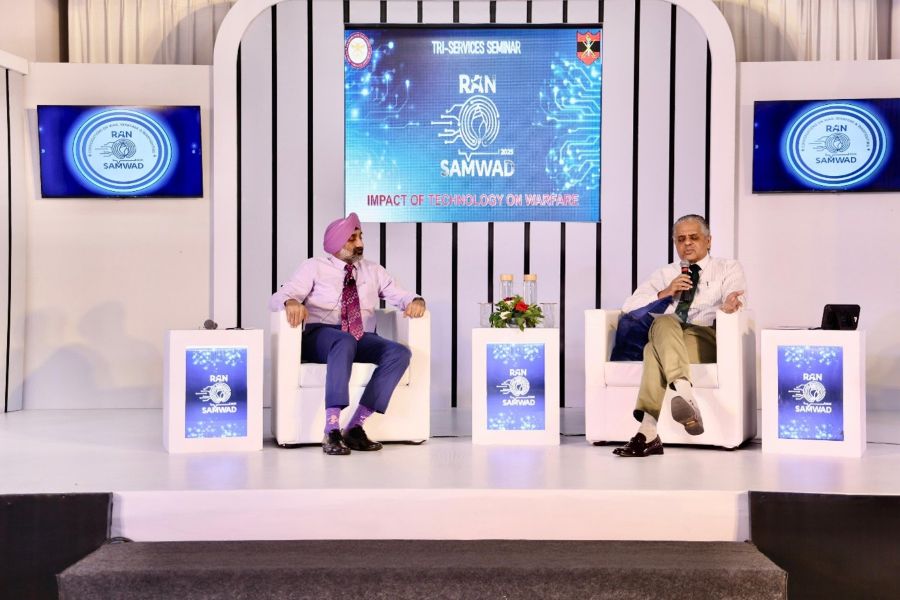
Rear Admiral Sudarshan Y Shrikhande, IN (Retd)

RADM Shrikhande is a 1979 graduate of the National Defence Academy. His qualifications include Masters in Weapon and Sonar Engineering from the Soviet Naval War College, (1985-88); M.Sc Indian Staff College (1995), MPhil from the Indian Naval War College and highest distinction from the US Naval War College (2003) and a PHD from Mumbai Univ (June 2025) for his thesis on sea-based nuclear deterrence for nuclear deterrence stability for India.
He has commanded three ships. He has been a defence attaché in Australia and the South Pacific. Ashore, he has held a variety of operational and training assignments. In flag rank, he served as Chief of Naval Intelligence, Chief of Staff, SNC, Joint HQ staff duties, and, in the nuclear forces command, as Flag Officer for Doctrines and Concepts.
In retirement since 2016, he is a visiting professor at several institutions, including NDC and CDM. Staff and War colleges spanning strategy, operational art, RMA, Peloponnesian War, Indo-Pacific geopolitics, leadership and ethics and Atmanirbharta/Self-Reliance in defence production. He has participated in Track 2 discussions with some countries, attended various national/international conferences and workshops, and written for national and international journals. He is a visiting professor at the Naval War College, Goa; Honorary Senior Fellow with ANCORS, Wollongong and a Distinguished Fellow at the Australia-India Institute, University of Melbourne.


