


“We are at a tipping point.” France’s National Strategic Review 2025 opens with stark language:
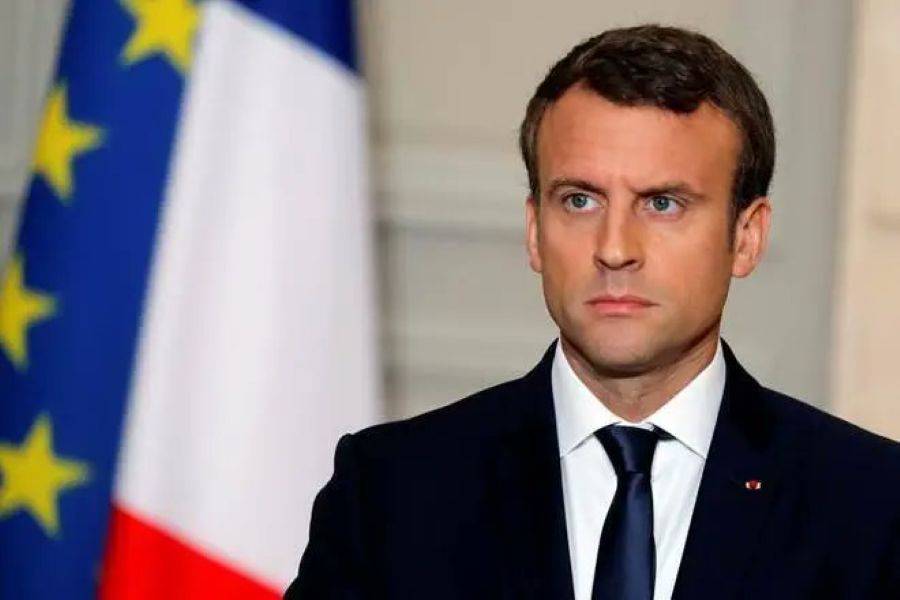
The document, personally endorsed by President Emmanuel Macron, sets a grim tone for Europe’s security outlook. The continent faces an “unprecedented” risk of a major war within the next five years—one that could involve France directly, it declares.
Russia, it warns, remains the “most direct and lasting threat” to European security, rebuilding its military strength even as it wages a brutal war in Ukraine. The Kremlin’s use of nuclear intimidation, cyberattacks, disinformation, and sabotage underscores a “confrontational approach” toward France and its allies. Moscow’s alliances with Iran, North Korea, and China—each with its own revisionist agenda—create a global network of instability that extends from Europe to Asia and Africa.
The Review goes further than previous French assessments, suggesting that a large-scale European war is no longer hypothetical. It projects that France and its allies must be ready for “a major high-intensity conflict near Europe by 2030,” combined with “massive hybrid actions” on their own soil.
Compounding the Russian threat is what Paris bluntly calls “a new cycle of U.S. disengagement.” With Washington prioritising its rivalry with China and adopting a more transactional foreign policy under Donald Trump, Europe can no longer rely on the American security umbrella. The report calls this a “paradigm shift” that forces Europeans to take “greater responsibility for the continent’s security.”
France argues that NATO remains indispensable, but insists that Europe must strengthen its “pillar within the Atlantic Alliance” and develop the capacity to act independently if U.S. support weakens further. It aligns with Macron’s long-standing call for “European strategic autonomy,” but the 2025 review couches it in urgent, almost wartime terms. Europe, it says, must “organise itself, overcome fragmentation, and build mass and depth” to ensure its survival.
Beyond traditional defence, the document highlights a technological arms race reshaping warfare—from drones and AI to quantum computing and space assets. The war in Ukraine, it notes, has “revolutionised battlefields,” turning drones into extensions of individual soldiers and making electronic warfare and cyber capabilities decisive.
France argues that Europe must close its innovation gap with the United States and China. It calls for massive investment in artificial intelligence, autonomous systems, and next-generation deterrent capabilities, as well as reindustrialisation to reduce dependence on non-European suppliers. The report advocates a “European preference” principle—design European, produce European, buy European—as essential to safeguarding technological sovereignty. Without it, France warns, Europe risks “strategic downgrading” and economic vulnerability in the event of global conflict.
The Review paints a picture of global instability where regional flashpoints are interconnected. It accuses Russia of deploying North Korean troops and Iranian drones in Ukraine, while Beijing deepens military and economic cooperation with Moscow. China’s ambition to become the world’s leading power by 2050, coupled with aggressive actions around Taiwan and in the South China Sea, adds another layer of danger.
Meanwhile, Iran’s “revisionist Islamist revolutionary power” is blamed for “the most serious direct confrontation in the Middle East in twenty years.” Its regional proxies—Hamas, Hezbollah, and the Houthis—have transformed local conflicts into a wider indirect war with Israel and the United States.
In Africa, France laments that anti-Western sentiment and Russian-backed disinformation have eroded Western influence, forcing Paris to rethink its security posture. Across the Sahel and Central Africa, the jihadist threat is resurging, worsened by what the Review calls “strategic predation” by Moscow and Beijing.
For France, the new era of insecurity demands not just military readiness but “moral rearmament.” The Review calls for comprehensive national mobilisation—linking the armed forces, industries, citizens, and youth—to strengthen resilience against war’s domestic fallout. It warns that hybrid threats—from cyberattacks and information warfare to organised crime and social unrest—can erode national cohesion.
The French public, it suggests, must be prepared for the possibility that future wars will not remain distant. By 2030, France aims to be “rearmed, materially and morally,” ready to “prevent, confront, and win” conflicts near Europe while defending its own territory from simultaneous hybrid attacks.
The goal is clear: a France that leads a sovereign Europe, capable of defending itself in an age of great-power confrontation.
Ramananda Sengupta

In a career spanning three decades and counting, I’ve been the foreign editor of The Telegraph, Outlook Magazine and the New Indian Express. I helped set up rediff.com’s editorial operations in San Jose and New York, helmed sify.com, and was the founder editor of India.com. My work has featured in national and international publications like the Al Jazeera Centre for Studies, Global Times and Ashahi Shimbun. My one constant over all these years, however, has been the attempt to understand rising India’s place in the world.
I can rustle up a mean salad, my oil-less pepper chicken is to die for, and it just takes some beer and rhythm and blues to rock my soul.