


The Ministry of Defence is preparing to float a tender for the long-delayed Medium Transport Aircraft (MTA) program, senior officials confirmed, marking the beginning of a crucial acquisition process for the Indian Air Force (IAF). The move comes at a time when the IAF is simultaneously advancing big-ticket fighter jet deals – including the procurement of 114 multirole fighters under the MRFA program and discussions with Russia for Su-35 fifth-generation stealth aircraft.
While fighters dominate headlines, the IAF’s transport fleet has become an equally urgent concern. The service has projected a requirement for at least 80 medium transport aircraft in the 18–30 tonne payload category, intended to replace its ageing An-32s and Il-76s, which together form the backbone of India’s military airlift. The tender will prioritise not just capability but also domestic industrial partnerships and technology transfer, in line with India’s push for defence indigenisation.
An Urgent Capability Gap
The urgency is stark. The An-32 fleet, once numbering nearly 200 aircraft, has dwindled to fewer than 100 serviceable planes, many of which are nearing the end of their extended service life despite partial upgrades in Ukraine. The Il-76s, inducted in the 1980s, are plagued by serviceability issues and rising maintenance costs. Smaller platforms, such as the Avro and Dornier, are already being phased out.
With C-17 Globemaster IIIs handling heavy-lift missions (up to 80 tonnes) and the newly inducted C-295s covering tactical roles (5–10 tonnes), the absence of a medium-lift workhorse has created a crippling gap. It is particularly significant as the Army prepares to field its Zorawar light tanks for rapid deployment in high-altitude theatres. Without a medium transport solution, planners warn of growing inefficiencies in force mobility and operational reach.
Air Marshal M. Matheswaran (Retd) underlined the problem:
“The gap in the 20-tonne payload category has existed since the early 2000s. The decline of the An-32 fleet has made the situation acute. While C-295s will replace the Avro and partly the An-32s, the medium segment – critical for mobility in the Himalayas and expeditionary operations – remains unaddressed.”
From Shelved Project to Renewed Urgency
The IAF’s recognition of this requirement dates back two decades. In the early 2000s, a joint Indo-Russian program was launched to co-develop a Medium Tactical Aircraft (MTA) through Ilyushin and HAL. That project collapsed by 2015, another casualty of sluggish joint development.
Since then, India has partially bridged the gap by inducting C-130J Super Hercules aircraft for special operations and heavy-lift C-17s, but both are stopgaps. The C-130J, proven and rugged, remains costly, technologically dated, and suboptimal for medium transport needs. The C-17 production line has closed, limiting India’s fleet to just 11 aircraft.
The Contenders
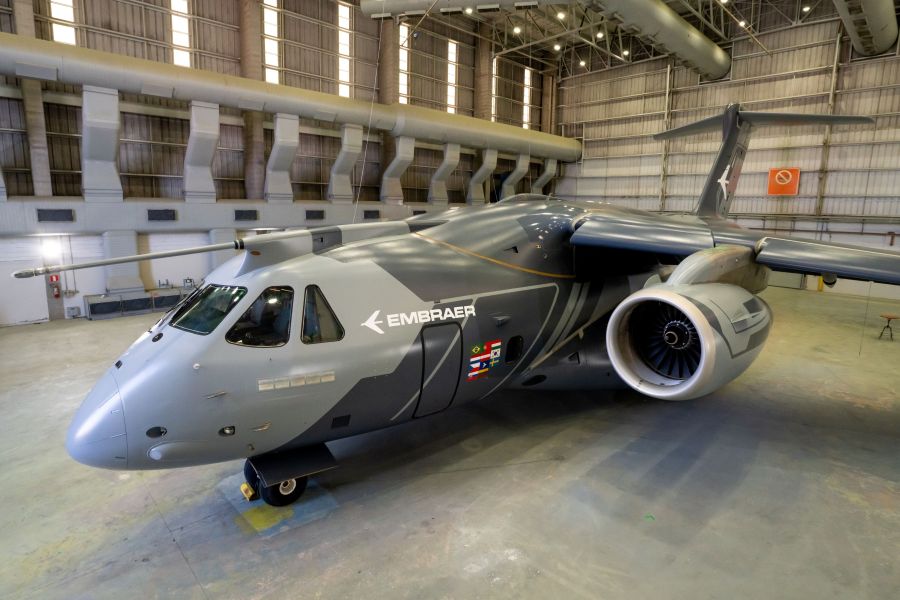
Strong global contenders are in the fray. Airbus is offering its A400M Atlas, Embraer its KC-390 Millennium (in partnership with Mahindra), while Lockheed Martin and Tata may pitch the C-130J Super Hercules. Russia has also re-entered the race with the IL-276 proposal, in collaboration with Hindustan Aeronautics Limited, according to sources.
The new MTA competition has attracted strong international interest.
- Russian IL-276: Moscow has re-entered the fray, pitching the IL-276 medium transport in collaboration with HAL. While continuity with existing Russian fleets is an argument in its favour, doubts linger over timelines, financing, and the reliability of Russian defence supplies post-Ukraine war.
- Lockheed Martin C-130J Super Hercules: Already in IAF service, the C-130J offers reliability and proven operations. Yet, as a turboprop design dating to the 1950s, it offers limited scope for industrial collaboration and falls short of modern efficiency standards.
- Airbus A400M Atlas: A technologically advanced platform capable of carrying 37 tonnes – even more than the Il-76. Its modern avionics, short take-off capability, and air-to-air refuelling option make it a versatile choice. However, its high cost and fuel inefficiency are red flags, particularly given the IAF’s already stretched budget.
“The A400M has similar payload capacity to the IL-76, with a significantly enhanced range, modern avionics, short take-off capability, ability to operate from unpaved surfaces, and even air-to-air refuelling, making it a viable long-term replacement,” said a retired IAF officer, who wished to remain anonymous.
- Embraer KC-390 Millennium: With a payload of 26 tonnes, this jet-powered aircraft fits squarely into the IAF’s target category. Modern, efficient, and competitively priced, the KC-390’s biggest advantage lies in Embraer’s willingness to partner with the Indian industry for local production and technology transfer. Many analysts see it as the most realistic and strategically aligned option.
According to Air Marshal Matheswaran: “Of the three, Embraer’s KC-390 is best suited for a variety of reasons. It is powered by jet engines, providing significantly better operating efficiency. Its state-of-the-art avionics and fuel-sipping engines deliver maximum operational and economic value.”
“In terms of cost, it will be the cheapest of the three. But the most important advantage lies in the potential for manufacturing in India. Brazil is more likely to offer favourable technology transfer (ToT) terms and joint production, which aligns with India’s goals of self-reliance and industrial capacity-building,” he added.
According to industry insiders also, the KC-390 and A400M are emerging as frontrunners. The former is seen as better suited to India’s precise requirements, while the latter is being championed as a long-term replacement for the Il-76.
More Than an Aircraft
Experts emphasise that the MTA program will shape not just the IAF’s airlift capabilities but also India’s aerospace manufacturing ecosystem. With at least 80 aircraft on order, the project is valued at several billion dollars, making it one of the largest transport aircraft programs outside NATO.
“The most important advantage lies in the potential for manufacturing in India,” said Air Marshal Matheswaran. “Brazil is more likely to offer favourable technology transfer terms than either the US or Europe. It could directly support India’s ambition of developing its own civil airliner.”
Strategic Timing
The revival of the MTA program comes as India accelerates parallel big-ticket acquisitions: the MRFA competition for 114 fighters and advanced negotiations with Russia on Su-35 stealth jets. With budgets under pressure, the Ministry of Defence faces the challenge of sequencing these procurements without compromising operational readiness.
For the IAF, the MTA is more than just another procurement line. It is about restoring balance to its airlift fleet, ensuring rapid-response capabilities across contested frontiers from Ladakh to the Indian Ocean, and strengthening domestic industrial capacity.
The decisions made in the coming months will have a lasting impact on military preparedness, aerospace partnerships, and India’s quest for self-reliance. For now, all eyes are on the tender and whether the IAF finally closes a gap it identified nearly two decades ago.
Huma Siddiqui