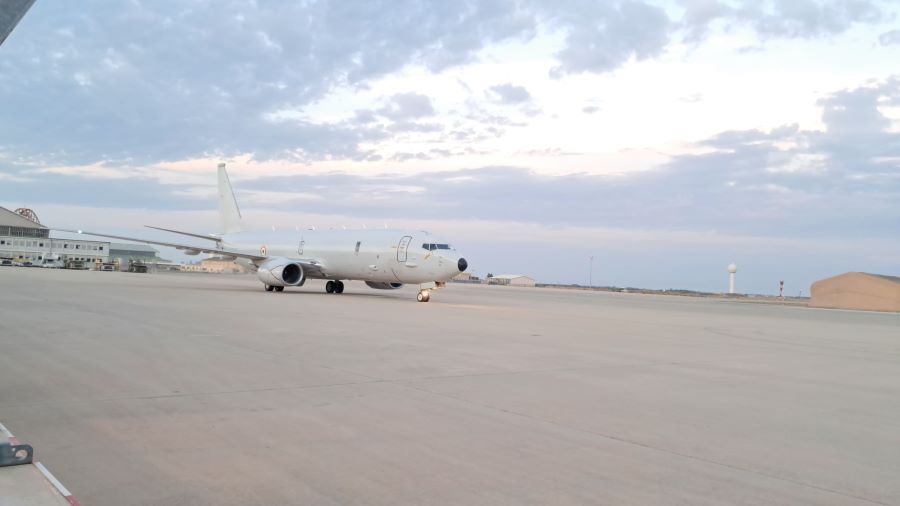
A high-level US defence delegation will arrive in New Delhi next week to advance long-pending negotiations on a $4 billion deal for six additional Boeing P-8I maritime patrol aircraft. This visit is expected to signal renewed momentum in the India-US strategic partnership following a period of diplomatic chill.
The visit, expected to take place from September 16 to 19, comes as both countries work to reset ties that were strained by trade tensions, tariff disputes, and divergent geopolitical alignments, especially over India’s energy ties with Russia.
According to sources, the deal, which has been pending for a long time, is now likely to be concluded or substantially advanced during the visit. The delegation will include officials from the US Department of Defence, Boeing, the Defence Security Cooperation Agency (DSCA), and other key stakeholders involved in bilateral defence sales.
Operational Synergy Driving Maritime Deal
As reported previously, India already operates 12 P-8I aircraft, stationed across Goa and Arakkonam. The aircraft have become vital assets for long-range surveillance, anti-submarine warfare, and maritime domain awareness, especially amid increasing Chinese naval activity in the Indian Ocean Region (IOR).
With proven interoperability during joint operations with Quad partners and deployment during critical episodes in Doklam and Ladakh, the addition of six more P-8Is will significantly enhance India’s maritime posture and intelligence capabilities.
This acquisition also aligns with India’s broader strategy to diversify its defence inventory, traditionally dominated by Russian platforms, by deepening cooperation with Western partners.
Sergio Gor Signals Strategic Reset
The diplomatic dimension of this deal has also gained traction with Sergio Gor, the US ambassador-designate to India, highlighting defence cooperation as a stabilising pillar in bilateral ties. Speaking at his Senate confirmation hearing, Gor described India as a “strategic partner” and underscored that restoring trust and concluding a trade agreement are top priorities for the Trump administration.
He also made it clear that Washington’s expectation is for India to reduce dependence on Russian oil, but clarified that the broader relationship is “built on many more decades” of cooperation. “Despite a little hiccup on tariffs, our relationship with India is much stronger,” he said.
During his hearing, he acknowledged the importance of the Quad grouping, confirming that preparations are underway for India to host the next Quad Leaders’ Summit later this year. Though the date is yet to be finalised, Prime Minister Narendra Modi has invited former President Donald Trump to attend the summit, reflecting a desire to deepen multilateral engagement within the Indo-Pacific.
“There have already been talks about a trip for the next Quad meeting,” Gor noted. The last Quad summit took place in Washington in September 2024, hosted by then-President Joe Biden. It was initially slated to be held in India, but scheduling conflicts shifted the venue to the US.
This year’s summit will mark a change in leadership for both the US and Japan, adding significance to India’s role as host in shaping the next phase of the Quad’s strategic agenda.
GE Engine Delivery, Military Exercises Reflect Broader Defence Engagement
In a further sign of returning normalcy in defence cooperation, General Electric (GE) has successfully delivered an additional engine to India this month after missing its August deadline, a delivery viewed as an important trust-building measure after months of delay.
Meanwhile, military ties continue to grow through joint troop exercises, including a recent deployment of 500 Indian and US troops in Alaska for a high-altitude warfare drill, underscoring the depth of operational engagement between the two forces.
Balancing Strategic Autonomy and Partnership
For India, this number of defence activities reinforces its commitment to strategic autonomy while pragmatically expanding cooperation with the United States to meet evolving regional challenges. The P-8I acquisition, in particular, is seen as a practical continuation of existing capabilities rather than a political signal of shifting allegiance.
Analysts note that the ability of both nations to compartmentalise trade and tariff issues from long-term strategic convergence has allowed the relationship to remain resilient, especially through institutional mechanisms like the 2+2 Ministerial Dialogue, LEMOA, and COMCASA.
Way Ahead
The impending conclusion of the P-8I deal and the planned Quad Summit later this year are expected to inject new momentum into a multifaceted relationship that spans defence, trade, climate, and emerging technologies. With both sides signalling renewed political will, the Indo-US partnership is poised to regain its trajectory as a key pillar in ensuring stability across the Indo-Pacific.
As Sergio Gor put it during his Senate appearance, “India is not just a regional ally, it is a strategic partner. Its geographic position, economic growth, and military strength make it essential to our shared vision for a free, open, and rules-based Indo-Pacific.”
Huma Siddiqui