



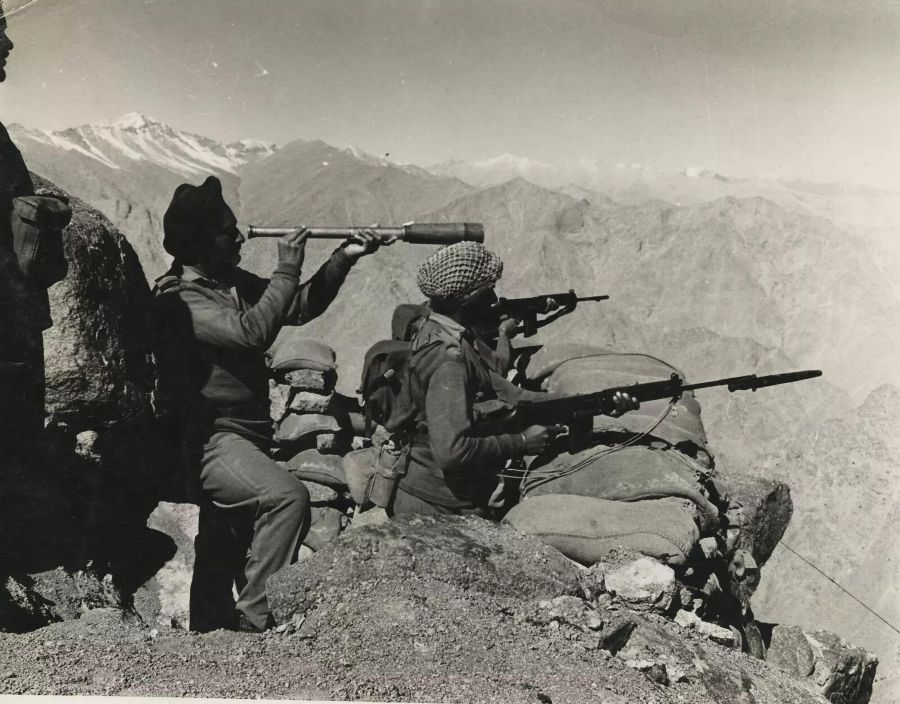
As Pakistan’s Ministry of Foreign Affairs issued yet another “Kashmir Black Day” statement today, India observed Infantry Day, commemorating the morning of 27 October 1947, when Indian soldiers were airlifted into Srinagar to repel an armed invasion backed by Pakistan.
For India, the coincidence serves as a historical and strategic reminder: the Indian Army’s first operation was an act of defence following lawful accession, not aggression.
From Invasion to Accession: The Real Sequence of 1947
On 22 October 1947, thousands of tribal fighters, armed and directed by Pakistan’s military, crossed into Jammu & Kashmir through Muzaffarabad. Within days, the raiders reached Baramulla, committing atrocities against civilians as they advanced on Srinagar.
The state’s ruler, Maharaja Hari Singh, appealed to New Delhi for help. On 26 October, he signed the Instrument of Accession, joining India under the same constitutional process used by hundreds of princely states. Governor-General Lord Mountbatten accepted the accession the next day.
At dawn on 27 October 1947, Dakota aircraft of the Indian Air Force began landing troops of 1 Sikh Regiment at Srinagar airfield. Their immediate mission: secure the airstrip and stop the raiders’ advance. The action prevented Srinagar’s fall and remains one of the Indian Army’s most decisive early operations.
India’s Defensive Response vs Pakistan’s First Act of Aggression
Pakistan’s latest MoFA statement repeats its familiar line portraying India as an “occupier.”
Yet, the historical record is clear. Pakistan initiated the conflict by supporting irregular forces that violated the sovereignty of a neighbouring state.
India responded only after receiving a formal request for assistance from a legally acceded entity.
This chronology is clear-cut and documented in British, Indian, and UN archives. Infantry Day, therefore, symbolises legitimacy and defence, not conquest.
A Propaganda Narrative at Odds with Reality
Pakistan’s diplomatic messaging every 27 October ignores events on its own side of the Line of Control. In recent months, mass protests in Pakistan-Occupied Kashmir (PoK) have drawn attention to Islamabad’s continuing political and economic neglect of the region. Demonstrations in Muzaffarabad, Dheerkot, and Dadyal over power shortages and taxation were met with lethal police action, leaving at least ten civilians dead and over a hundred injured.
International outlets and rights observers documented curfews, detentions, and an internet blackout, a grim contrast to Pakistan’s self-image as the protector of Kashmiri rights.
For defence analysts, these developments highlight the widening gap between Islamabad’s external rhetoric and internal governance failures.
The Strategic Significance of Infantry Day
Beyond commemoration, Infantry Day reaffirms India’s foundational doctrine of legitimate defence and rapid mobilisation — principles that continue to define military planning.
The 1947 airlift, executed within hours of accession, remains a textbook example of speed, initiative, and jointness between the Army and Air Force.
Today, as India invests in air-mobility platforms, ISR integration, and theatre-level readiness, the lessons of 27 October endure: swift, coordinated response to hybrid aggression is essential to preserving territorial integrity.
Legality, Sovereignty, and Modern Relevance
India’s position on Jammu & Kashmir is built on legal accession, democratic governance, and developmental inclusion. Pakistan’s is rooted in aggression and the continued occupation of territories it seized illegally.
While Islamabad attempts to internationalise the issue through annual statements, its own record in PoK and Gilgit-Baltistan, marked by repression and disenfranchisement, undermines its credibility.
For India’s strategic community, the message of Infantry Day 2025 is both historical and contemporary: the defence of Jammu & Kashmir in 1947 laid the moral and operational foundation for India’s security posture in the Himalayas today.
Infantry Day 2025 coincides with Pakistan’s renewed propaganda offensive, but history leaves little room for ambiguity.
The Indian Army entered Kashmir as the legitimate defender of a sovereign state under attack.
Seventy-eight years on, as Pakistan faces unrest in its own occupied territories, India’s infantry continues to stand for stability, sovereignty, and lawful defence, the same principles that defined its first battle.
Infantry Day is not a day of occupation; it is the day India’s soldiers saved Kashmir.
Huma Siddiqui


