India’s national security landscape has been shaped for nearly eight decades by Pakistan’s sustained use of terrorism and proxy warfare, according to a comprehensive chronology compiled by New Delhi-based think tank NatStrat.
The document traces Pakistan-origin attacks from 1947 to 2025, mapping how state agencies, militant outfits, and covert infrastructure evolved into an integrated strategy aimed at imposing continuous costs on India.
The chronology begins with the 1947–48 invasion of Jammu & Kashmir under “Operation Gulmarg,” where Pashtun tribal militias, backed by Pakistani Army regulars, crossed into Kashmir before the region’s accession to India.
Citing accounts from Maj. Gen. Akbar Khan, the NatStrat report notes that the invasion was planned internally but executed under the cover of a tribal revolt. The assault on Muzaffarabad, Uri, and Baramulla — and India’s rapid airlift of troops to Srinagar on 27 October — marked the first instance of Pakistan using irregular forces to alter ground realities.
Through the 1960s, Pakistan exported insurgency eastward, assisting groups such as the Mizo National Front and Naga separatists through training camps in East Pakistan. NatStrat’s documentation shows how the ISI provided arms, shelter, and logistical supervision to insurgent leaders operating from the Chittagong Hill Tracts and Sylhet.
The escalation culminated in Operation Gibraltar in 1965, where thousands of Pakistani soldiers infiltrated Jammu & Kashmir disguised as locals. The plan — based on faulty assumptions about a Kashmiri uprising — collapsed, triggering the 1965 war. The NatStrat report outlines the disconnect between the ISI’s optimistic intelligence assessments and the reality on the ground.
In 1971, Pakistan launched Operation Chengiz Khan, a pre-emptive strike on Indian airbases, which was followed by India’s coordinated military campaign in the east and west. The report notes the scale of casualties and the forced displacement during the crackdown in East Pakistan, culminating in the surrender of 93,000 Pakistani troops — the largest since World War II.
The 1970s and 1980s saw a shift toward Sikh militancy in Punjab. NatStrat traces how Pakistan-backed groups such as Babbar Khalsa, KCF, and BTF received weapons, safe havens, and training in Karachi and Lahore. The chronology details ISI-directed hijackings, weapons smuggling, and attempts to fuse local grievances with Pakistan’s broader strategic goals. Testimonies referenced in the document describe a well-developed terror supply chain running across the border.
By the late 1980s, Pakistan reoriented its proxy infrastructure toward Kashmir under what the report calls the “K2 Project,” an integrated effort to fuel simultaneous unrest in Punjab and Jammu & Kashmir. The NatStrat chronology shows how the ISI redirected battle-hardened fighters from the Afghan jihad into Kashmir, creating a multi-tiered ecosystem of training camps, infiltration routes, logistical bases, and ideological indoctrination.
The 1990s witnessed an intensification of targeted killings, mass civilian attacks, political assassinations, and ethnic violence. The NatStrat document lists key incidents, including the assassinations of community leaders, the massacres of Kashmiri Pandits in Sangrampora (1997) and Wandhama (1998), and the Chittisinghpura massacre of Sikhs in 2000. Hizbul Mujahideen, Lashkar-e-Taiba, and Jaish-e-Mohammad expanded their presence with ISI support.
The serial bombings in Mumbai in 1993 — involving RDX supplied through Pakistan-linked channels — and subsequent attacks such as the Lajpat Nagar blast (1996) and the Coimbatore bombings (1998) are described as part of the broader Pakistani proxy network.
A major doctrinal rupture came with the 1999 Kargil conflict. Based on Pakistani accounts cited in the NatStrat report, a select group of senior officers planned the infiltration of Pakistani soldiers disguised as irregulars to occupy strategic heights in the Kargil sector. The NatStrat document describes how the operation bypassed political clearance, relied on internal secrecy, and attempted to exploit Pakistan’s developing nuclear posture to limit India’s options — ultimately ending in strategic failure.
Later that year, the hijacking of IC-814 exposed Pakistan-based groups’ continued operational capability. The hijackers — identified as Pakistani nationals — forced India to release Jaish-e-Mohammad chief Masood Azhar, an incident the NatStrat chronology links directly to ISI-backed networks in Kandahar.
In the 2000s and 2010s, attacks such as the Red Fort incident (2000), the Parliament attack (2001), the 2008 Mumbai assault, and the 2016 strikes in Pathankot, Uri, and Nagrota continued to involve Pakistan-based groups such as LeT and JeM. The NatStrat document tracks how these groups operated through cross-border training, logistics, reconnaissance, and funding channels that evolved with communications and financial networks.
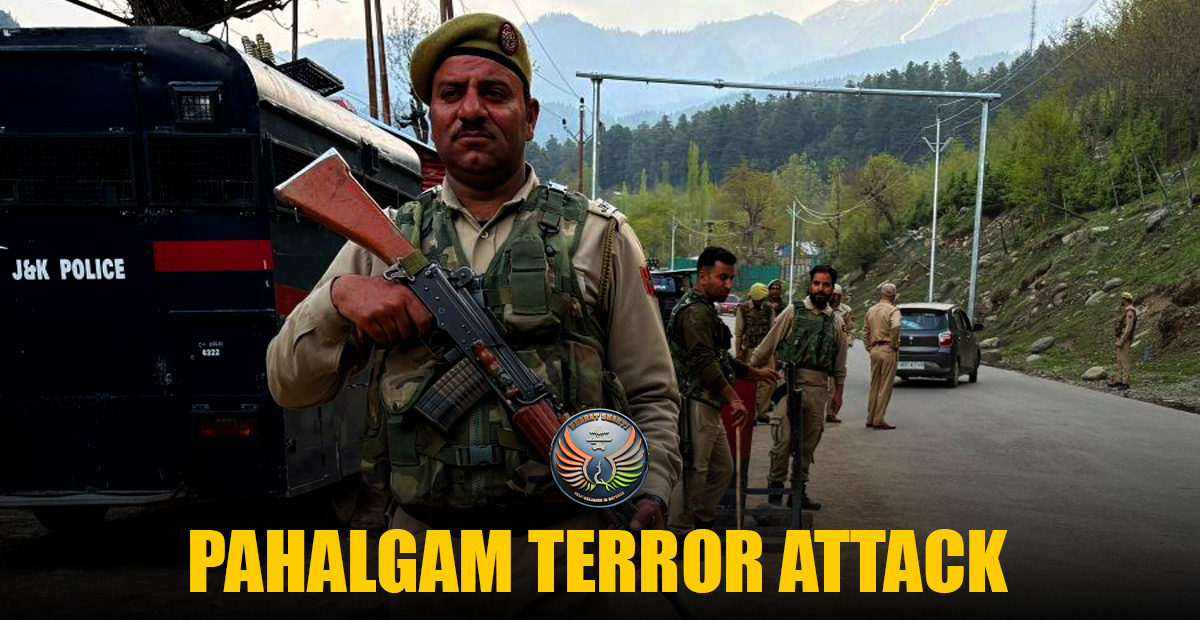
The chronology concludes with incidents up to 2025, including the Pahalgam attack, situating them within the long arc of Pakistan’s use of terrorism, narcotics-linked financing, information warfare, and cyber operations.
Across nearly eight decades, the NatStrat compilation presents a consistent pattern: Pakistan’s reliance on a calibrated ecosystem of militant proxies, covert operations, and hybrid tools to impose strategic costs on India while maintaining plausible deniability.
Ramananda Sengupta

In a career spanning three decades and counting, I’ve been the foreign editor of The Telegraph, Outlook Magazine and the New Indian Express. I helped set up rediff.com’s editorial operations in San Jose and New York, helmed sify.com, and was the founder editor of India.com. My work has featured in national and international publications like the Al Jazeera Centre for Studies, Global Times and Ashahi Shimbun. My one constant over all these years, however, has been the attempt to understand rising India’s place in the world.
I can rustle up a mean salad, my oil-less pepper chicken is to die for, and it just takes some beer and rhythm and blues to rock my soul.