



Historically, many wars around the world have been ended through third-party efforts. For example, during the Korean War (1950–1953), the ceasefire that ended active fighting was mediated by third-party nations and the United Nations. India played an important role by proposing an armistice plan, which the UN and opposing forces eventually accepted. It led to the signing of the Korean Armistice Agreement in July 1953, which established the Demilitarised Zone (DMZ) between North and South Korea. Similarly, during the Vietnam War (1955–1975), various third-party actors, including Pope Paul VI and diplomats from France, tried to mediate ceasefires and peace agreements.
The most notable outcome was the Paris Peace Accords of 1973, brokered through extensive diplomatic efforts, resulting in a ceasefire signed by all parties. More recently, Qatar has served as a third-party mediator. Since 1999, Qatar has hosted and signed numerous peace agreements, especially related to Sudan and the Darfur conflict. Its role has included leading multilateral negotiations and hosting conferences that resulted in agreements such as the 2020 Juba Agreement for Sudan.
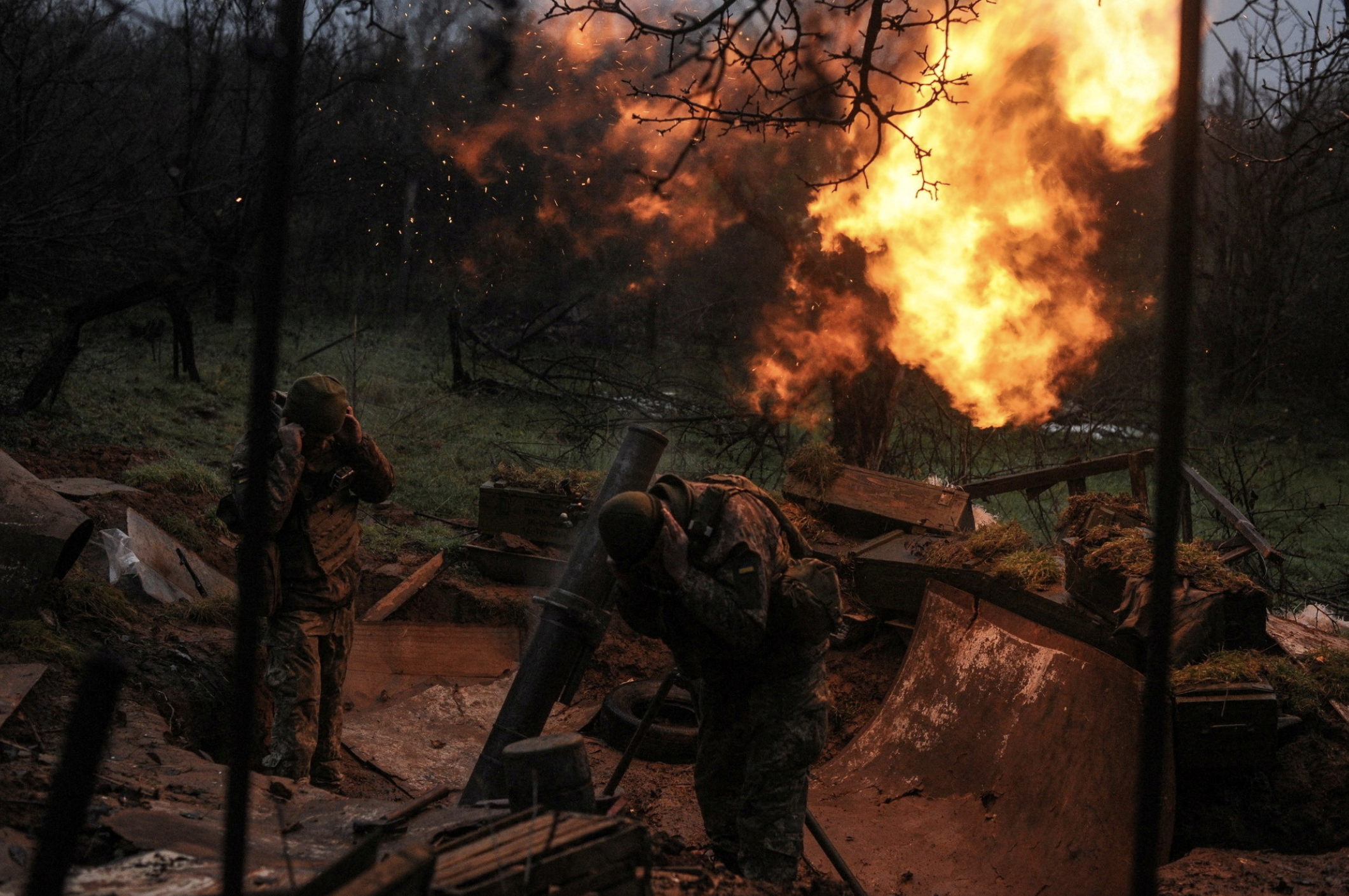
The course of the Ukraine war is heading down the third-party mediation path. US mediation in the Ukraine War is leaving more questions than answers. The foremost of them is whether the current dispensation of the USA is trying to end the war in the interest of peace and global stability, or is it the personal goal of the POTUS to be seen as the peacemaker, which can take him a step closer to the Nobel Peace Prize. Indications are that it is more of the second, since the first meeting in Alaska took place without achieving anything, except, of course, President Putin validating the authenticity of Trump’s claim to the coveted award. Be that as it may, it must be agreed that more has happened in a few weeks than in the last 3 years of the war. Nobody will grudge President Trump a Nobel if he indeed pulls off a peace deal, not just a ceasefire.
In a commentary published recently, I assessed that the Ukraine conflict would, in due course, reach a cessation. I projected that “the frontline of the war will be frozen at its current position, a buffer zone between the opposing forces will be established and monitored by neutral parties, territory under Russian control will remain with Russia, and Ukraine will maintain neutrality, refraining from NATO membership for at least the next two decades.”
The same concerns are being voiced globally today after the first meeting between Trump and Putin. The term ‘land swap’ between Russia and Ukraine is not the term either party wants to hear. The portions of land planned to be swapped are soaked in Ukrainian and Russian blood. Russia will certainly not give up any territory it has captured at great cost in its soldiers’ lives. Neither will Ukraine give up its rights to any part of its sovereign territory, which they have defended so valiantly for so long. Crimea, of course, is a lost cause for Ukraine. But, unless much has been promised to Putin, there is no reason for him to be so effusive in the post-meeting press conference.
All that remains now is likely some form of pressure on the Ukrainian president to accept the terms of the peace treaty. Putin managed to push back the deadline for accepting a ceasefire deal and the related secondary tariffs. That prompted most analysts to note after the meeting in the global press that the U.S. may not have lost, but Putin has won the first round.
It is a sad story that international organisations responsible for maintaining global peace are conspicuous by their absence. The UN is gradually losing its relevance in this unipolar world. The last significant UN-mediated agreement between two warring nations was the Algiers Peace Agreement between Eritrea and Ethiopia, signed on December 12, 2000. This UN-facilitated deal officially ended two years of border conflict. It included terms for a ceasefire, prisoner exchanges, and a mechanism for a boundary commission under UN supervision to resolve remaining territorial disputes.
Since then, conflicts such as the India-Pakistan clashes in Kargil, the 2003 Iraq invasion, the Russia-Georgia war of 2008, and the Armenia-Azerbaijan conflict of 2020 have occurred. In none of these cases did the UN actively resolve the issues between the warring sides. In two of these conflicts, two permanent members of the UN Security Council, the USA and Russia, were directly involved as aggressors. They would likely have used their veto powers to block UN intervention. This raises the key question: who protects humanity when the supposed protectors are themselves engaged in the madness of war?
Therefore, many countries rightly demand the reform of the Security Council. While it may have made sense to have the UK, USSR, and France as permanent members in 1945, what right do they have today to remain permanent members and exclude larger democratic, economic, and military powers from holding seats? Without necessary reforms, the UN risks becoming the League of Nations, which failed to prevent World War II due to a lack of enforcement power, ineffective sanctions, and the withdrawal or non-participation of key member states.
Equally striking is the EU’s absence from the main negotiations. For the first time since the Maastricht Treaty in 1993, the EU has felt humiliated by being ignored in peace talks during a war on the European continent. It may be paying the price for outsourcing its security to the USA since NATO’s formation in 1949. Despite having enough economic, manpower, and military resources, the continent lacks the collective will to take responsibility for its own security. This internal division among its 27 member states means the Americans are currently bullying it in trade and on the Ukraine battlefield. The EU is not seen as a unified force on the global stage.
Conversations with locals reveal a deep sense of frustration, which they blame on Europe’s lack of leadership. Most key nations have leaders with poor approval ratings at home. How can they be major players internationally? The so-called ‘Coalition of the Willing’ has hurried to support President Zelensky in Washington, aiming to wean Trump from Russian influence. They have all, including Zelensky, learned to flatter Trump, and it’s working. There are discussions about a ‘NATO-like’ security guarantee for Ukraine against future Russian invasion.
It’s unlikely Russia would accept this, since the war started to keep NATO away from its border. NATO near Russia is as unacceptable as a Chinese base in Canada or a Russian base in Mexico is to the US. A neutral Ukraine with a NATO-like guarantee from the US and Europe is too complex to make sense to the Russians or anyone else. Some analysts, like Jeffrey Sachs, have criticised the EU for never trying diplomatic approaches with Russia over Ukraine. Even after sanctions failed to achieve their goals, the EU continued to follow the US’s lead and lacked a unified strategy to resolve the crisis.
The President of the United States has risked his political career and reputation by granting a red-carpet welcome to a person who has an arrest warrant from the ICC for war crimes. His goal of stopping the killings in Ukraine is genuine and widely supported, yet surprisingly, he seems comfortable with the ongoing killings and starvation deaths in Gaza. Still, the world awaits a positive outcome from the events unfolding in the coming weeks.
Air Cmde TK Chatterjee(Retd)
Air Cmde TK Chatterjee (Retd)
Air Cmde TK Chatterjee(Retd) was commissioned into the IAF in Dec 1976 in the fighter stream. In his 33 years long career he has flown almost all fixed wing aeroplanes that fly in the subcontinent, from the earliest MiG21 upto the Rafale and the F16. He is a Qualified Flying Instructor, an Experimental Test Pilot, and an alumni of the Defence Services Staff College. After IAF, he was involved in the training of pilots for the civil aviation industry at the Indira Gandhi Rashtriya Uran Academy and have contributed about 200 trained pilots to the industry.


