



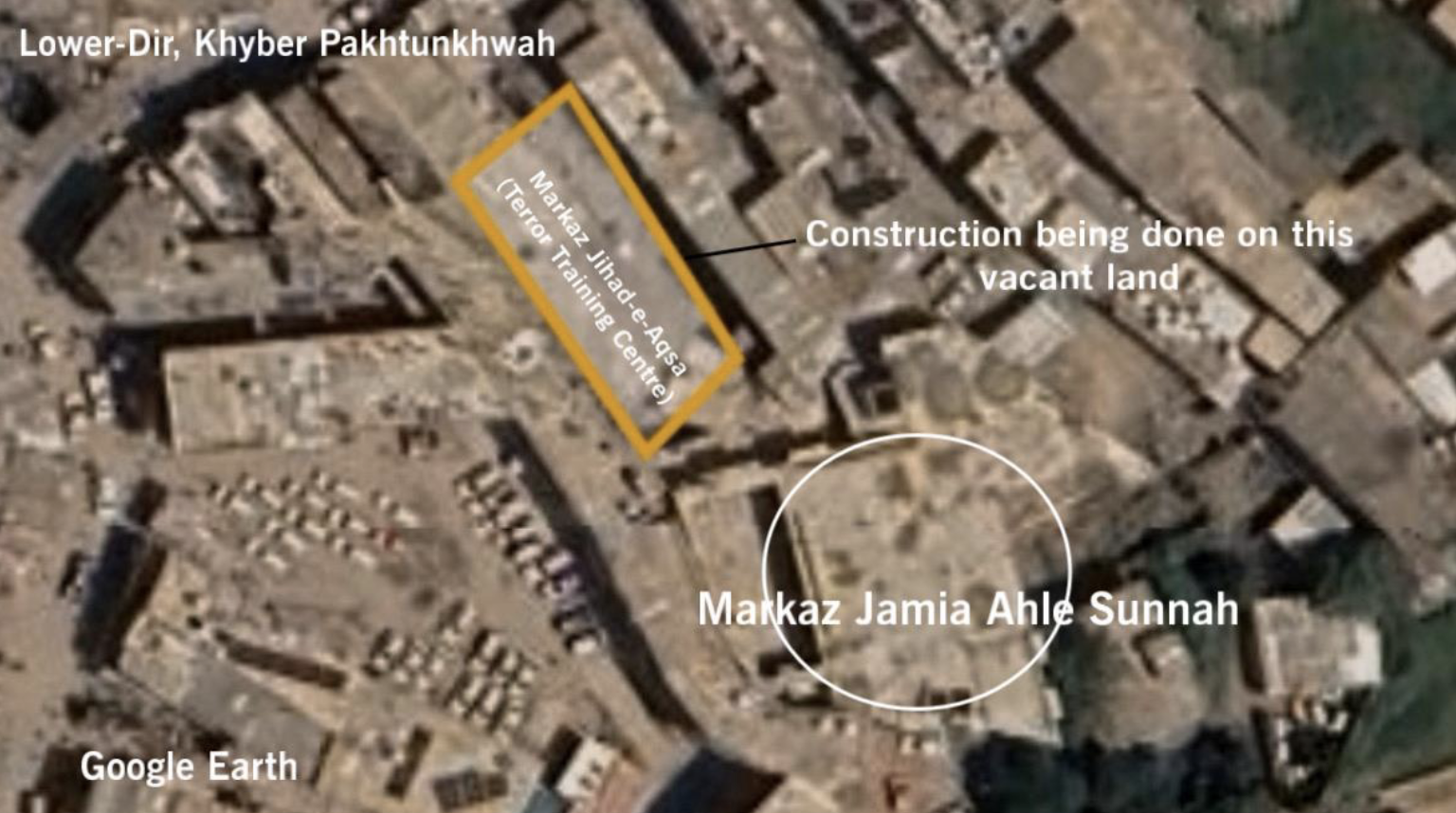
New intelligence inputs confirm that the Pakistan-based terror group Lashkar-e-Taiba (LeT) is constructing a fresh training and residential facility deep inside Khyber Pakhtunkhwa (KPK), Pakistan. The move marks a strategic shift by UN-designated terror outfits away from their traditional strongholds in Pakistan-occupied Kashmir (PoK) and Punjab, possibly in a calculated bid to evade future Indian military strikes such as those seen during Operation Sindoor.
The construction of this LeT training camp, named Markaz Jihad-e-Aqsa, coincides with a period when Pakistan’s Prime Minister Shehbaz Sharif and Army Chief Field Marshal Asim Munir are actively engaging in renewed diplomatic overtures with the United States. A high-profile meeting with US President Donald Trump at the White House earlier this week has raised eyebrows in New Delhi, especially given the strategic undercurrents and the recent shift in Washington’s tone towards Islamabad.

Terror Infrastructure in KPK: A Strategic Relocation
Latest visuals and classified inputs dated September 22, 2025, confirm that the LeT’s new facility is being built in the Kumban Maidan area of Lower Dir, just 47 kilometres from the Afghan border. The site covers over 4,600 square feet and is adjacent to the recently completed Jamia Ahle Sunnah Mosque, a known LeT-affiliated religious institution. This proximity suggests a familiar tactic: using religious fronts to mask militant activity.
What makes this facility particularly concerning is the operational history of the commanders involved. The centre is reportedly under the charge of Nasr Javed, a key figure in the 2006 Hyderabad blasts and former head of LeT’s PoK training camps. The training programs being planned – Daura-e-Khas and Daura-e-Lashkar- are known to focus on advanced guerrilla tactics and fidayeen operations, with this site set to replace the destroyed Markaz Ahle Hadith camp at Bhimber-Barnala, hit by Indian forces in May 2025.
Construction began just weeks after Pakistan’s military crackdown on Tehreek-e-Taliban Pakistan (TTP) in the same region, a move widely seen as clearing the path for state-backed terror infrastructure. Over two dozen TTP operatives were eliminated, paving the way for pro-state groups like LeT and Hizbul Mujahideen (HM) to move in.
US-Pakistan Diplomatic Reset
Trump hosted both Sharif and Munir at the White House, calling them “great leaders” and signalling what appears to be a thaw in US-Pakistan relations.
According to sources, “The optics of warming US-Pakistan ties, while LeT builds a new training base just kilometres from the Afghan border, are not lost on us. It is strategic depth repurposed for asymmetric warfare.”
Historically, Washington has wavered in its view of Pakistan, from a strategic ally during the Cold War and War on Terror to a state accused of duplicity after Osama bin Laden was found living undetected in Abbottabad. Trump himself had condemned Pakistan in 2018 for offering “nothing but lies and deceit.” The recent shift in tone is therefore both surprising and alarming.
India’s Security Calculus
The implications for India are serious. With LeT, JeM, and HM now concentrating operations in Lower Dir and Mansehra, the Indian military sees a re-emergence of cross-border threat vectors, albeit from deeper inside Pakistani territory. Satellite and drone footage confirm coordinated infrastructure development across multiple locations in KPK, likely under the oversight of Pakistan’s ISI Special Operations Directorate.
What is particularly troubling is the co-location of training and religious sites, a pattern seen in LeT’s past operations. The proximity between the new LeT and HM camps, just 4 kilometres apart, suggests possible joint operational planning.
Indian military officials assert they retain the capability to strike such distant targets if actionable intelligence confirms direct threats to Indian assets or citizens.
State Strategy of ‘Selective Counterterrorism’
Pakistan’s recent “anti-terror” operations in KPK, officially aimed at making the region terror-free, have enabled state-backed groups to expand. While over 40 civilians have reportedly died in Pakistani airstrikes since June, local sources claim these actions primarily target anti-state militants, not India-focused outfits like LeT and HM.
This “good terrorist, bad terrorist” doctrine, long criticised by India and Western analysts alike, was effectively acknowledged in August 2025 by Khyber Pakhtunkhwa Chief Minister Ali Ameen Gandapur, who defended the use of state power to eliminate “anti-national” elements while staying silent on groups targeting India.
Moreover, despite public requests for international funding to combat terrorism, significant resources are reportedly being funnelled into rebuilding terror infrastructure under state protection.
As the Markaz Jihad-e-Aqsa camp nears completion by December 2025, India is recalibrating its intelligence and security posture. With Pakistan’s overtures to the US gaining traction, and with LeT consolidating its infrastructure beyond immediate Indian reach, the regional security dynamics are entering a more complex and shadowy phase.
Team BharatShakti

Dr Ravi Shankar has over two decades of experience in communications, print journalism, electronic media, documentary film making and new media.
He makes regular appearances on national television news channels as a commentator and analyst on current and political affairs. Apart from being an acknowledged Journalist, he has been a passionate newsroom manager bringing a wide range of journalistic experience from past associations with India’s leading media conglomerates (Times of India group and India Today group) and had led global news-gathering operations at world’s biggest multimedia news agency- ANI-Reuters. He has covered Parliament extensively over the past several years. Widely traveled, he has covered several summits as part of media delegation accompanying the Indian President, Vice President, Prime Minister, External Affairs Minister and Finance Minister across Asia, Africa and Europe.


