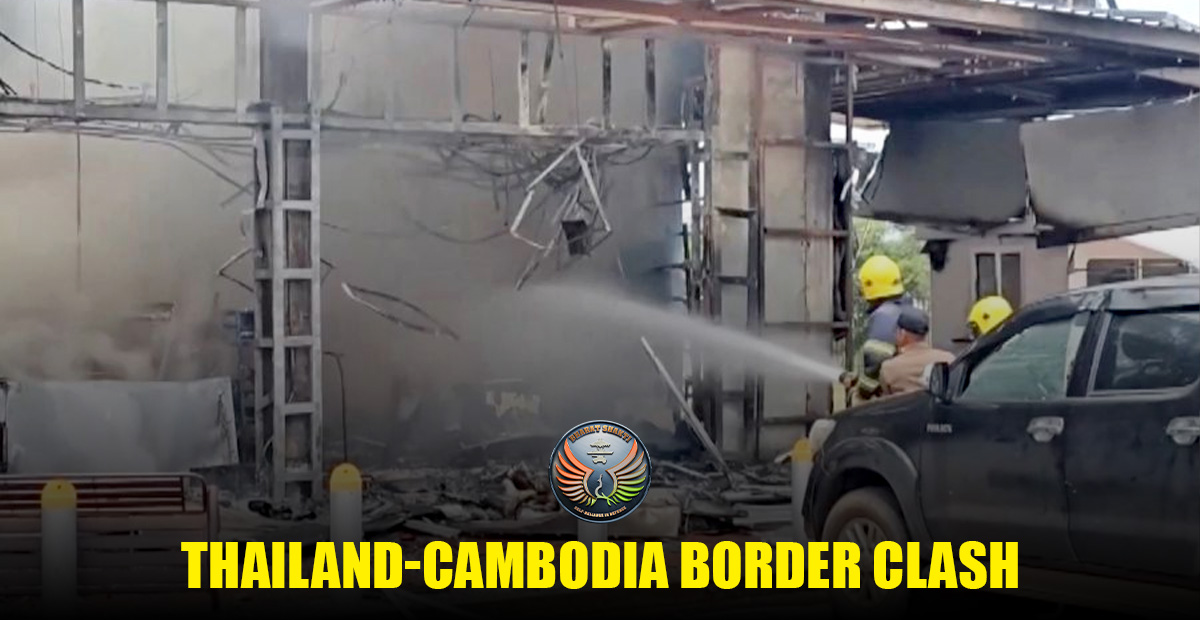
A territorial dispute between Thailand and Cambodia has erupted into violent confrontation, leaving at least nine Thai civilians dead and pushing the two Southeast Asian neighbours into a diplomatic freefall.
With airstrikes, artillery fire, and thousands displaced along the border, the crisis marks the most serious escalation in over a decade. But what exactly sparked the fighting, and why is this stretch of land so fiercely contested?
What Happened?
On Thursday, the Thai and Cambodian militaries exchanged fire at several points along their shared border. The Thai government confirmed that nine civilians were killed and at least 14 others wounded. Cambodia has not released official casualty numbers, though both sides claim the other initiated hostilities.
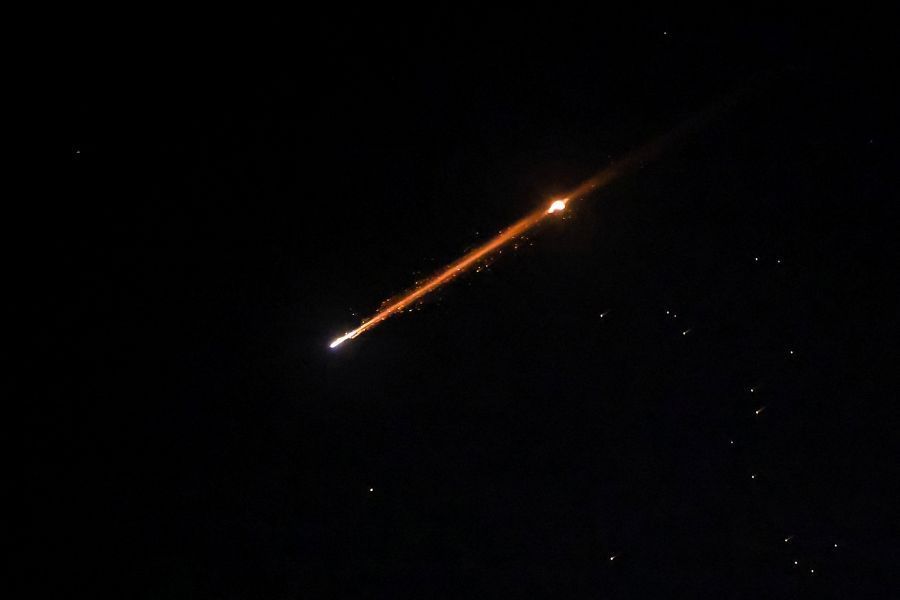
Thai officials reported that Royal Thai Air Force F-16s launched targeted strikes against Cambodian military positions, while Cambodia responded with rocket attacks using BM-21 Grad systems. The violence marks a sharp departure from past skirmishes, which have rarely involved airpower or had such a significant impact on civilians.
Both governments have since recalled ambassadors, shut down border crossings, and suspended trade, signalling a significant downturn in bilateral relations.
A Longstanding Dispute: What’s the Root Cause?
The flashpoint in this crisis is more than just a boundary line — it’s a centuries-old struggle centred on culturally significant temples and murky colonial-era maps.
At the heart of the dispute is Preah Vihear Temple, an ancient Hindu sanctuary perched on a cliff in the Dângrêk Mountains. While the International Court of Justice (ICJ) awarded the temple to Cambodia in a landmark 1962 ruling, the surrounding territory, roughly 4.6 square kilometres, remains hotly contested.
In 2008, Cambodia’s move to list Preah Vihear as a UNESCO World Heritage Site reignited tensions. Thailand objected, accusing Cambodia of encroaching on its territory. The disagreement led to years of sporadic violence, peaking in 2011 when artillery exchanges killed more than a dozen people and forced thousands from their homes.
Despite a 2013 ICJ clarification affirming Cambodian sovereignty over the temple and its vicinity, unresolved questions about the buffer zones and nearby temples, like Ta Moan Thom and Ta Muen Thom, have kept the border fragile.
What Triggered the Latest Violence?
Tensions began building again in May 2025, when a Cambodian soldier was killed near the Emerald Triangle, the remote region where Thailand, Cambodia, and Laos converge. In the following weeks, landmine explosions in disputed areas injured multiple Thai soldiers, one of whom lost a leg.
Thailand accused Cambodia of planting new mines in violation of international treaties, including the Ottawa Convention, which bans anti-personnel mines. Cambodia denied the charge, blaming legacy ordnance from past conflicts and asserting that the mines were located on Cambodian soil.
The final spark came on July 24, when Thailand launched a series of airstrikes on Cambodian military sites near the disputed temples. Cambodia responded with heavy artillery barrages that hit civilian areas in Thailand’s Surin province, resulting in multiple casualties.
What Is the Impact?
The human toll is mounting. Thai officials estimate over 40,000 civilians have been evacuated from border villages. Makeshift shelters are now housing residents, with hospitals relocating patients in anticipation of further strikes.
Diplomatically, the fallout has been swift. Both countries have downgraded their ties, expelled ambassadors, and severed trade links. Cambodia has taken further action by imposing cultural and economic bans, halting imports of Thai media, produce, fuel, and even power supply contracts.
In Thailand, the conflict has shaken the government. Prime Minister Paetongtarn Shinawatra was suspended after a leaked phone call with former Cambodian leader Hun Sen raised questions about her stance on military operations. Her replacement, Acting PM Phumtham Wechayachai, has pledged to uphold international law but remains under pressure from rising nationalist sentiment.
Why Is This Border So Difficult to Define?
The Thailand-Cambodia border stretches 817 kilometres, much of it based on French colonial-era demarcations that are poorly defined in many regions. The rugged, forested terrain complicates patrols, while the lack of clearly marked boundaries invites dispute.
The temples in question are not only ancient monuments but also potent symbols of national identity for both countries. As such, any perceived threat to their control quickly becomes a matter of domestic pride and political volatility.
Despite multiple attempts at bilateral border commissions and ASEAN mediation, progress has stalled repeatedly due to internal politics and mutual mistrust.
Could This Lead to a Wider Conflict?
Experts caution that while neither country appears interested in a full-scale war, the situation remains highly volatile. The deployment of fighter jets, artillery systems, and the use of drones, all within densely populated areas, increases the risk of miscalculation.
The lack of clear communication channels and the speed of escalation also raise concerns among regional observers. With no talks scheduled and both militaries on high alert, localised skirmishes could persist or intensify.
What Happens Next?
There are growing calls for international mediation, possibly via ASEAN or the United Nations, but neither Thailand nor Cambodia has officially requested outside intervention.
Until then, border communities remain under threat, trade is at a standstill, and diplomatic relations are in tatters. As the world watches, the challenge remains: how to de-escalate a decades-old feud that continues to ignite with deadly force.
Team BharatShakti