


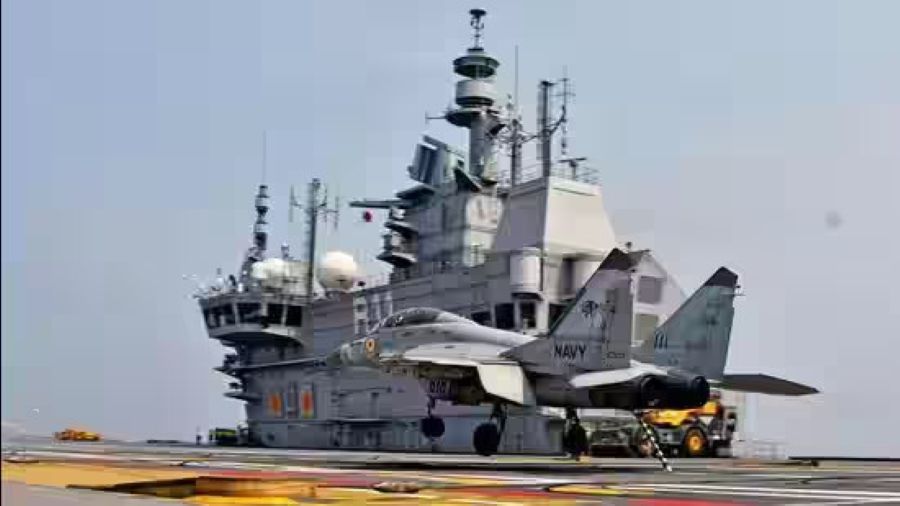
In a fresh push to reduce dependence on imported ammunition, the Indian Navy has invited domestic defence manufacturers to develop and produce an indigenous 80mm air-to-ground rocket for its MiG-29K carrier-borne fighter fleet.
The move is part of the military’s broader drive to indigenise frontline weapon systems and critical battlefield consumables under the government’s Atmanirbhar Bharat initiative.
The Navy issued an Expression of Interest (EoI) last week seeking industry participation for the design, development and manufacture of the unguided rocket, which is currently sourced from overseas suppliers. The weapon is employed by the MiG-29K/KUB fighters operating from INS Vikramaditya and is a key component of the Navy’s carrier-based strike capability.
Fired from B8M-1 rocket pods, the 80mm rocket is designed for attacking armoured vehicles and soft targets, including radar installations, parked aircraft and troop concentrations. The weapon combines armour-penetrating capability with fragmentation, making it suitable for a wide range of battlefield missions.
According to the Navy’s requirements, the rocket should weigh about 11.3 kg and measure approximately 1.54 metres in length. It must be capable of achieving a velocity of 600 metres per second and engage targets at ranges between 1.3 km and 4 km.
The weapon’s 0.9 kg high-explosive warhead is expected to penetrate up to 400 mm of armour under direct-impact conditions while generating at least 400 fragments, each weighing around 3 grams, upon detonation.
The Navy has outlined demanding operational specifications for the indigenous system. The rocket must remain fully functional over a temperature range from minus 60°C to plus 60°C, enabling deployment across diverse operating environments, from high-altitude regions to tropical maritime conditions.
If inducted into service, the weapon is expected to have a minimum shelf life of 15 years.
The EoI also stipulates that the rocket should be hermetically sealed and capable of storage and operation at altitudes up to 20,000 metres. It must be certified for launch from aircraft flying up to 17,500 metres.
Alongside the combat version, the Navy is seeking a practice round with identical flight characteristics but without a warhead, allowing pilots to conduct realistic training without expending operational ammunition.
The service has indicated a projected requirement of 273 live rockets and 2,400 practice rounds following successful development, qualification and user trials. Initial induction is tentatively planned for 2026-27.
The initiative reflects a wider trend across the armed forces to localise the production of ammunition, rockets and missile systems that have traditionally relied on foreign supply chains. Recent years have seen similar indigenisation efforts by the Army and Air Force as the Ministry of Defence increasingly prioritises domestically developed and manufactured equipment in procurement programmes.
For India’s defence industry, the programme offers another opportunity to enter a niche segment of aerial munitions manufacturing while supporting the military’s long-term goal of achieving greater self-reliance in critical combat capabilities.
Team BharatShakti